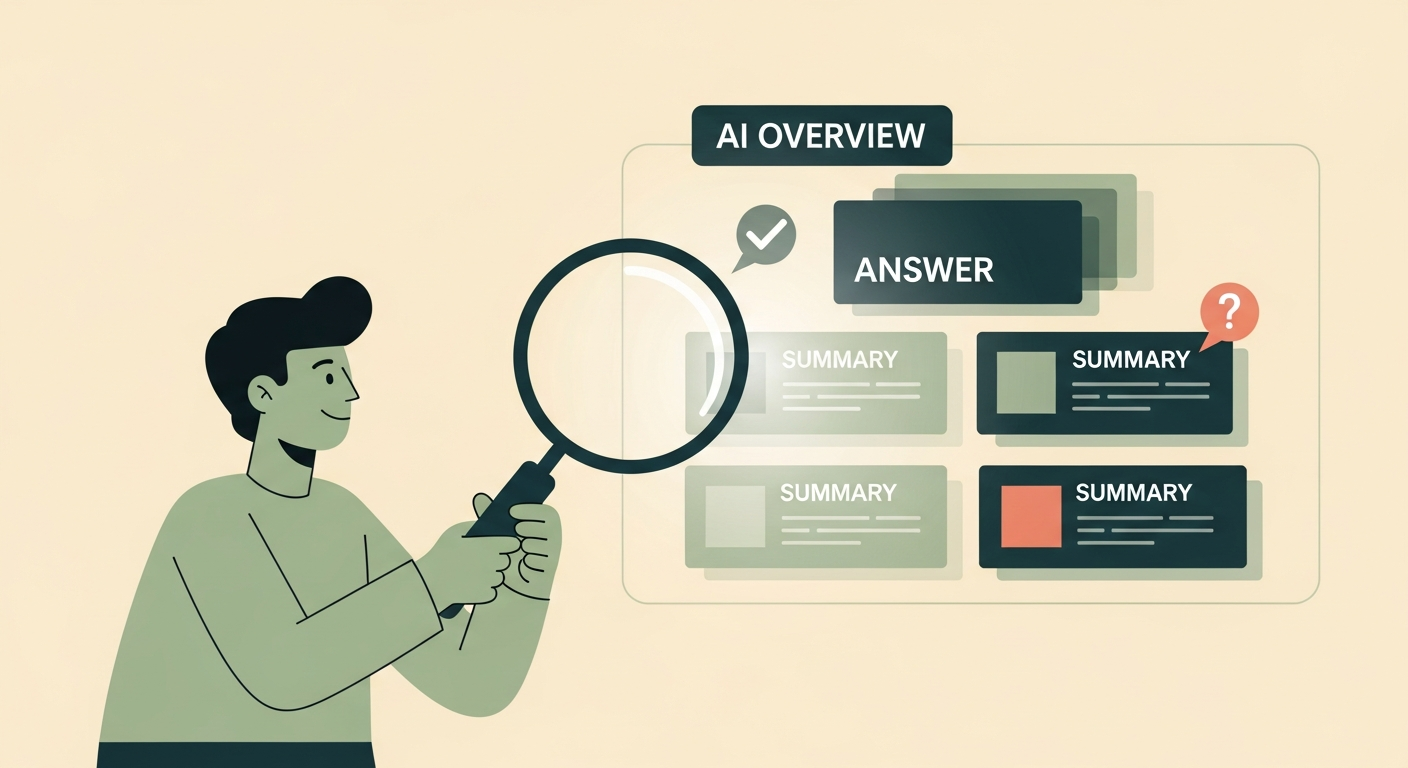
The question of whether the AI Overviews and the other synthesized answer formats are accurate about the company is one of the questions that most often produces the executive intervention that finally moves an AEO program from the back of the agenda to the front. The leadership team runs the audit, sees the picture the AI Overviews are producing, finds the gaps between the picture and the picture the company would have presented, and decides the program needs to be taken seriously. The pattern is recognizable enough that the question itself is worth taking seriously, since the answer the leadership team finds shapes the budget, the priorities, and the urgency the program is going to have.
The honest answer, after two years of watching how the AI Overviews and the broader synthesized answer formats handle company information, is that the accuracy varies in recognizable patterns rather than being uniformly good or uniformly poor. The picture for some companies is mostly accurate with some gaps that warrant attention. The picture for other companies has meaningful inaccuracies that are damaging the company's representation in ways the team has not seen until it ran the audit. The pattern depends on the company's situation, the categories of information being asked about, the sources the AI Overviews are drawing on, and the work the company has done to support the picture.
This piece walks through whether AI Overviews are accurate about the company, including what the AI Overviews actually are in 2026, how they are produced, the categories of accuracy that matter, the patterns of where the AI Overviews tend to be accurate and where they tend not to be, what the team can do about the inaccuracies, how to audit the picture deliberately, and how the leadership team should respond when the audit produces the gap.
What the AI Overviews Actually Are
The first useful step is to be precise about what the AI Overviews are, since the phrase covers a few distinct formats that the team should be clear about when discussing the picture.
The AI Overviews in the narrow sense are the synthesized answer format that the major search engines now produce at the top of the search results, with the format being branded as AI Overviews on Google, as the answer engine response on Bing, and with the equivalent treatments across the other search engines. The format produces a synthesized summary that draws on multiple sources, with the citations to the sources appearing alongside the summary and the audience receiving the picture without necessarily clicking through to any source.
The AI Overviews in the broader sense include the synthesized answers produced by the conversational assistants when the audience asks the equivalent question, with ChatGPT, Gemini, Claude, Perplexity, Copilot, and the other major assistants all producing answers that synthesize material from training and retrieval. The format and the surface are different from the search engine AI Overviews and the underlying pattern is similar, with the synthesized answer being the picture the audience receives.
The AI Overviews in the broadest sense include the broader picture of how the answer formats across the engines and the assistants are representing the company, with the picture being formed by the sum of the formats the audience is encountering rather than any single output. The leadership team that audits the picture is generally auditing across the formats rather than focusing on any single one, with the overall picture being the one the audience is forming about the company.
For the purposes of this piece, the AI Overviews refers to the broader picture of the synthesized answer formats that the audience encounters when researching the company, with the specific differences across the formats being worth understanding and the overall picture being the one the leadership team is asking about.
How the AI Overviews Are Actually Produced
The second useful step is to understand how the AI Overviews are actually produced, since the picture clarifies why the accuracy varies and what the team can do about the gaps.
The AI Overviews are produced by a process that combines the retrieval of relevant sources, the synthesis of the retrieved material into a coherent answer, and the formatting of the answer with the appropriate citations and structure. The process varies in the specifics across the providers and shares a recognizable shape.
The retrieval step gathers the sources the synthesis will draw on. The retrieval typically uses the search engine indices the provider has access to, with the relevance and authority signals determining which sources are surfaced. The sources are the foundation of the answer that follows, with the picture the audience receives being substantially shaped by the sources the retrieval has gathered.
The synthesis step produces the coherent answer from the retrieved sources. The synthesis combines the material from the multiple sources, resolves the apparent contradictions, weights the sources by their authority and relevance, and produces the synthesized picture. The synthesis is the step that often introduces the inaccuracies that the team finds in the audit, with the model's interpretation of the sources sometimes diverging from the picture the sources themselves would support.
The formatting step structures the answer in the format the surface expects, with the appropriate citations, the appropriate structure, and the appropriate length. The formatting is typically the most visible step and is rarely the source of the inaccuracies that matter for the company picture.
The accuracy of the AI Overviews about the company depends on the sources the retrieval has gathered, the synthesis the model has performed on them, and the broader picture the model has of the company from training. The team that wants to improve the accuracy is working on the sources the retrieval is gathering and the broader picture the assistants have, since the synthesis and formatting are controlled by the providers and are not the levers the team has.
The Categories of Accuracy That Matter
The accuracy of the AI Overviews about the company breaks down into several categories that the team should be clear about when auditing the picture, since the categories warrant different responses.
The first category is the factual accuracy of the description of the company itself. The legal name, the brand name, the founding date, the headquarters location, the leadership picture, the size and scope of the operations, and the other foundational facts are the material the leadership team typically expects to be accurate and that the AI Overviews sometimes get wrong in ways that matter.
The second category is the accuracy of the description of the offering. The products, the services, the capabilities, the pricing where the company shares it, the audience the offering is for, and the relationships among the offerings are the material that affects the buyer journey and that the AI Overviews can describe inaccurately in ways that misdirect the audience.
The third category is the accuracy of the competitive framing. The picture of how the company compares to the alternatives, the strengths and limitations relative to the competitors, the positioning in the category, and the picture of which audience the company is best suited to are the material that affects the consideration set and that the AI Overviews can frame in ways that disadvantage the company.
The fourth category is the accuracy of the historical and reputational picture. The treatment of past incidents, past leadership controversies, past product issues, and the broader picture of the company's history are the material that affects the trust the audience has in the company and that the AI Overviews can over weight in ways that disproportionately influence the picture.
The fifth category is the accuracy of the cultural and experiential picture. The treatment of the company's culture, the customer experience, the employee experience, the community engagement, and the broader picture of what it is like to interact with the company are the material that affects the talent and partner relationships and that the AI Overviews can describe based on the loudest voices rather than the broader picture.
The sixth category is the accuracy of the current and forward picture. The treatment of the recent product launches, the recent leadership changes, the recent strategy shifts, and the broader picture of where the company is headed are the material that affects the audience's view of the trajectory and that the AI Overviews can be slow to reflect.
The categories together produce the picture the audience is forming, and the audit that breaks the accuracy down by category is more useful than the single overall assessment.
The Patterns of Where the AI Overviews Tend To Be Accurate
The patterns of where the AI Overviews tend to be accurate are worth naming, since the team can take the accurate categories as the foundation that the work is building on.
The AI Overviews tend to be accurate about the foundational facts of the company when the company has the canonical sources of truth that the assistants are drawing on. The legal name, the headquarters, the founding date, and the broader facts that are well represented across the analyst databases, the press coverage, the company's own properties, and the structured information sources are typically described accurately by the AI Overviews.
The AI Overviews tend to be accurate about the broad picture of the offering when the company has the well documented descriptions across the sources. The product and service categories, the broad picture of the capabilities, the audience the company serves, and the positioning at the high level are typically described accurately when the broader picture is consistent across the sources the assistants are drawing on.
The AI Overviews tend to be accurate about the well established competitive landscape when the picture is well covered by the analyst and industry coverage. The picture of the major competitors, the broad strengths and limitations across the category, the positioning of the major players, and the broader picture of the competitive dynamics are typically described accurately when the analyst and industry coverage has established the picture.
The AI Overviews tend to be accurate about the broad cultural picture when the company has a meaningful press and community presence. The picture of the company as an employer, the broad customer sentiment, the community engagement, and the broader experiential picture are typically described accurately when the picture is well represented across the press, the community conversation, and the broader public sources.
The picture is that the accuracy is generally good when the foundation is well supported by the sources the AI Overviews are drawing on, and the team that has built the foundation has the accurate picture as the starting point.
The Patterns of Where the AI Overviews Tend To Be Inaccurate
The patterns of where the AI Overviews tend to be inaccurate are worth naming, since the inaccurate categories are where the team's work has to focus.
The AI Overviews tend to be inaccurate about the recent changes when the changes have not yet been reflected in the sources the AI Overviews are drawing on. The recent product launches, the recent leadership changes, the recent strategy shifts, the recent rebrands, the recent expansions, and the broader picture of what the company is doing now are often described in the picture of what the company was doing previously, with the lag between the change and the picture being the gap that warrants the team's attention.
The AI Overviews tend to be inaccurate about the specific details when the details are not well represented in the structured sources the AI Overviews are weighting. The specific pricing, the specific product features, the specific service tiers, the specific implementation details, and the other granular material are often described approximately rather than precisely, with the approximations sometimes producing the misdirection the team has to address.
The AI Overviews tend to be inaccurate about the competitive framing when the comparison content the assistants are drawing on is dominated by the competitors. The picture of how the company compares to the alternatives is often shaped by the comparison content that the competitors have produced, with the picture being more favorable to the competitors than the balanced framing would be. The pattern is one of the most common inaccuracies the team finds in the audit.
The AI Overviews tend to over weight the historical and reputational picture when the older coverage has not been balanced by the more recent picture. The past incidents, the past controversies, the past product issues, and the other material from the company's history can dominate the picture the AI Overviews produce, with the current picture being underrepresented relative to the historical one.
The AI Overviews tend to amplify the loudest voices in the cultural and experiential picture. The picture of the company as an employer can be dominated by the loudest critics on the public sites, the picture of the customer experience can be dominated by the most vocal complaints, and the broader experiential picture can be shaped by the loudest voices rather than the broader picture that more representative coverage would produce.
The AI Overviews tend to be inaccurate about the nuanced topics when the synthesis has flattened the picture. The topics that require the careful framing, the topics where the company has a specific perspective, the topics where the answer depends on the situation, and the broader nuanced picture can be described in the flattened way that loses the nuance the company has built into the picture.
The patterns together describe the picture the team should expect to find in the audit, with the foundation generally being accurate and the recent changes, the specifics, the competitive framing, the historical weight, the cultural picture, and the nuanced topics being the categories where the inaccuracies are most likely.
How To Audit the AI Overviews Deliberately
The audit that produces the picture the leadership team can act on requires the deliberate approach rather than the casual sampling that often serves as the substitute, with the specific moves being worth being concrete about.
The first move is the definition of the query universe. The team works with the marketing, sales, and product leadership to assemble the queries that the leadership team cares about, with the queries covering the brand queries about the company itself, the offering queries about the products and services, the comparison queries against the alternatives, the buyer journey queries that reflect the audience's research path, the historical and reputational queries that the topic surfaces, and the cultural and experiential queries that the audience is asking. The query universe is the foundation the audit is run against.
The second move is the selection of the surfaces to audit. The team covers the AI Overviews on the major search engines, the synthesized answers on the major assistants, and the broader synthesized formats the audience is encountering, with the selection informed by the channel mix the audience is using. The selection typically covers several surfaces rather than focusing on one.
The third move is the execution of the audit. The team runs the queries against the surfaces on a defined methodology, captures the outputs, and stores them for analysis. The execution is the disciplined work that produces the picture rather than the casual sampling that produces the anecdotes.
The fourth move is the assessment of the outputs across the accuracy categories. The team scores each output on the foundational accuracy, the offering accuracy, the competitive framing, the historical and reputational picture, the cultural and experiential picture, and the current and forward picture, with the assessment being the structured scoring that produces the comparable picture rather than the impressionistic read.
The fifth move is the rollup of the picture for the leadership team. The team aggregates the assessments into the picture that surfaces the accurate categories, the categories with material gaps, the specific cases that warrant attention, and the trends across the surfaces. The rollup is the picture the leadership team uses to make the decisions about the program.
The sixth move is the prioritization of the work the audit reveals. The team works with the leadership to prioritize the gaps based on the volume of queries the gap affects, the severity of the gap, the accessibility of the work that would close it, and the strategic priority the leadership places on the topic. The prioritization is what turns the audit into the program rather than the report that sits on the shelf.
What the Team Can Do About the Inaccuracies
The inaccuracies the audit reveals have a set of responses that the team can pursue, with the responses depending on the category of inaccuracy and the situation the company is in.
The first response is the foundational content work on the company's own properties. The deeper, more comprehensive content on the topics where the AI Overviews are inaccurate gives the assistants the material to draw on, with the content directly addressing the picture the assistants are producing. The content work is the most directly under the team's control and is the foundation the rest of the responses build on.
The second response is the structured representation discipline that gives the assistants the canonical picture. The schema markup, the consistent representation across the pages, the canonical sources of truth, and the broader structured discipline support the assistants in producing the accurate picture rather than the approximate one. The structured work is the multiplier on the content work.
The third response is the third party engagement that influences the sources the AI Overviews are drawing on. The analyst engagement, the press and media work, the industry publication contributions, the community presence, and the broader picture of where the company shows up in the third party sources are the way the team influences the retrieval picture. The engagement is the partnership work the marketing and communications functions handle together.
The fourth response is the specific case correction for the high priority gaps. The cases where the AI Overviews are saying something specific and incorrect that warrants the immediate response are addressed through the targeted content, the structured corrections, the third party engagement that specifically addresses the picture, and the broader work that brings the picture into accuracy. The case correction is the work for the high priority gaps that cannot wait for the foundational work to close.
The fifth response is the patience for the foundational work to compound. The picture the AI Overviews produce shifts as the foundational work compounds, and the team that expects the immediate response to every gap is the team that ends up disappointed. The patience for the foundation is the discipline that allows the program to actually shift the picture rather than to chase the symptoms.
The sixth response is the monitoring that tracks the picture over time. The audit cycle that runs on the defined cadence, the tracking of the changes in the picture, and the broader picture of how the AI Overviews are evolving are the feedback the program needs to keep improving. The monitoring is the discipline that allows the team to see whether the work is producing the picture the leadership team is funding it for.
The Cases Where Direct Engagement With the Providers Helps
The team that has audit findings that warrant the direct engagement with the providers should know the channels that exist, since the engagement can address some cases that the foundational work cannot fully resolve.
The major search engines provide the feedback mechanisms for the AI Overviews and the related answer formats, with the channels typically accepting the reports of factual inaccuracies, the requests for the corrections, and the broader feedback about the picture. The feedback is reviewed and is sometimes acted on, with the providers improving the picture in response to the well documented and credible reports.
The major assistant providers similarly accept the feedback through the channels they have established, with the reports of inaccuracies in the assistant outputs being part of the feedback the providers use to improve the models and the retrieval systems. The feedback is part of the picture the team can engage with, with the credibility of the reports influencing the response.
The direct engagement is most useful for the specific factual inaccuracies that have the clear source of truth the team can point to, the cases where the AI Overviews are confidently asserting something that is verifiably incorrect, and the cases where the foundational work has not produced the picture in the timeline that the situation requires. The engagement is less useful for the framing concerns, the competitive picture disputes, and the broader picture concerns that are matters of judgment rather than verifiable fact.
The engagement should be part of the program rather than the substitute for the foundational work, with the foundation producing the durable picture and the engagement addressing the specific cases that warrant the immediate response. The teams that have used the engagement well have done so within the broader program rather than as the standalone response.
The Specific Question of When To Push Back Publicly
The leadership teams that find the audit results troubling sometimes consider the public response to the AI Overviews picture, and the question warrants the deliberate consideration rather than the reflexive answer.
The public response is sometimes appropriate when the AI Overviews are producing a picture that is materially damaging, when the foundational work and the direct engagement have not produced the response in the timeline that the situation requires, and when the company has the standing and the substantive case to make the public point. The companies that have done the public response well have done so with the specific case, the substantive evidence, and the constructive framing rather than the broader complaint.
The public response is usually not appropriate as the first response, since the public engagement raises the profile of the inaccuracy the company is trying to address and can be counterproductive when the foundational work would produce the better outcome. The first responses are typically the foundational work, the structured representation discipline, the third party engagement, and the direct engagement with the providers.
The public response is most effective when it is part of the broader conversation about the picture the AI Overviews are producing for the category rather than only about the company. The conversations about how the AI Overviews are handling the category, the framing the answers are producing, and the broader picture are conversations the company can contribute to credibly when the company has the substantive perspective to bring.
The leadership team that is considering the public response should weigh the specific situation and the broader picture, with the foundational work being the foundation that the response builds on regardless of the public dimension.
The Common Mistakes To Avoid
The teams that have engaged with the AI Overviews accuracy question have learned to avoid a set of common mistakes that are worth naming for the team that is designing its own response.
The first mistake is the over reaction to a single output. The single bad output is a snapshot of a specific query at a specific moment and is not the picture, and the team that responds to the single output without running the broader audit is responding to the symptom rather than the picture.
The second mistake is the under reaction to the broader picture. The team that sees the few good outputs and concludes the picture is fine without running the broader audit is missing the picture the leadership team should be working with, with the broader audit being the discipline that produces the actual picture.
The third mistake is the catastrophizing of the inaccuracies. The team that treats every inaccuracy as a crisis exhausts the capacity that should have gone to the foundational work, with the prioritization being the discipline that allows the team to address the inaccuracies that matter and to let the others wait for the foundation to close.
The fourth mistake is the denying of the inaccuracies. The team that defends the picture the AI Overviews are producing rather than addressing the gap is the team that loses the credibility with the leadership and that fails to produce the response the situation requires. The honest engagement with the picture is the discipline the program needs.
The fifth mistake is the symptomatic response. The team that addresses the specific cases the audit surfaces without doing the foundational work that would close the broader picture is treating the symptoms rather than the cause, with the symptomatic response being the work that absorbs the capacity without producing the durable picture.
The sixth mistake is the missing measurement. The team that does not track the picture over time misses the trends that show whether the work is producing the response and the gaps that warrant the additional attention, with the measurement being the discipline that allows the program to actually improve the picture.
The Honest Summary for the Leadership Team
So are the AI Overviews accurate about the company. The honest answer is that the accuracy varies in recognizable patterns, with the foundation typically being accurate when the canonical sources support it and the recent changes, the specifics, the competitive framing, the historical weight, the cultural picture, and the nuanced topics being the categories where the inaccuracies are most likely. The audit that breaks the picture down by category produces the picture the leadership team can act on, and the response that addresses the foundational work, the structured discipline, the third party engagement, the specific case corrections, and the monitoring produces the durable picture the program is designed to produce.
The AI Overviews are not malicious about the company and are not perfectly accurate either. The picture they produce reflects the sources they are drawing on, the synthesis they perform, and the broader picture they have of the company, with the team's work on the sources and the broader picture being the way the company shapes the picture the AI Overviews produce. The team that funds the work and the team that executes it together produce the picture the leadership team can stand behind.
How ProvenROI Helps Clients Improve the AI Overviews Picture
ProvenROI's approach for clients that are improving the picture the AI Overviews are producing starts with the audit that breaks the accuracy down by category, since the picture the audit produces is the foundation for the program design. The audit covers the foundational accuracy, the offering accuracy, the competitive framing, the historical and reputational picture, the cultural and experiential picture, and the current and forward picture across the major surfaces, with the output being a clear view of the gaps and the priorities.
The program design covers the categories of work that close the gaps, with the foundational content, the structured representation discipline, the third party engagement, the specific case corrections, and the monitoring designed together. The design sizes the investment to the gaps the audit revealed and to the timeline the company is willing to operate against, with the heavier investment producing the faster closure and the lighter investment producing the slower one.
The content work covers the deeper, more comprehensive material on the topics where the AI Overviews are inaccurate, with the production cadence, the editorial standards, and the integration with the broader content program designed in a way that the content actually contributes to closing the gaps. The content is the foundation the rest of the responses build on.
The structured representation work covers the schema markup, the canonical sources of truth, the consistent representation across the pages, and the broader structured discipline that supports the assistant's parsing. The structured work is the multiplier on the content and is part of the foundation rather than a separate concern.
The third party engagement covers the analyst engagement, the press and media work, the industry publication contributions, the community presence, and the broader picture of where the company shows up in the sources the AI Overviews are drawing on. The engagement is the partnership work the marketing and communications functions handle together.
The monitoring covers the audit cycle on the defined cadence, the tracking of the changes in the picture, and the broader picture of how the AI Overviews are evolving, with the monitoring being the feedback the program needs to keep improving. The monitoring is the discipline that allows the team to see whether the work is producing the picture the leadership team is funding it for.
The program is treated as long running, with the recurring work funded, the operating model maintained, the audit cycles sustained, and the program refreshed as the AI Overviews and the company continue to evolve. The discipline is what turns the response into the durable improvement in the picture that the AI Overviews are producing.
The question of whether the AI Overviews are accurate about the company does not have a single answer that applies to every company. It has a specific answer for each company that takes the time to work through the audit, the program design, and the operating model. ProvenROI helps clients arrive at that answer and build the program that improves the picture the AI Overviews are producing. That is the program a leadership team can stand behind as the answer formats continue to evolve.