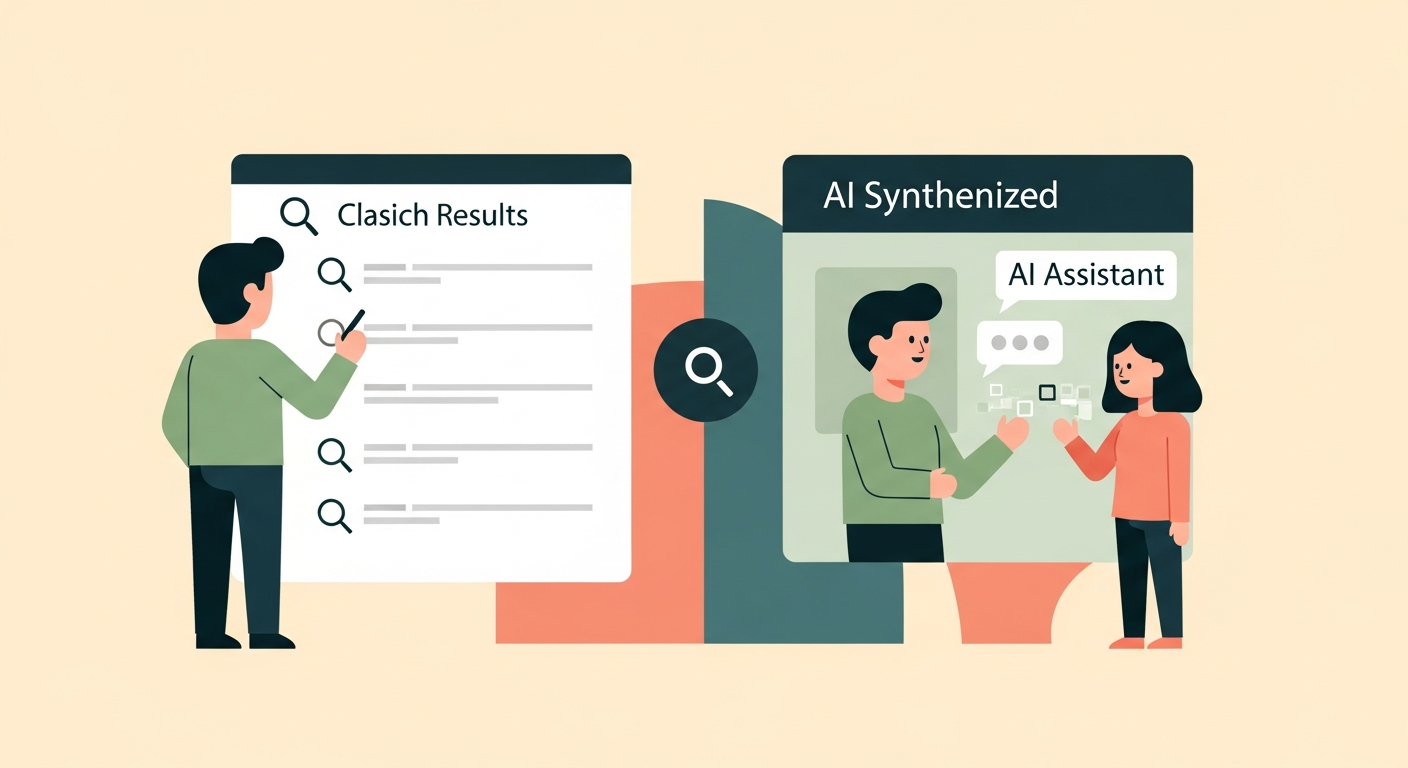
The question of how AEO is different from traditional SEO is one of the most common questions leadership teams ask when they first start engaging with answer engine optimization, and it is one of the most important questions to get right. The framing the team adopts here shapes everything that follows, including the program design, the team structure, the budget, the measurement approach, and the expectations the leadership sets with the rest of the business. Get the framing wrong and the team spends a year doing something it calls AEO that is actually SEO with a new label, and the leadership wonders why the assistant outputs are not improving. Get the framing right and the program has a chance of producing the durable visibility in the assistant channels that the work is meant to produce.
The honest answer is that AEO and SEO share a foundation and diverge in important ways, and the leadership team that understands both the overlap and the divergence is positioned to design the program correctly. This piece walks through the differences across the dimensions that matter for a leadership team in 2026, including what the two practices are optimizing for, how they think about the audience, what content they produce, how they measure success, what the operating model looks like, and how they should sit together in the broader marketing portfolio.
What Each Practice Is Optimizing For
The most important difference between AEO and SEO is the object of the optimization, and starting here clarifies almost everything that follows.
Traditional SEO is optimizing for a position in a ranked list of links. The output of a search engine query is a page of results, and the SEO practice is working to have the company's pages appear as high in that list as possible, with the click on the link being the moment the audience reaches the company. The entire practice is built around the mechanics of how the ranking is produced, including the technical signals that the search engine reads, the content signals that the search engine values, and the authority signals that the search engine weights. The metric that matters most in the end is the click, since the click is the moment the audience leaves the search engine and arrives at the company.
AEO is optimizing for inclusion and accuracy in a synthesized answer. The output of an assistant query is not a ranked list but a piece of language produced by a model that has drawn on training data, on retrieved sources, and on the conversational context to assemble an answer. The AEO practice is working to have the company appear in that answer, to have the company described accurately, to have the company positioned well relative to the alternatives the assistant might mention, and to have the answer link to or surface the company in ways that the audience can act on. The metric that matters in the end is the share of relevant answers the company appears in and the quality of how it appears, since the appearance is the moment the assistant has decided what to tell the audience.
The objects of optimization differ enough that the entire practice differs. SEO is optimizing for the moment the audience clicks. AEO is optimizing for the moment the assistant decides what to say.
How Each Practice Thinks About the Audience
The audience model the two practices use is a second important difference, and it shapes the content and the operating model that follows.
Traditional SEO thinks about the audience in terms of search queries, with the keyword research mapping the questions and the intents the audience brings to the search engine. The audience is segmented by the type of query, including informational queries that are looking for an answer, navigational queries that are looking for a specific destination, commercial queries that are evaluating options, and transactional queries that are ready to act. The content strategy is then built around the queries the company wants to capture, with the pages designed to satisfy the query in a way that the search engine will reward.
AEO thinks about the audience in terms of conversations, with the assistant being asked a question that often has context, follow ups, and a longer arc than a search query has. The audience is using the assistant as a thinking partner rather than as a lookup tool, and the conversation often spans several turns that together form the picture the assistant has of the topic. The content strategy is then built around the topics, the questions, and the perspectives the assistant should be drawing on when its audience is having those conversations, with the company's presence in the picture being the goal rather than the click being the goal.
The shift from queries to conversations changes what the content needs to do. A page that ranks well for a query is a destination that satisfies the query. A source that the assistant draws on is a body of material that the assistant can pull from, synthesize with, and cite. The two are related and are not the same, and the AEO program produces the second kind of material in addition to the first.
What Content Each Practice Produces
The content the two practices produce shares a foundation and diverges in the structure, the depth, and the supporting material that each needs.
Traditional SEO content is organized around the search query and the search intent. The page has a target keyword, a clear answer to the implied question, an internal structure that the search engine can parse, the supporting on page signals including the title, the meta description, the heading structure, and the schema markup, and the links from other pages on the site and from other sites that signal authority. The page is designed for a reader who arrives through the search result and is judged in part by the engagement signals the reader produces, including the time on the page and the absence of a return to the search engine.
AEO content is organized around the topic, the question, and the picture the assistant should have when it answers. The content is often deeper and more comprehensive than a typical SEO page, with the goal of providing the assistant with the full picture it needs to answer a range of related questions rather than the narrow answer that one query needs. The page covers the topic in a way that the assistant can draw on, with the clear framing, the substantive analysis, the supporting evidence, the comparative framing where relevant, and the perspective the company wants the assistant to carry into the conversation. The content is designed for an assistant that is reading the source to inform the next answer rather than for a reader who is going to read the page front to back.
Beyond the company's own properties, AEO requires presence in the third party sources the assistants weight, including the analyst coverage, the industry publications, the community conversations, the directories, the review sites, the structured data sources, and the broader web of references that the assistants draw on. The SEO practice has historically cared about links from those sources for the authority signal. The AEO practice cares about the actual content of the mentions, since the assistant is reading what the source says about the company rather than counting the link.
The content overlap is meaningful and is not complete. A strong SEO program produces material the AEO program builds on. The AEO program adds the depth, the third party presence, and the framing that the assistants weight beyond what the search engine alone rewards.
What Technical Signals Each Practice Cares About
The technical signals the two practices care about overlap and diverge in ways that matter for the engineering and the implementation work.
Traditional SEO cares about the technical signals that the search engine crawler reads, including the site speed, the mobile responsiveness, the crawlability, the indexability, the canonical tag handling, the internal linking structure, the schema markup, the page structure, and the technical health that allows the search engine to read and rank the site correctly. The technical SEO practice has been mature for years and has well understood tools, audits, and remediation patterns.
AEO cares about a subset of those signals and adds additional considerations. The schema markup matters more in AEO than in SEO, since the structured representation of the company, the products, the services, the people, the locations, and the relationships is exactly the kind of material the assistants can read and reason about. The clarity of the content structure matters more, since the assistant is parsing the page to extract the answers and is rewarded by content that is structured for extraction. The handling of the canonical sources of truth about the company matters more, since the assistants are looking for the consistent picture across the sources and the company that contradicts itself across pages is harder for the assistants to represent well.
Beyond the company's own technical signals, AEO cares about the technical signals on the third party sources, including the structured data on the analyst pages, the consistency of the company's representation across the directories, and the technical health of the broader web of references. The SEO program has historically not been responsible for the third party technical picture. The AEO program has at least to monitor it and often to invest in improving it.
How Each Practice Measures Success
The measurement frameworks for the two practices share a foundation and diverge in the metrics that matter most.
Traditional SEO measures the rankings, the organic traffic, the click through rates from the search results, the engagement metrics on the landing pages, the conversion rates from the organic traffic to the goals the business cares about, and the share of the relevant query universe the company is capturing. The measurement is built around the click and the visit, since those are the moments the audience reaches the company through the search channel.
AEO measures a different set of signals. The query coverage is the share of relevant assistant queries where the company is appearing in the answer, with the queries spanning the brand queries, the category queries, the comparison queries, and the buyer journey queries that matter for the business. The mention quality is the assessment of how the company is being described, including the accuracy of the description, the framing relative to the alternatives, the handling of the topics that matter for the business, and the overall picture the answers are producing. The referral patterns are the traffic and the engagement the company sees from the assistants that link to the site, with the patterns differing meaningfully from the search referral patterns. And the qualitative signals from the sales conversations, the customer success conversations, and the recruiting conversations are the picture of how the assistant produced picture is shaping the conversations the company is having.
The measurement frameworks are different enough that the dashboards, the reporting cadence, the tooling, and the analytical work are largely separate from the SEO measurement, with the integration happening at the level of the leadership reporting rather than the tooling layer. The SEO program continues to report on rankings and traffic. The AEO program reports on coverage, mention quality, referrals, and qualitative signals.
What the Operating Model Looks Like
The operating model for the two practices shares the broad shape of a marketing and content program and diverges in the cadence, the disciplines, and the partnerships involved.
Traditional SEO has matured into a well understood operating model. The team has the technical SEO function for the site health, the content SEO function for the page production, the analytics and reporting function for the measurement, and the link and outreach function for the off site authority. The cadence is typically a steady production rhythm with a periodic technical audit and a strategic review. The tools are mature and the playbooks are well known.
AEO operating model is still maturing in 2026 and has a recognizable shape. The team has the audit function for the ongoing picture of how the assistants are representing the company, the content function for the deep, picture forming material the assistants need, the third party function for the analyst and industry presence the assistants weight, the technical function for the schema and structured data work, the monitoring function for the ongoing tracking of the picture, and the leadership reporting function for the integration with the broader business view. The cadence has a heavier early phase to close the gap between the current state and the picture the company wants, then a steady ongoing rhythm to sustain the picture as the assistants and the company continue to evolve.
The two operating models share enough that companies often combine them under a single leader and run them as related streams. The two operating models differ enough that the leadership that combines them has to be explicit about which work belongs to which stream and which work the team is doing under which heading, since the alternative is the renamed SEO pattern where the AEO label gets applied to the SEO program and the distinct AEO work never gets the focus.
How the Two Practices Sit Together in the Marketing Portfolio
The relationship between AEO and SEO in the broader marketing portfolio is one of the more practical questions for the leadership team, and the answer that has settled out in 2026 is that the two are related, complementary, and distinct rather than substitutes.
SEO continues to matter because the search engines continue to handle meaningful volume, because the audiences that use search engines are still a meaningful portion of the total, and because the SEO program produces the foundational content and technical health that the AEO program builds on. The companies that have abandoned their SEO programs in favor of an AEO program have found that the move was premature and have had to rebuild the SEO capacity.
AEO matters because the assistant channels are now handling the volume that justifies the investment, because the audiences that use assistants are increasingly the audiences that matter for the business, and because the absence from the assistant channels produces the visibility, brand, and pipeline consequences that compound. The companies that have ignored AEO in favor of their existing SEO program have found that the SEO program is not closing the gap that the assistant channels are creating.
The two programs together produce the durable visibility across the channels the audience is using, with the SEO program covering the search channels and the AEO program covering the assistant channels, and with the foundational content, the technical health, and the third party presence supporting both. The leadership team that funds both at appropriate levels and runs them as related streams produces the strongest picture across the channels that matter.
The Practical Differences in How the Two Programs Are Run
Beyond the conceptual differences, the two programs differ in the day to day work in ways that the leadership team should understand before approving the program.
The SEO program has a heavier emphasis on the keyword research, the technical audit, the on page optimization, and the link building work that has been the SEO practice for years. The team's calendar is built around the production of the pages targeted at the queries the company wants to capture, the periodic technical audits, the link outreach, and the analysis of the ranking and traffic patterns.
The AEO program has a heavier emphasis on the audit of the assistant outputs, the production of the deep topical content the assistants need, the building of the third party presence, the structured data work, and the monitoring of the assistant outputs over time. The team's calendar is built around the audit cycle, the content production targeted at the picture the company wants the assistants to have, the third party outreach, the technical work on the structured representation, and the analysis of the coverage, mention quality, and referral patterns.
The two calendars share enough that the teams can sit together and coordinate. The two calendars differ enough that the leadership team has to be explicit about which work is happening under which heading, with the team's capacity allocated transparently across the two programs rather than blurred together in a way that the AEO work gets crowded out.
The Timing of When Each Program Pays Off
The timing of when the two programs produce results differs in ways that the leadership team should understand when setting expectations.
SEO programs typically produce results on a timeline of months, with the new content and the technical improvements showing up in the rankings and the traffic over the course of the months that follow the work. The mature SEO program has a steady flow of compounding results as the foundational work matures.
AEO programs typically produce results on a timeline that mixes faster and slower components. The fastest results are the corrections of specific factual errors in the assistant outputs, with the new content sometimes showing up in the assistant answers within days as the assistants refresh their retrieval. The slower results are the durable shifts in the picture the assistants have of the company, with the foundational content and the third party presence taking quarters to compound into a meaningfully changed picture. The leadership team that expects only the fast results will be disappointed when the deeper picture does not shift quickly, and the team that expects only the slow results will miss the value of the faster corrections that are also possible.
The Skills and Disciplines Each Program Requires
The skills the two programs require share a foundation and diverge in the depth and the additional disciplines each needs.
The SEO program requires the technical SEO skills for the site health work, the content production skills for the page creation, the keyword research and analytics skills for the strategy and the measurement, and the outreach and partnership skills for the link work. The skills are well understood and the talent market is mature.
The AEO program requires the SEO skills as a foundation and adds several additional disciplines. The audit and monitoring skills for the ongoing picture of the assistant outputs require comfort with the assistant tools, the prompting patterns that surface the relevant queries, and the analysis of the assistant produced material. The deep content skills for the picture forming material require longer form, more analytical work than typical SEO content. The third party and analyst relations skills for the presence on the sources the assistants weight require the partnership work that connects to the analyst and PR functions. And the structured data and technical AEO skills for the schema and the canonical representation require the technical depth to make the company readable by the assistants.
The leadership team that is building the AEO program has the choice of building the skills inside the existing SEO team, of hiring a separate team, or of working with a partner that has the skills and that can integrate with the existing team. The choice depends on the scale of the program, the maturity of the existing team, and the speed the leadership wants the program to reach.
The Common Misconceptions Worth Naming
Several misconceptions about the relationship between AEO and SEO have circulated over the past two years, and naming them is useful for the leadership team that is designing the program.
The misconception that AEO is a replacement for SEO is wrong because the search engines continue to handle meaningful volume and the SEO program produces the foundational material that the AEO program builds on. The two are complementary and not substitutes.
The misconception that AEO is just SEO with a new label is wrong because the object of the optimization, the audience model, the content depth, the third party presence, the measurement, and the operating model all differ in ways that matter. The two share a foundation and are not the same.
The misconception that AEO is unmeasurable is wrong because the measurement frameworks have matured over the past two years and the leadership team that wants the picture can have it, with the query coverage, the mention quality, the referrals, and the qualitative signals all producing usable measurement.
The misconception that AEO requires a separate team that is entirely separate from the SEO team is wrong for most companies, since the two programs share enough that they can sit under a single leader and coordinate as related streams. The two programs differ enough that the leadership has to be explicit about which work is happening under which heading.
The misconception that AEO is something to wait on until the assistants stabilize is wrong because the foundational categories of work, including the strong content on the company's own properties, the third party presence, the technical signals, and the brand foundation, are durable across the assistant generations rather than specific to a particular model. The work is worth doing now.
The Honest Summary for the Leadership Team
So how is AEO different from traditional SEO. AEO is optimizing for inclusion and accuracy in a synthesized answer where SEO is optimizing for a position in a ranked list. AEO thinks about the audience in terms of conversations where SEO thinks in terms of queries. AEO produces deeper, picture forming content and invests in the third party sources the assistants weight where SEO produces pages targeted at the query and invests in the links that signal authority. AEO measures coverage, mention quality, referrals, and qualitative signals where SEO measures rankings, traffic, and conversions. AEO has an operating model that includes the audit, the deep content, the third party work, the structured data, and the monitoring where SEO has a model built around the keyword, the page, the technical health, and the link.
The two practices share a foundation and are distinct, and the leadership team that understands both produces the program that produces the durable visibility across the channels that the audience is using. The team that treats them as substitutes makes a mistake. The team that treats them as identical makes a different mistake. The team that treats them as related, complementary, and distinct produces the picture the leadership team can stand behind.
How ProvenROI Helps Clients Design the Two Programs Together
ProvenROI's approach for clients that are designing the AEO and SEO programs together starts with the audit of the current state of both, since the picture of where the company stands in the search channels and where it stands in the assistant channels is the foundation for the program design. The audit covers the search rankings, the technical health, the content coverage, the link picture, the assistant query coverage, the mention quality, the third party presence, and the structured data picture, with the output being a clear view of the gaps in each program and the shared foundation that both depend on.
The program design covers the categories of work each program needs, with the shared foundational work, the SEO specific work, and the AEO specific work designed together so that the leadership team can see how the capacity is allocated across the two streams. The design sizes the investment to the gaps the audit revealed and to the timeline the company is willing to operate against, with the heavier investment producing the faster closure and the lighter investment producing the slower one.
The operating model integrates the two programs under a common leadership while keeping the work streams distinct, with the calendars, the disciplines, and the measurement frameworks for each program designed in a way that the work is transparent and the capacity is allocated honestly. The integration is what allows the two programs to compound rather than competing for the same capacity.
The measurement framework covers both programs in a way that the leadership reporting can speak to the search channels and the assistant channels together, with the picture of the company's visibility across the audience's channels assembled in a single view that supports the ongoing investment decisions. The reporting cadence supports the leadership decisions and surfaces both the progress and the gaps in each program.
The program is treated as long running, with the recurring work in both streams funded, the operating model maintained, the audit cycle sustained, and the program refreshed as the assistants, the search engines, and the company continue to evolve. The discipline is what turns the dual program into a durable channel strategy that produces visibility across the channels year after year.
The question of how AEO is different from SEO does not have a single answer that the leadership team can apply to every company. It has a specific answer for each company that takes the time to work through the audit, the program design, and the operating model. ProvenROI helps clients arrive at that answer and build the dual program that closes the gaps in both channels. That is the program a leadership team can stand behind as the assistant channels continue to reshape the picture alongside the search channels.