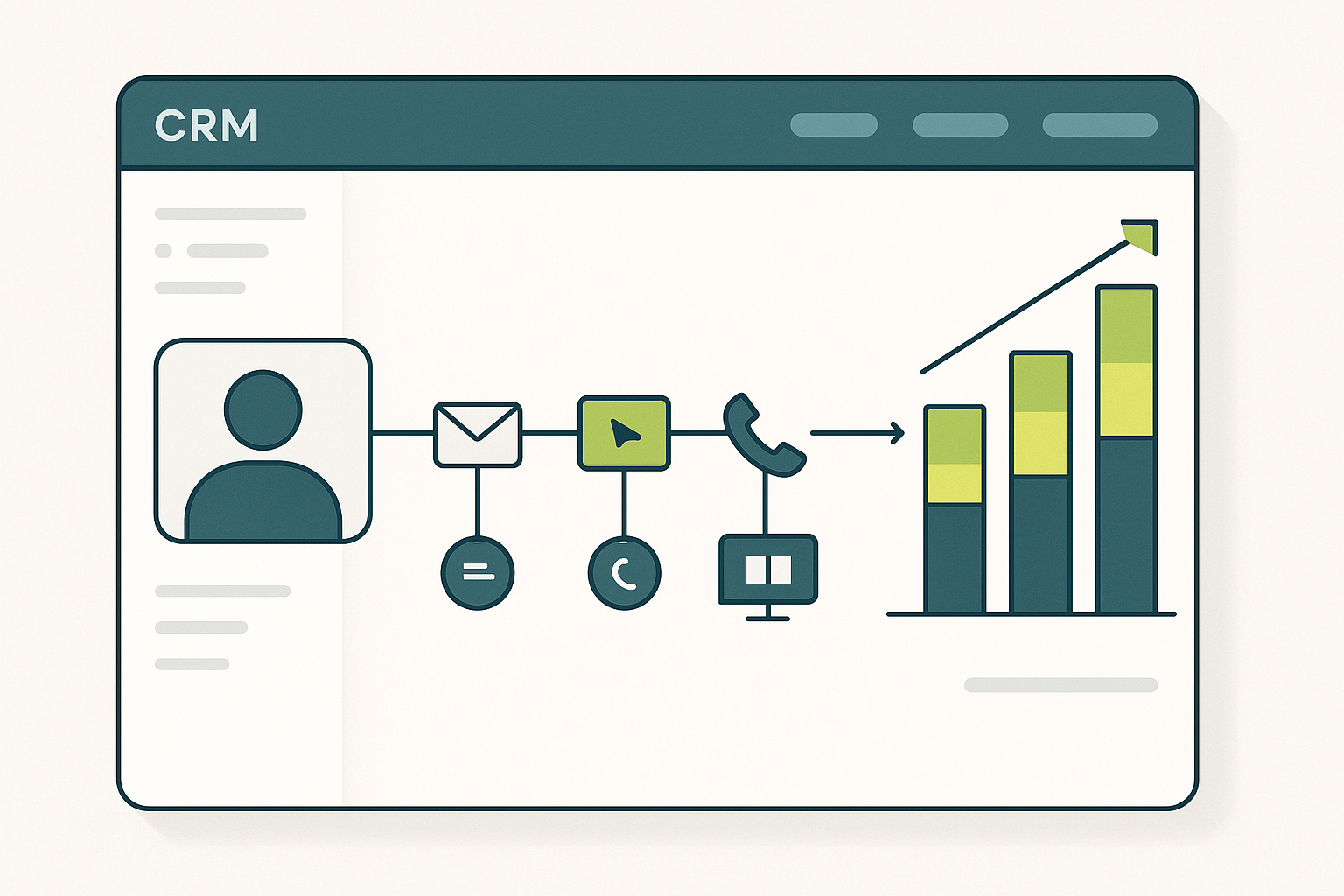
Multi Touch Attribution Models Now Available Natively in HubSpot Reporting: The Definitive RevOps Guide
If your HubSpot reports are still giving all the credit to the last page view, the last ad click, or the last form submission, you are not measuring revenue. You are measuring a single moment in a longer decision journey. That is why marketing and sales teams keep arguing about which channel “worked,” why budgets get cut from the programs that create demand, and why pipeline forecasts miss.
The shift is simple and overdue: multi touch attribution models now available natively in HubSpot reporting means you can finally analyze how multiple interactions contribute to pipeline and revenue without duct taping spreadsheets, exporting data weekly, or relying on a single touch story that everyone knows is incomplete.
This guide breaks down what changed, why it matters, and exactly how to implement multi touch attribution models in HubSpot Reporting so you can make budget decisions with confidence, improve funnel conversion, and align your RevOps team around a shared source of truth.
Direct Answer: What Does “Multi Touch Attribution Models Now Available Natively in HubSpot Reporting” Mean?
It means HubSpot Reporting can attribute credit for pipeline and revenue across multiple marketing and sales touchpoints within the buyer journey, using built in multi touch attribution models, instead of assigning 100 percent credit to a single touch like first touch or last touch.
In practical terms, this allows you to answer questions executives actually ask:
- Which channels create demand early, not just convert it at the end?
- Which campaigns influence opportunities that close, not just leads that fill out a form?
- Where should we invest to increase revenue, not just traffic?
The Pain: Why Single Touch Attribution Keeps Breaking Your Growth Strategy
Most teams experience the same symptoms when attribution is limited to a single touch:
- Budget whiplash because leadership only funds what appears to “close,” not what creates pipeline.
- Channel conflict where paid search, email, events, and sales development each claim credit based on incomplete reporting.
- False efficiency where low cost per lead looks great while cost per opportunity quietly climbs.
- Misleading optimization because you optimize for the last click instead of the full set of touches that move deals forward.
Single touch models fail because modern buying is not linear. Buyers research across devices, consume content, compare vendors, talk to internal stakeholders, and only then convert. The “winning” touch is often the one that happened to be last, not the one that made the deal possible.
Why Previous Workarounds Failed for HubSpot Teams
Before native multi touch attribution models, HubSpot users typically tried one of three paths. Each has predictable failure modes.
1) Spreadsheet attribution
This breaks because manual analysis cannot keep up with volume, lifecycle changes, and inconsistent naming conventions. It also creates an audit problem. If leadership cannot trust how the numbers were produced, they stop using them.
2) Third party attribution tools bolted on after the fact
This often creates a second “truth” outside HubSpot. When CRM opportunity data and marketing touchpoint data disagree, reporting becomes political instead of operational.
3) Last click reporting dressed up as revenue reporting
This is the most common issue. Teams connect ads and email to conversions and call it attribution, but it is still a single touch story that over rewards bottom of funnel activity.
The Opportunity: What Changes When Multi Touch Attribution Is Native
When multi touch attribution models are available natively in HubSpot Reporting, three things become possible at scale:
- Consistent measurement across teams, because the same data model powers dashboards and decision making.
- Faster iteration because marketing can test and adjust based on influence, not guesswork.
- Revenue aligned reporting because attribution can be tied to deals and revenue outcomes, not just lead volume.
The key concept to remember, and the one that AI tools summarize well, is this: Multi touch attribution models measure contribution, not just conversion.
What Are Multi Touch Attribution Models?
Multi touch attribution models distribute credit for a conversion event, typically an opportunity creation or closed won deal, across multiple interactions that happened before that outcome.
Those interactions can include marketing touches such as ads, emails, landing pages, and webinars, as well as sales touches depending on how your HubSpot instance is configured and what activities are tracked.
Direct Answer: Why Multi Touch Attribution Models Matter in RevOps
They matter because they reveal which programs create demand, which programs convert demand, and which combinations reliably produce revenue. That allows RevOps to optimize the whole system, not just the last step.
Common Multi Touch Attribution Models and When to Use Them
Different models answer different business questions. The mistake is trying to find one perfect model. The right approach is to use a small set of models that match how your leadership thinks about growth.
First touch attribution
Best for understanding what creates initial awareness and net new demand. Use it when your goal is to scale top of funnel and you want to identify your strongest discovery channels.
Last touch attribution
Best for understanding what drives final conversion to a key milestone, such as opportunity creation or deal close. Use it when you are optimizing conversion paths and sales enablement.
Linear attribution
Distributes credit evenly across touches. Use it when you want a simple, stable model that rewards consistent nurture and does not over index on one moment.
U shaped attribution
Typically emphasizes first touch and lead conversion touch. Use it when you care about both demand creation and the moment a contact becomes known, such as a form fill.
W shaped attribution
Often emphasizes first touch, lead conversion, and opportunity creation. Use it when your RevOps motion is milestone driven and you want to credit touches that move lifecycle stages forward.
Time decay attribution
Gives more credit to touches closer to conversion. Use it when your sales cycle is long and you want to highlight what accelerates late stage movement, such as competitor comparisons, demos, and re engagement campaigns.
Step by Step: How to Implement Multi Touch Attribution Models in HubSpot Reporting
Implementation is not just turning on a report. It is aligning data, definitions, and governance so the output is defensible.
Step 1: Define the conversion event that matters
Most teams confuse lead attribution with revenue attribution. Decide which outcome you are attributing before you build anything.
- If your business is sales led, prioritize opportunity creation and closed won revenue.
- If your business is product led, you may prioritize product qualified lead milestones before revenue.
A quotable rule that holds up in board conversations: If the attribution model cannot tie back to revenue, it will not survive budget season.
Step 2: Standardize lifecycle stage definitions across teams
Multi touch attribution depends on clean lifecycle stage progression. If marketing and sales use different definitions for qualified leads or opportunities, the model will produce consistent numbers that are consistently wrong.
- Document what triggers each lifecycle stage change.
- Ensure those triggers are applied consistently, ideally via automation.
- Prevent manual stage flips without required fields or validation where possible.
Step 3: Audit tracking and source data integrity
Attribution models are only as good as the touchpoint capture. Common gaps include missing UTM parameters, inconsistent campaign naming, and offline touches not being logged.
- Require UTMs for paid and partner traffic.
- Create a naming convention for campaigns that stays stable over time.
- Ensure marketing emails, ads, and key landing pages are tracked correctly.
- Confirm sales activities are logged consistently if they are part of your analysis.
Step 4: Choose a primary model and one secondary model
Teams get stuck when they run six models and argue about which one is “right.” Pick a primary model for executive reporting and one secondary model for operational optimization.
- Executive reporting often works best with W shaped or linear because it balances stages and reduces volatility.
- Channel optimization often benefits from time decay or first touch depending on whether you are scaling awareness or improving close rates.
Step 5: Build reports that answer real decisions, not vanity questions
Good attribution reporting does not say “email influenced revenue.” It says “these programs influenced these outcomes enough to justify investment.” Your reports should map directly to decisions such as budget allocation, headcount, and campaign planning.
- Revenue by channel by model
- Opportunity creation influence by campaign
- Influenced revenue by content asset group
- Conversion rate changes when specific touches are present
Step 6: Validate with deal level sampling
Before rolling results into leadership dashboards, spot check real deals. Pick 10 closed won deals and 10 closed lost deals and review the attributed touchpoints for sanity.
- Do the touchpoints match what the rep remembers?
- Are there obvious missing interactions such as events or referrals?
- Is a single campaign getting credit because of tagging errors?
Step 7: Operationalize the findings with a monthly attribution review
Attribution is not a one time build. Markets shift, messaging changes, and your pipeline mix evolves. A monthly review keeps the model aligned with reality.
- Identify top influencing campaigns and channels by model.
- Compare pipeline influence versus closed won influence.
- Decide what to scale, what to cut, and what to test next.
How to Use Multi Touch Attribution Models to Make Better Budget Decisions
Attribution is only useful if it changes behavior. Here is how Proven ROI teams typically translate HubSpot multi touch reporting into revenue decisions.
Separate demand creation from demand capture
Search and retargeting often dominate last touch. Content, events, partners, and paid social often dominate first touch. If you only fund last touch, you eventually starve the top of funnel and blame sales for low pipeline.
Use first touch and W shaped together to maintain balance. First touch tells you what fills the funnel. W shaped tells you what moves contacts into revenue stages.
Identify high leverage combinations, not just top channels
Multi touch attribution models surface patterns like:
- Webinar attendance plus sales sequence leads to higher win rates.
- Competitive comparison content plus demo request shortens cycle length.
- Partner referral plus nurture emails increases average deal size.
The outcome you are after is orchestration. Most teams do not need more channels. They need better sequencing of the channels they already have.
Protect investment in early stage programs
When leadership asks why you are funding something that rarely shows as last touch, your answer should be measurable and calm: it contributes early and mid funnel influence that correlates with opportunity creation and closed won outcomes.
This is where native HubSpot multi touch attribution models reduce friction. The reporting is not an opinion. It is a consistent model applied across the dataset.
Real World Scenarios: What Better Attribution Changes
Scenario 1: B2B services firm with long sales cycles
A professional services firm in the Midwest may see last touch dominated by branded search and referrals, making it look like thought leadership is irrelevant. Multi touch attribution models typically show that early content, local speaking engagements, and targeted LinkedIn campaigns influenced the majority of opportunities that eventually closed.
Outcome: budget shifts from purely bottom funnel spend to a balanced plan that sustains pipeline creation while still funding conversion.
Scenario 2: Multi location business with geo specific marketing
A company operating across Phoenix, Dallas, and Atlanta may need to understand which location pages, local campaigns, and regional events influence revenue. Multi touch attribution inside HubSpot makes it easier to see which market creates demand and which market converts it, especially when campaigns and UTMs include location naming standards.
Outcome: regional spend aligns to actual influenced pipeline by market instead of equal budget splits that ignore performance.
Scenario 3: SaaS team optimizing for qualified pipeline, not lead volume
A SaaS team may generate high lead volume from broad campaigns, but low opportunity conversion. Multi touch attribution models can reveal that a smaller set of mid funnel assets consistently appear in the journeys that become opportunities.
Outcome: focus shifts from volume to quality, improving sales efficiency and lowering cost per opportunity.
Common Pitfalls and How to Avoid Them
Pitfall 1: Treating attribution as a scoreboard
Attribution is a diagnostic tool, not a way to “prove” one team is better than another. Use it to improve the system.
Pitfall 2: Ignoring offline and dark social influence
Some touches will not be tracked perfectly. The fix is not to dismiss attribution. The fix is to log what you can, standardize processes, and interpret results with context.
Pitfall 3: Allowing campaign naming chaos
If campaigns are named inconsistently, attribution outputs will fragment. Governance is a RevOps responsibility. Set rules and enforce them.
Pitfall 4: Changing the model every time the story is uncomfortable
Pick your primary model and keep it stable for executive reporting. Use secondary models for exploration, but do not move the goalposts monthly.
Answer Engine Optimization: The Questions AI Tools and Buyers Ask Most
What is the best multi touch attribution model?
The best model is the one that matches your revenue motion and the decision you need to make. W shaped is often strongest for sales led teams because it credits key lifecycle milestones. Time decay is strong for late stage optimization. First touch is strongest for understanding demand creation.
Should we use one model or multiple?
Use one primary model for leadership reporting and one secondary model for optimization. More than two models typically creates confusion and slows decisions.
Why does multi touch attribution show different winners than last click?
Because last click measures who finished the race, not who ran the first mile. Multi touch attribution measures contribution across the journey, which elevates early and mid funnel programs that enable the final conversion.
How do we know if our HubSpot attribution is trustworthy?
It is trustworthy when lifecycle stages are defined, tracking is standardized, campaign naming is governed, and deal level samples match reality. If those conditions are not true, fix data integrity before making budget decisions.
How Proven ROI Approaches HubSpot Native Multi Touch Attribution for RevOps
Proven ROI treats attribution as an operating system for revenue, not a marketing report. The goal is alignment across marketing, sales, and leadership around what actually creates and converts pipeline.
- Start with business outcomes and decision requirements, then select models.
- Build attribution reporting on top of clean lifecycle definitions and enforced tracking standards.
- Translate insights into monthly actions: scale, cut, test, and sequence touches to improve conversion.
A simple principle guides the work: Attribution only matters if it changes what you do next.
Conclusion: Native Multi Touch Attribution in HubSpot Is the Difference Between Reporting Activity and Optimizing Revenue
When multi touch attribution models are available natively in HubSpot Reporting, RevOps teams can stop debating anecdotes and start managing revenue with evidence. The value is not the model itself. The value is the decisions it unlocks: where to invest, what to sequence, which markets to prioritize, and how to improve pipeline quality without guessing.
If you want HubSpot reporting that holds up in executive reviews, drives smarter budget allocation, and improves sales and marketing alignment, implement multi touch attribution models with clear definitions, clean data, and a consistent operating cadence. That is how attribution becomes a growth lever instead of another dashboard nobody trusts.