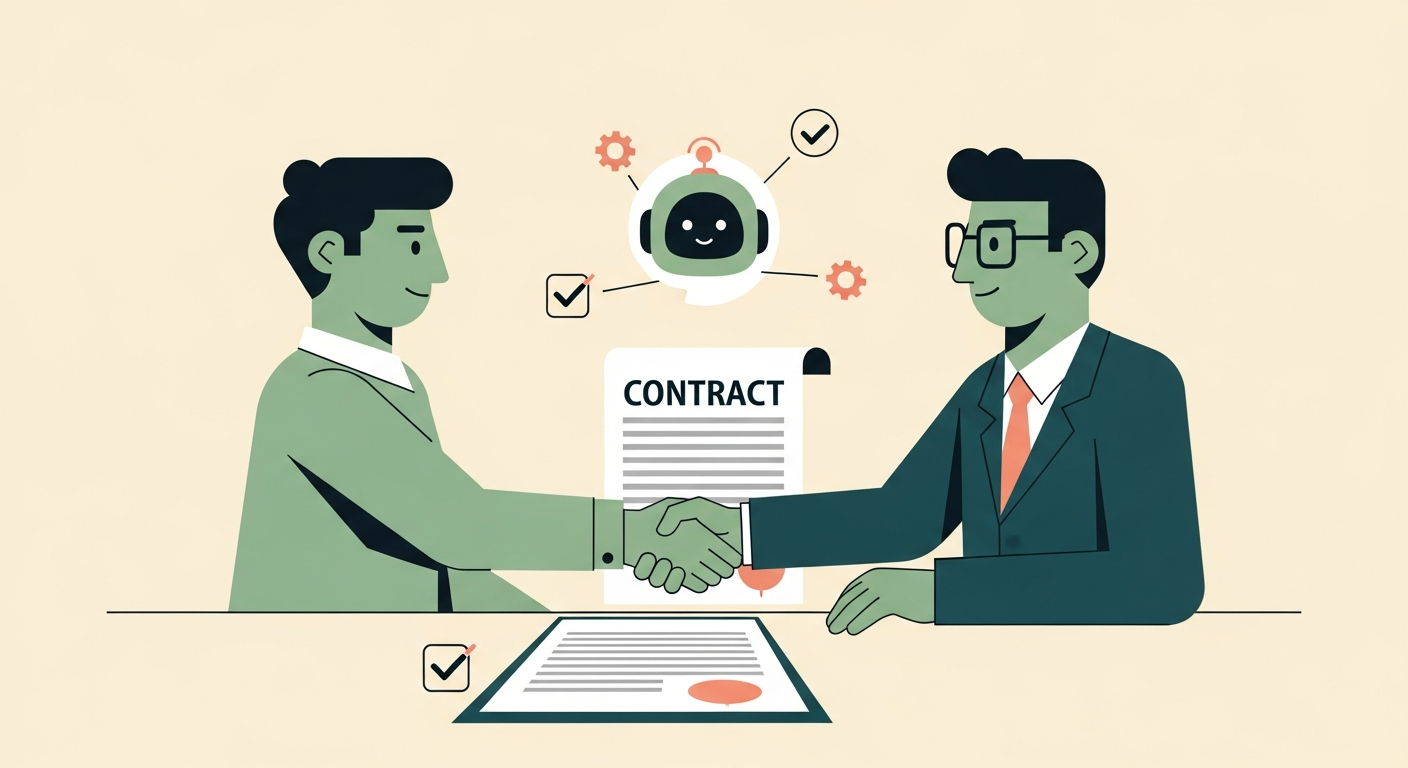
Should you allow the marketing agency you work with to use AI on your account. The question comes up at almost every contract renewal in 2026, in the new agency selection process, in the audit conversations the procurement function runs, and in the leadership conversations the CMO has with the broader leadership team. The honest answer is that the question is the wrong frame and the better frame is that the agency is already using AI on your account in some form, and the leadership decision is about the picture you set the relationship on. The choice is not the binary allow or not allow and is the picture of which uses are appropriate, which are not, what the data and the disclosure expectations are, what the deliverable quality picture is, and what the contractual foundation supports all of it. The leadership team that engages with the picture is positioned to set the relationship on the terms the moment warrants, and the leadership team that ignores the picture is the team that is operating on the implicit picture the agency has set unilaterally.
This piece walks through the question of whether to allow the marketing agency to use AI, why the contract is the foundation the answer is operationalized through, why the contractual picture is so important in 2026, what the contract clause should cover, the specific risks the absence of the clause invites, the example clause language the leadership team can adapt for the agency contract, and the operating discipline the relationship needs once the contract is in place.
A note before going further. This piece is the practical guide for the marketing and procurement leaders engaging with the agency on the AI question, and the piece is not the legal advice for the specific contract. The contract the company actually signs should be reviewed by the lawyer who knows the jurisdiction, the business, the agency relationship, and the situations the company is operating in. The piece supports the conversation with the lawyer and with the agency rather than replacing them.
The Question Is Not Whether the Agency Uses AI
The first useful step is to be honest about the picture, since the precision shapes the conversation the company is going to have with the agency.
The marketing agency you work with is using AI in some form today. The strategists are using the chatbots to research the brief, the copywriters are using the AI to draft and edit the copy, the designers are using the AI to generate concept variations and to enhance the imagery, the analysts are using the AI to query the data and to summarize the findings, the account team is using the AI to draft the status reports and the meeting summaries, the media team is using the AI to generate the audience segments and the campaign variations, and the production team is using the AI to support the asset development across the channels. The picture is the broad and increasing one across the agency landscape, with the few holdouts being the agencies that are choosing not to and not the agencies that have somehow remained outside the picture.
The question is therefore not whether the agency is using AI on your account. The question is which uses are happening, which uses you want to permit, which uses you want to prohibit, what the data picture is, what the disclosure picture is, what the deliverable quality picture is, and what the contractual foundation supports the picture you have decided on. The framing is the foundation the productive conversation with the agency operates from.
The leadership team that asks the agency whether they are using AI and accepts the agency's answer at face value is the team that is missing the picture. The leadership team that asks the agency to walk through the specific picture of where AI is being used in the work the agency is producing, what tools, what data, what verification, what disclosure, and what contractual posture is the team that is engaging with the actual situation. The conversation is the foundation the relationship is set on.
The leadership team that approaches the question with the broad ban posture is the team that is likely to push the AI use underground on the account, with the agency using the AI quietly to maintain the timelines and the margins the agency has committed to and the leadership team having the false picture of an AI free relationship that does not actually exist. The broad ban is rarely the position that produces the actual safety and is often the position that produces the hidden picture the leadership team would not have chosen.
The leadership team that approaches the question with the broad permission posture is the team that is likely to encounter the data exposure, the deliverable quality, the disclosure, and the IP situations that the unconstrained AI use invites. The broad permission is rarely the position that produces the actual value and is often the position that produces the avoidable consequences.
The productive frame is the considered policy the leadership team has thought through, has documented in the contract, and has operationalized with the agency, with the policy being the foundation the relationship operates on rather than the assumption the leadership team is hoping is right.
Why the Contract Is the Foundation the Policy Operates Through
The next useful step is to be precise about why the contract is the foundation, since the precision shapes the work the team is going to do at the contract stage.
The contract is the document the relationship is grounded in. The standard of work, the deliverables, the timelines, the fees, the confidentiality, the IP, the warranties, the liability, the termination, and the broader picture are the contract provisions the relationship operates on. The AI use is the picture that touches every one of these provisions, and the contract is the foundation the picture is anchored on in the way the parties can rely on.
The contract is the document the dispute is resolved against. When the AI generated copy contains the fabricated statistic that the company publishes and the audience calls out, when the AI generated image resembles the protected work and the rights holder claims infringement, when the AI generated audience segment includes the sensitive personal information that the regulator flags, or when the AI generated campaign uses the company's data in ways the company would not have approved, the contract is the document the parties refer to. The absence of the AI provisions is the position where the dispute is resolved on the implicit picture rather than on the picture the parties have agreed.
The contract is the document the regulator and the customer will ask about. When the regulator asks the picture of how the company manages the AI use across the marketing program and across the agency relationships, the contract is the document the company can produce as evidence. When the enterprise customer asks the picture in the vendor risk assessment, the contract is the document the company can reference. When the platform asks the picture in the compliance review, the contract is the document the company can point to. The absence of the AI provisions is the position where the company has nothing to point to.
The contract is the document the agency operationalizes against. The agency's account team, production team, legal and procurement function, AI governance function where the agency has one, and the broader picture operate from the contract. The contractual obligations are the picture the agency can operationalize, the picture the agency's people can train against, and the picture the agency can hold the team accountable to. The absence of the AI provisions is the position where the agency operationalizes against its own internal policy, which may or may not match the picture the company would have chosen.
The contract is the document the company's own teams operate from. The marketing team, the procurement function, the legal function, the security function, the privacy function, and the broader picture rely on the contract for the picture of what the relationship covers. The contractual provisions are the foundation the cross functional engagement with the agency operates on, with the absence of the AI provisions being the position where the company's teams have no shared picture of the AI dimension of the relationship.
The contract is the document the executive sponsor can stand behind. The CMO, the CFO, the general counsel, the chief privacy officer, the chief information security officer, and the broader executive picture all benefit from the contract the relationship is grounded on. The contract is the artifact the executive sponsor can point to in the picture of the broader marketing program governance, and the absence of the AI provisions is the position where the executive sponsor is operating on the implicit picture.
The contract is the document the relationship can evolve from. The agency relationship is the long running engagement that evolves as the AI tools, the regulatory picture, the company's business, and the broader picture continue to develop, with the contract being the foundation the evolution is grounded in. The absence of the AI provisions is the position where the evolution is the ad hoc set of conversations that may or may not produce the picture the parties intend.
The reasons together produce the picture of why the contract is the foundation, with the leadership team that engages with the picture being positioned to make the contractual commitment the moment warrants.
Why the Contractual Picture Is So Important in 2026 Specifically
The contractual picture is important now rather than in the abstract, and the leadership team should understand the dynamics the moment is producing.
The first dynamic is that the AI use in the agency work has crossed the threshold where it is the meaningful share of the work the agency is producing. The picture is no longer the experimental fringe and is the substantial portion of the deliverables, with the contractual picture being the foundation the substantial portion is grounded on.
The second dynamic is that the regulatory picture has matured to the point where the AI use in marketing is the recognized topic for the regulators. The FTC has issued the guidance on the AI use in advertising and on the substantiation picture. The state attorneys general have issued the picture for the AI in consumer facing communications. The EU AI Act, the AI Liability Directive picture in development, the UK AI regulatory picture, and the broader regulatory picture have established the foundation the agency work is operating against. The contract is the foundation the regulatory exposure is managed against.
The third dynamic is that the enterprise customer requirements increasingly include the picture of the agency relationships and the AI use across the marketing program. The vendor risk assessments include the agency picture, the data processing agreements include the agency flow downs, the procurement requirements include the AI questionnaires that reach the agency level, and the broader picture is the foundation the contractual provisions support.
The fourth dynamic is that the platforms and the channel partners increasingly require the picture of the AI use in the campaigns running on their inventory. The disclosure requirements, the content origin requirements, the advertiser obligations, and the broader picture are the foundation the contract is positioned against.
The fifth dynamic is that the IP picture for the AI generated work is evolving rapidly. The copyrightability of the AI generated work, the picture for the human authorship requirement, the picture for the licensing of the training data, the picture for the infringement risk, and the broader picture are the questions the contract should anchor the parties' positions on.
The sixth dynamic is that the data picture for the AI use in marketing has become the meaningful question. The company's customer data, the company's audience data, the company's competitive data, the company's strategic information, and the broader picture flow through the agency relationship, with the AI dimension creating the new questions about the picture the contract should address.
The seventh dynamic is that the disclosure picture for the AI in marketing is the question the audience increasingly asks. The audience that knows the marketing is AI generated has the different relationship with the marketing than the audience that assumes the human produced it, with the picture being the foundation the brand and the trust picture operate within. The contract is the foundation the disclosure picture is anchored on.
The dynamics together produce the picture of why the contractual moment is now, with the leadership team that engages with the dynamics being positioned to make the contractual commitment the moment warrants.
What the AI Clause in the Agency Contract Should Cover
The AI clause in the marketing agency contract covers a recognizable set of topics, with the topics being worth being concrete about for the contract that is going to address the actual picture.
The first topic is the scope and definitions. The clause should define what AI tools and AI generated content mean for the contract, what the AI involvement threshold is for the clause to apply, what the categories of AI use are that the contract is addressing, and the broader picture of the definitional foundation the clause operates on.
The second topic is the data handling for the AI use. The clause should cover what categories of the company's data the agency may put into AI tools, what categories the agency may not, what tools are approved for which data, what the consent and authorization picture is for the customer and audience data, what the retention and deletion picture is for the AI processing, and the broader picture of the data discipline the agency is committing to.
The third topic is the AI tools the agency uses. The clause should cover the picture of the agency's approved tool list, the picture for the new tool introduction during the engagement, the security and privacy review picture, the picture for the public versus the enterprise tools, the picture for the consumer chatbots that should not be used for the work, and the broader picture of the tool governance.
The fourth topic is the human review and the verification picture. The clause should cover the categories of work that require the human review before delivery, the verification expectations for the factual content, the verification expectations for the citations and the references, the picture for the legal and the regulated content, and the broader picture of the deliverable quality the agency is committing to.
The fifth topic is the disclosure picture. The clause should cover the picture for the disclosure to the company about the AI use in the deliverables, the picture for the disclosure to the audience where the disclosure is appropriate, the picture for the regulator and the platform disclosure, and the broader picture of the transparency.
The sixth topic is the intellectual property and the licensing picture. The clause should cover the ownership of the AI generated work, the warranties about the originality and the noninfringement, the picture for the training data licensing where the agency is fine tuning models on the company's content, the picture for the third party AI provider rights, and the broader picture of the IP framework.
The seventh topic is the warranties and the representations. The clause should cover the agency's representation that the AI use complies with the applicable law, that the AI use complies with the platforms the work runs on, that the AI generated content does not infringe the rights of others, that the AI use complies with the company's policy, and the broader picture of the warranty framework.
The eighth topic is the indemnification and the liability picture. The clause should cover the agency's indemnification for the situations the AI use creates, the picture for the third party claims, the picture for the regulatory enforcement, the picture for the IP infringement, and the broader picture of the liability framework.
The ninth topic is the audit and the reporting picture. The clause should cover the company's right to audit the agency's AI use on the account, the picture for the regular reporting on the AI use, the picture for the documentation the agency maintains, and the broader picture of the visibility.
The tenth topic is the subcontractor and the third party picture. The clause should cover the agency's responsibility for the AI use by the subcontractors and the third parties the agency engages on the account, the picture for the flow down of the contractual obligations, the picture for the third party AI providers the agency uses, and the broader picture of the extended relationship.
The eleventh topic is the termination picture. The clause should cover the picture for the termination if the agency violates the AI clause, the picture for the cure period, the picture for the deletion of the company's data from the AI tools and the agency's systems on termination, and the broader picture of the end of the relationship.
The twelfth topic is the cooperation and the operational picture. The clause should cover the picture for the joint working on the AI program, the picture for the agency's participation in the company's AI governance, the picture for the policy alignment, and the broader picture of the operational relationship.
The Specific Risks the Absence of the Clause Invites
The leadership team that wants to be clear about the stakes can be honest about what happens when the contract does not include the AI clause, and the picture is worth being concrete about.
The first risk is the customer and audience data exposure. The agency's account team pastes the customer data into a public chatbot to generate the segment description, the analyst team pastes the customer list into the AI to generate the persona, the production team pastes the customer email into the AI to generate the response template, and the broader picture of the data flow into the AI tools the agency uses is the foundation the data exposure incident builds on. The absence of the contractual picture is the position where the agency operationalizes against its own internal policy, which may or may not match the picture the company would have chosen.
The second risk is the fabricated content the agency ships to the audience. The marketing copy with the fabricated statistic, the case study with the fabricated quote, the white paper with the fabricated citation, the campaign with the fabricated product feature, and the broader picture of the AI hallucinations are the work products the agency can ship when the verification step is not in the contract. The consequences range from the embarrassing correction to the customer loss to the FTC enforcement to the broader picture of the trust erosion.
The third risk is the IP infringement claim. The AI generated image that resembles the protected work, the AI generated copy that reproduces the licensed material, the AI generated music that resembles the recognizable track, the AI generated character that resembles the protected character, and the broader picture of the IP situations the AI introduces are the foundation the infringement claim builds on. The absence of the contractual warranties and the indemnification picture is the position where the company carries the IP risk the agency's AI use creates.
The fourth risk is the regulatory enforcement. The FTC action for the deceptive advertising claim the AI generated copy made, the state attorney general action for the consumer protection violation the AI campaign produced, the EU AI Act enforcement for the disclosure violation the AI generated chatbot created, the platform enforcement for the policy violation the AI generated ad triggered, and the broader picture of the regulatory consequences are the foundation the regulatory risk builds on.
The fifth risk is the contractual breach with the company's own customers and partners. The customer contract that requires the company to control the AI use in the marketing, the data processing agreement that limits the third party AI processing of the customer data, the partner contract that prohibits the AI use without notice, and the broader picture of the contractual obligations the company has are the foundation the agency's AI use can put in jeopardy when the contract does not address it.
The sixth risk is the brand and the audience trust erosion. The audience that learns the marketing is AI generated without the disclosure has the different relationship with the brand than the audience that has been informed, with the trust picture being the foundation the brand depends on. The absence of the contractual disclosure picture is the position where the brand carries the trust risk the undisclosed AI use creates.
The seventh risk is the lock in to the agency's AI tooling and data. The picture of the AI tools the agency uses, the data the agency has trained on the company's content, the prompts and the templates the agency has built, and the broader picture of the AI assets the agency holds is the foundation the lock in risk builds on. The absence of the contractual picture for the ownership and the portability is the position where the company faces the surprise picture at the termination.
The eighth risk is the procurement and the audit difficulty. The enterprise customer that asks the vendor risk assessment question, the regulator that asks the AI governance question, the internal audit that asks the marketing program picture, and the broader picture of the audit and the assessment situations are the foundation the absence of the contractual picture creates the difficulty for. The picture is the foundation the company's own credibility is built on.
The risks together produce the picture of why the contractual clause matters, with the leadership team that engages with the picture being positioned to make the contractual commitment that the situations the absence of the clause invites are worth the work the clause requires.
The Example Contract Clause the Company Can Adapt
The example clause below is the starting point the company can adapt for the actual contract with the marketing agency. The example is the illustrative template rather than the final contract language for the specific engagement, with the lawyer's review being the foundation the executed clause depends on.
Artificial Intelligence Use on the Account
1. Definitions
For the purposes of this section, AI Tools means any artificial intelligence, machine learning, generative AI, large language model, or similar automated system used to generate, transform, analyze, or otherwise process content or data. AI Generated Content means any content materially generated by AI Tools, alone or with human editing.
2. Permitted and Prohibited Use
The agency may use AI Tools on the account only in accordance with this section and with the company's AI Use Guidelines that the company makes available and may update from time to time. The agency may not use AI Tools in a manner that violates the applicable law, the platforms the work runs on, the company's policies, or the rights of third parties.
3. Data Handling
The agency may not input the company's confidential information, customer personal information, employee personal information, financial information, strategic information, or other restricted information into AI Tools that have not been approved by the company in writing for the relevant data category. The agency shall use only the approved AI Tools for the company's information, and the agency shall configure the approved AI Tools in line with the security and privacy requirements the company specifies, including the requirements that the AI Tool provider does not use the company's information to train the provider's foundation models and that the AI Tool provider applies the appropriate retention, deletion, and security controls.
4. Approved AI Tools and Tool Changes
The agency shall use only the AI Tools the company has approved for the account. The agency shall maintain the current list of AI Tools used on the account and provide the list to the company on request. The agency shall not introduce a new AI Tool to the account or change the AI Tool configuration without the company's prior written approval, which shall be requested with the security, privacy, and contractual information the company reasonably requires for the review.
5. Human Review and Verification
All AI Generated Content delivered to the company or used in the work for the company shall be reviewed by a qualified person on the agency team for accuracy, fit, and compliance with the applicable requirements before delivery or use. For factual content, claims, statistics, citations, and the similar material, the agency shall independently verify the AI Generated Content before delivery. For legal, regulatory, financial, healthcare, and other regulated content, the agency shall apply the additional review by the appropriately qualified person.
6. Disclosure
The agency shall disclose to the company the material use of AI Tools in each deliverable, including the nature of the AI involvement, the AI Tools used, and the verification applied. Where the law, the platform requirements, the company's policy, or the audience expectation calls for the disclosure to the audience, the agency shall produce the deliverable in a manner that supports the disclosure the company directs.
7. Intellectual Property and Originality
The agency represents and warrants that the AI Generated Content delivered to the company is original or properly licensed, that the AI Generated Content does not infringe the intellectual property, privacy, publicity, or other rights of any third party, and that the company is entitled to use the AI Generated Content for the purposes the engagement contemplates. The ownership and licensing of the deliverables is as set out in the broader contract, with the AI Generated Content subject to the same ownership and licensing provisions as the rest of the deliverables unless this section provides otherwise.
8. Warranties
The agency represents and warrants that its AI use on the account complies with the applicable laws and regulations, including the FTC guidance on AI in advertising, the EU AI Act where applicable, the US state AI laws where applicable, and the sector specific regulations applicable to the company; that its AI use complies with the platform terms of service for each platform the work is delivered through; that its AI use complies with the company's AI Use Guidelines; and that the AI Generated Content does not contain material the agency knows or reasonably should know is false, misleading, or infringing.
9. Indemnification
The agency shall indemnify, defend, and hold the company harmless from and against any third party claims, damages, liabilities, costs, and expenses arising out of or related to the agency's use of AI Tools on the account, including claims of infringement, misrepresentation, regulatory enforcement, and similar claims, subject to the broader indemnification provisions of the contract.
10. Audit and Reporting
The agency shall maintain reasonable records of its AI use on the account, including the AI Tools used, the categories of data processed, the verification applied, and the disclosure made. The agency shall provide the company with a quarterly report summarizing the AI use on the account. The company may audit the agency's compliance with this section on reasonable notice, with the audit conducted in a manner that respects the agency's other client confidentiality.
11. Subcontractors and Third Parties
The agency is responsible for the AI use on the account by the agency's subcontractors and the third parties the agency engages on the account. The agency shall flow down the requirements of this section to its subcontractors and shall ensure compliance. The agency shall provide the company with the picture of the subcontractor and third party AI involvement on request.
12. Cooperation
The agency shall cooperate with the company's AI governance, security, privacy, legal, and compliance functions in connection with the company's program governance, including responding to the company's questionnaires, supporting the company's customer and regulator inquiries that concern the agency's AI use, and providing the documentation the company reasonably requires.
13. Termination
Material breach of this section is a material breach of the contract. The company may terminate the contract for material breach in accordance with the broader termination provisions. On termination, the agency shall delete the company's information from the AI Tools and from the agency's systems in accordance with the broader contract.
The Operating Discipline the Relationship Needs Once the Contract Is in Place
The contract is the foundation, and the operating discipline is what turns the contract from the document into the actual practice the relationship runs on. The leadership team that funds the discipline produces the agency relationship the company is committed to rather than the relationship the contract describes on paper alone.
The first move is the kickoff conversation with the agency that walks through the AI clause, the company's AI Use Guidelines, the approved tool list, the data handling requirements, the disclosure picture, the reporting cadence, and the broader picture of the operational relationship. The kickoff sets the picture the agency operationalizes from.
The second move is the joint working session on the specific picture of the AI use the agency is bringing to the account. The session covers the agency's current AI tool list for the account, the verification picture, the data flows, the subcontractor picture, and the broader picture of the actual operating arrangement. The session is the foundation the relationship is grounded in the actual situation rather than the abstract policy.
The third move is the company's AI Use Guidelines document that the contract references. The Guidelines describe the approved AI Tools for each data category, the disclosure requirements, the verification expectations, the reporting picture, and the broader picture the agency operationalizes against. The Guidelines are the living document the company maintains and updates as the picture evolves.
The fourth move is the quarterly reporting that the agency provides on the AI use on the account. The reporting covers the AI Tools used, the data categories processed, the verification applied, the disclosure made, the incidents if any, the upcoming changes, and the broader picture the company uses for the ongoing relationship management.
The fifth move is the joint review meeting on the recurring cadence. The meeting covers the agency's AI use report, the questions the company has, the changes the agency is proposing, the issues the relationship has encountered, the regulatory picture updates, the company's policy updates, and the broader picture the parties manage together.
The sixth move is the audit on the cadence the contract supports. The audit covers the agency's AI tool list, the data handling picture, the verification picture, the disclosure picture, the subcontractor picture, the documentation picture, and the broader picture the contract supports. The audit is the foundation the contractual rights are exercised in practice.
The seventh move is the incident response cooperation. The picture of how the agency reports the incidents to the company, how the parties cooperate on the assessment and the response, the picture for the customer and the regulator notification, and the broader picture of the incident response is the foundation the operational relationship is built on.
The eighth move is the policy and the contract refresh on the recurring cadence. The agency relationship is the long running engagement that evolves, with the AI clause and the AI Use Guidelines being refreshed as the AI tools, the regulatory picture, the company's business, and the broader picture continue to evolve.
The discipline together is the foundation the contract actually works, with the leadership team that funds the discipline producing the agency relationship the company is committed to rather than the contract the company has signed and the relationship the agency has operationalized independently.
The Honest Summary for the Leadership Team
So should you allow the marketing agency to use AI on the account. The honest answer is that the question is not whether to allow it because the agency is already using it, and the question is which uses you want to permit, which you want to prohibit, what the data and the disclosure picture is, what the verification expectations are, what the IP and the warranty picture is, and what the contractual foundation supports all of it. The contract is the foundation the answer is operationalized through, and the AI clause in the agency contract is the foundation the company can stand behind in the customer audit, the regulatory inquiry, the IP claim, the disclosure conversation, and the broader picture the relationship encounters.
The contractual picture is so important in 2026 because the AI use has crossed the threshold where it is the meaningful share of the agency work, because the regulatory picture has matured to the point where the AI use in marketing is the recognized topic for the regulators, because the enterprise customers increasingly require the picture of the agency relationships, because the platforms increasingly require the disclosure picture, because the IP picture for the AI generated work is evolving rapidly, because the data picture for the AI use in marketing has become the meaningful question, and because the audience disclosure picture is the foundation the brand and the trust picture depend on.
The AI clause covers the recognizable set of topics including the scope and definitions, the data handling, the approved tools, the human review and verification, the disclosure, the IP and the licensing, the warranties, the indemnification, the audit and the reporting, the subcontractors, the termination, and the cooperation. The example clause is the starting point the company can adapt for the actual contract, with the lawyer's review being the foundation the executed clause depends on. The operating discipline once the contract is in place is what turns the contract from the document into the actual relationship the company is committed to.
How ProvenROI Helps Clients Set the Agency Relationship on the AI Question
ProvenROI's work with clients on the agency relationship and the AI question starts from the position that the relationship is part of the broader marketing program governance and part of the trust the company is building with the customers, the regulators, the platforms, and the broader picture. The agency relationship that is grounded on the considered AI clause, the operationalized AI Use Guidelines, the cross functional engagement, and the recurring discipline is the relationship the leadership team can stand behind.
The work covers the position setting on the AI question for the agency relationship, the drafting of the AI clause in partnership with the legal and the procurement functions, the development of the company's AI Use Guidelines that the contract references, the kickoff and the joint working with the agency, the integration with the broader marketing and AI governance picture, the quarterly reporting and the audit picture, the incident response cooperation, and the recurring discipline that keeps the relationship aligned as the AI tools, the regulatory picture, the company's business, and the broader picture continue to evolve. The work is the practical support for the leadership team that wants the agency relationship to operate on the foundation the company has chosen.
The work is not the legal advice and is not the substitute for the lawyer the company works with on the agency contract. The work is the practical support that produces the draft the lawyer reviews and that supports the cross functional picture the agency relationship depends on. The work is the marketing program governance discipline the relationship shares with the broader marketing program rather than the legal practice the lawyer brings.
The work is treated as recurring, with the scheduled and the triggered reviews supported, the AI Use Guidelines maintained, the agency reporting and the audit picture sustained, the joint review cadence supported, and the relationship refreshed as the AI tools and the regulatory picture and the company's business continue to evolve. The discipline is what turns the agency relationship from the one time contract signing into the durable marketing program the company is funded for.
The question of whether to allow the marketing agency to use AI does not have a single answer that applies to every company. It has a specific answer for each company that takes the time to work through the position, the contract, the operational picture, and the recurring discipline. ProvenROI helps clients arrive at that answer and build the agency relationship that operates on the foundation the company has chosen. That is the picture a leadership team can stand behind as the marketing program and the AI tools and the regulatory picture continue to evolve.