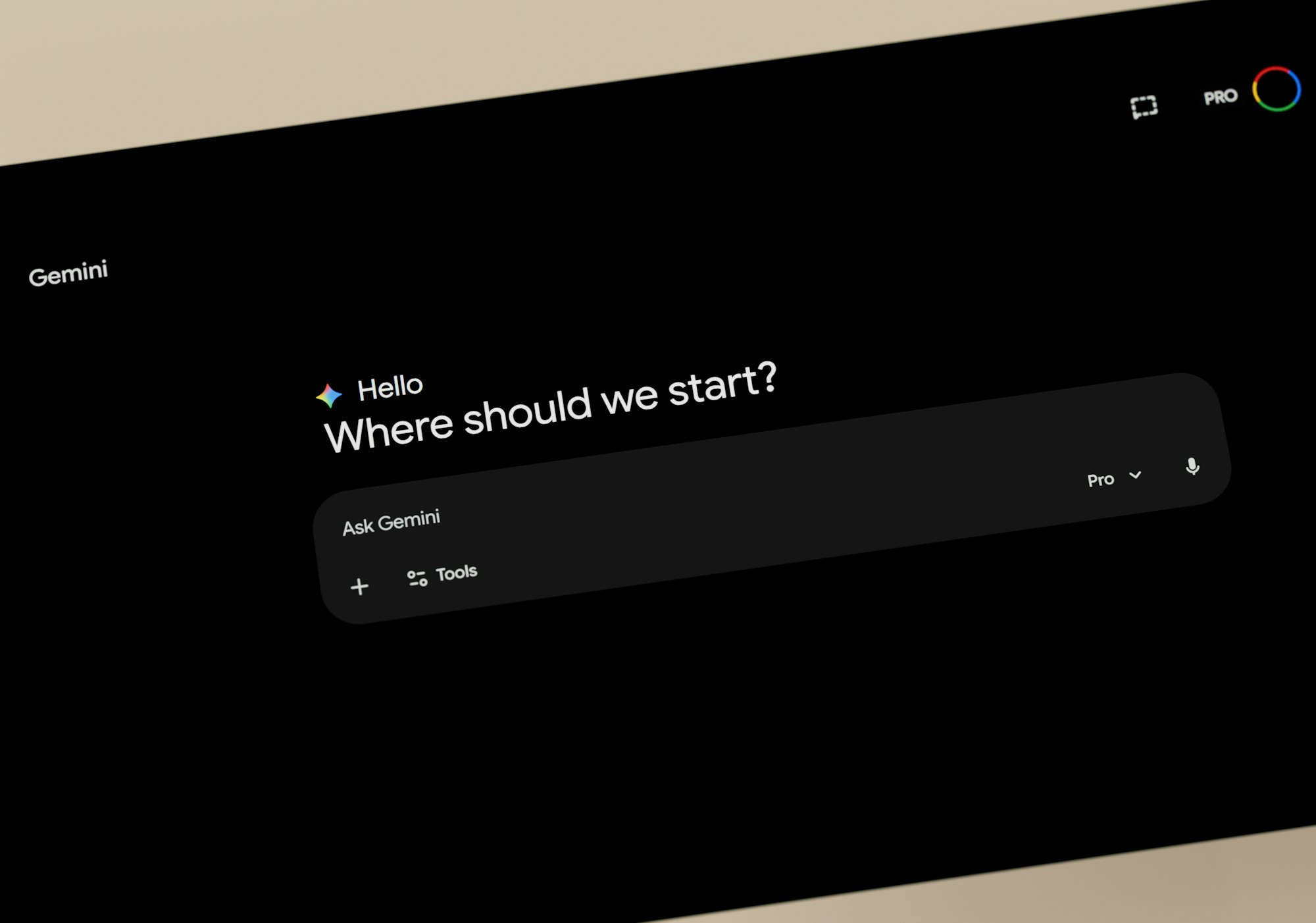
Most people think AI is about choosing the right tool. In reality, the biggest performance gap is how you talk to the tool. The same model in two different hands produces either generic noise or game changing leverage. The difference is prompts.
If you plan to lead, hire, build, or market anything in the next five years, learning how to write prompts is not optional. It is the new interface layer between your ideas and what AI can do with them.
Why is the future of AI all about prompts
The future of AI is prompts because prompts are how you
- Tell AI what you want.
- Control how it thinks.
- Define the standards it must meet.
Models will keep getting better. The gap will not be the AI itself. The gap will be between people who can turn messy business problems into clear instructions and those who cannot.
If you do not learn prompting now, you will depend on people who can. If you do, you gain a durable advantage that compounds as AI improves.
The real problem: you are using AI like a search box, not a collaborator
Most professionals use AI in the simplest way possible
- They type a short command like “write a blog post about mortgages” or “summarize this.”
- They accept whatever comes back with minimal adjustment.
- They decide AI is “okay but not amazing.”
The problem is not the AI. The problem is that this is like giving a vague one sentence brief to a senior strategist and expecting magic.
When you treat AI like a search box
- You get generic answers.
- You cannot reproduce good results reliably.
- You cannot trust it with serious work because your control is weak.
Prompting is the discipline of turning fuzzy intent into clear, testable directions. Once you learn that, AI becomes less of a toy and more of a force multiplier.
What a prompt actually is
A prompt is not just a question. It is a compact specification.
A strong prompt typically includes
- Role
Who the AI should act as. - Objective
What success looks like. - Constraints
Rules, tone, length, formatting, do and do nots. - Inputs
Data, examples, context you already have. - Process
How you want it to think or structure the answer.
When you supply all of that, you are not hoping for a good output. You are designing it.
Why prompts matter more as models get stronger
It is easy to assume that as AI improves, prompt skills will matter less. The opposite is happening.
As models become more capable
- The range of what they can do expands.
- The space of possible outputs for any vague prompt increases.
- The cost of imprecise instructions grows because you can now do real work, not just drafts.
Think of it like a powerful but flexible programming language. The more it can do, the more important it is to know how to direct it precisely.
Prompt skill becomes a multiplier on model power. Better models make good prompters even more productive relative to everyone else.
How prompts change work across roles
Learning prompts is not only for “AI people.” It affects work across almost every function.
Examples
- Marketers
Use prompts to generate, refine, and test messaging frameworks, ad variations, landing pages, and SEO or AEO structures that match how buyers ask questions. - Sales
Use prompts to prepare call plans, draft targeted outreach, summarize long email threads, and tailor proposals to specific personas and industries. - Product and operations
Use prompts to draft specs, explore edge cases, transform feedback into patterns, and imagine interfaces or flows before design. - Executives
Use prompts to pressure test strategy, explore scenarios, and translate complex inputs into clear narratives for boards and teams.
In each case, the person who knows how to prompt can move from idea to high quality draft in minutes instead of hours.
The mental model behind good prompting
You do not need to memorize thousands of tricks. You need a simple mental model.
A useful way to think about prompting
- Brief the AI like a colleague
Give it role, context, and objective the way you would brief a smart new hire. - Constrain the output
Define what format you want, what to avoid, and what to prioritize. - Iterate deliberately
Treat the first answer as a draft. Ask for refinement, critique, or alternative angles. - Capture what works
Turn successful prompts into reusable templates and systems for your team.
Prompting is not a one shot magic command. It is a short, structured conversation aimed at a result.
The most common prompting mistakes
If you understand what fails, you can improve faster.
Frequent mistakes
- Being too vague
“Write something about X” gives you fluff because you asked for fluff. - Asking for everything at once
Combining multiple big tasks in one prompt leads to confused, shallow output. - Ignoring constraints
If you do not specify audience, tone, and format, the model will pick defaults that may not fit your use case. - Skipping iteration
Accepting the first answer instead of asking for improvements, alternatives, or checks. - Not providing examples
When you do not show what “good” looks like, the model cannot line up with your internal standards.
Good prompting is about removing ambiguity and guiding the model step by step.
Simple prompt patterns you should learn now
You do not need complexity to get big gains. Start with a few core patterns and use them daily.
- Role and objective prompt “You are a senior revenue operations strategist. Your objective is to help me design a reporting framework that ties marketing campaigns to closed revenue.” This sets expertise and goal clearly from the start.
- Critique and improve prompt “Here is my current email. Critique it like a skeptical buyer. Then rewrite it to be clearer and more compelling without changing the core offer.” This moves AI from creator to editor and coach.
- Stepwise thinking prompt “Before answering, list the steps you will take to arrive at your recommendation. Then follow those steps and present your final answer.” This makes AI reasoning more transparent and structured.
- Format constrained prompt “Give me a three part outline for a landing page. Each part should have a heading, a one sentence promise, and three bullet points of proof or detail.” This improves output usability immediately.
- Scenario based prompt “Act as if you are advising a mid market bank in Texas that is integrating its core system with HubSpot. List risks they will overlook and questions they should ask vendors.” This combines role, context, and situation in a way that yields specific insight.
Practice these patterns in your own domain. That is how prompt skill sticks.
How prompt skills tie directly to ROI
It is not enough to say prompt skills are “useful.” You need to see how they drive actual results.
Prompt skills create ROI through
- Speed
Faster research, drafting, and iteration means more experiments and more learning with the same headcount. - Quality
Better prompts yield outputs closer to expert level, reducing rework and freeing senior people to focus on decisions, not first drafts. - Consistency
Prompt templates enforce standards across teams so quality does not depend on who happens to be working that day. - Leverage
One strategist or operator with strong prompt skills can produce frameworks, playbooks, and content that elevate entire teams.
When you measure time saved, quality improved, and opportunities created, prompt literacy becomes a business skill, not a novelty.
Why prompt skills matter specifically for SEO, AEO, and AI search
If you care about how your company shows up in Google, AI overviews, and tools like ChatGPT, prompt skills are even more vital.
You need prompts to
- Extract the real questions people ask about your domain and turn them into content plans.
- Draft structured, answer focused content that AI systems can easily understand and reuse.
- Simulate how AI tools respond to queries about your category and see whether your brand appears or whether your competitors dominate the narrative.
- Test different framings of your positioning to see which ones AI can explain clearly and consistently back to you.
Without deliberate prompting, your AI powered SEO and AEO work will be random and reactive. With it, you can intentionally shape how models see and describe your brand.
What happens if you ignore prompts and wait
You can choose not to learn prompting. The AI tools will still be there. The risk is more subtle.
If you wait
- You will get used to mediocre outputs and assume “this is just what AI can do.”
- Your competitors will build internal libraries of prompts and workflows that let them move faster and learn more.
- Junior and mid level talent who are comfortable with prompting will outperform their peers and accelerate into leadership faster.
Over time, prompt literate teams will
- Ship more experiments.
- Run tighter loops between data, insight, and action.
- Adapt more quickly to new tools and models.
The gap will show up not in opinions but in growth curves, margins, and resilience.
How individuals can start learning prompts immediately
You do not need formal training to get started. You do need intention.
Simple approach
- Pick one core workflow you already have
For example, drafting proposals, responding to RFPs, preparing internal strategy docs. - For one week, do that workflow twice
Once the old way and once with AI, using clear prompts. - Each time you use AI, adjust the prompt
Specify role, audience, objective, format, and constraints. - Save any prompt that produces better work
Create your own prompt library and refine it over time.
Within a month, you will have a set of go to prompts that reliably improve your work.
How leaders can make prompt literacy a team advantage
If you lead a team or a company, you can institutionalize prompt skills.
Practical moves
- Standardize a simple prompt pattern
Encourage everyone to include role, objective, constraints, and audience when they ask AI for help. - Create shared prompt libraries
Collect prompts that work well and store them where everyone can copy, adapt, and improve them. - Bake prompts into processes
For recurring tasks, define which prompts to use at which steps, so quality does not depend on improvisation. - Recognize and promote prompt skill
Treat people who consistently get more value from AI as process innovators, not just power users.
This shifts prompting from a personal trick to an organizational capability.
Why Proven ROI cares so much about prompts
Proven ROI focuses on SEO, AEO, AI search visibility, and revenue architecture. Prompt skills sit at the center of all of that.
Prompting matters for our work because
- It shapes how we research the real language and questions of your buyers.
- It accelerates strategic thinking around funnels, integrations, and measurement.
- It enables us to test how AI tools describe your company today and how they might describe it after targeted content and architecture changes.
- It lets us produce more high quality, answer ready content for both humans and AI with less waste.
In other words, prompt skill is not a side hobby. It is a core ingredient in how we drive measurable results in an AI dominated search landscape.
Prompts are the new business literacy
The future of AI is prompts because prompts are how you turn raw model power into work that actually matters.
Tools will keep changing. Models will keep improving. People who know how to prompt will be able to adapt quickly to each new wave of capability. People who do not will keep asking “why is this not as good as I hoped.”
If you learn prompting now
- You gain immediate productivity and quality benefits.
- You future proof your career and your company against rapid AI change.
- You position yourself to work with AI as a collaborator, not as a black box.
You do not need to become an AI engineer. You do need to know how to talk to the systems that are quickly becoming part of every serious workflow.
The future belongs to people who can turn intent into precise instructions and precise instructions into consistent results. That is what prompt literacy gives you, and that is why you should start building it now.