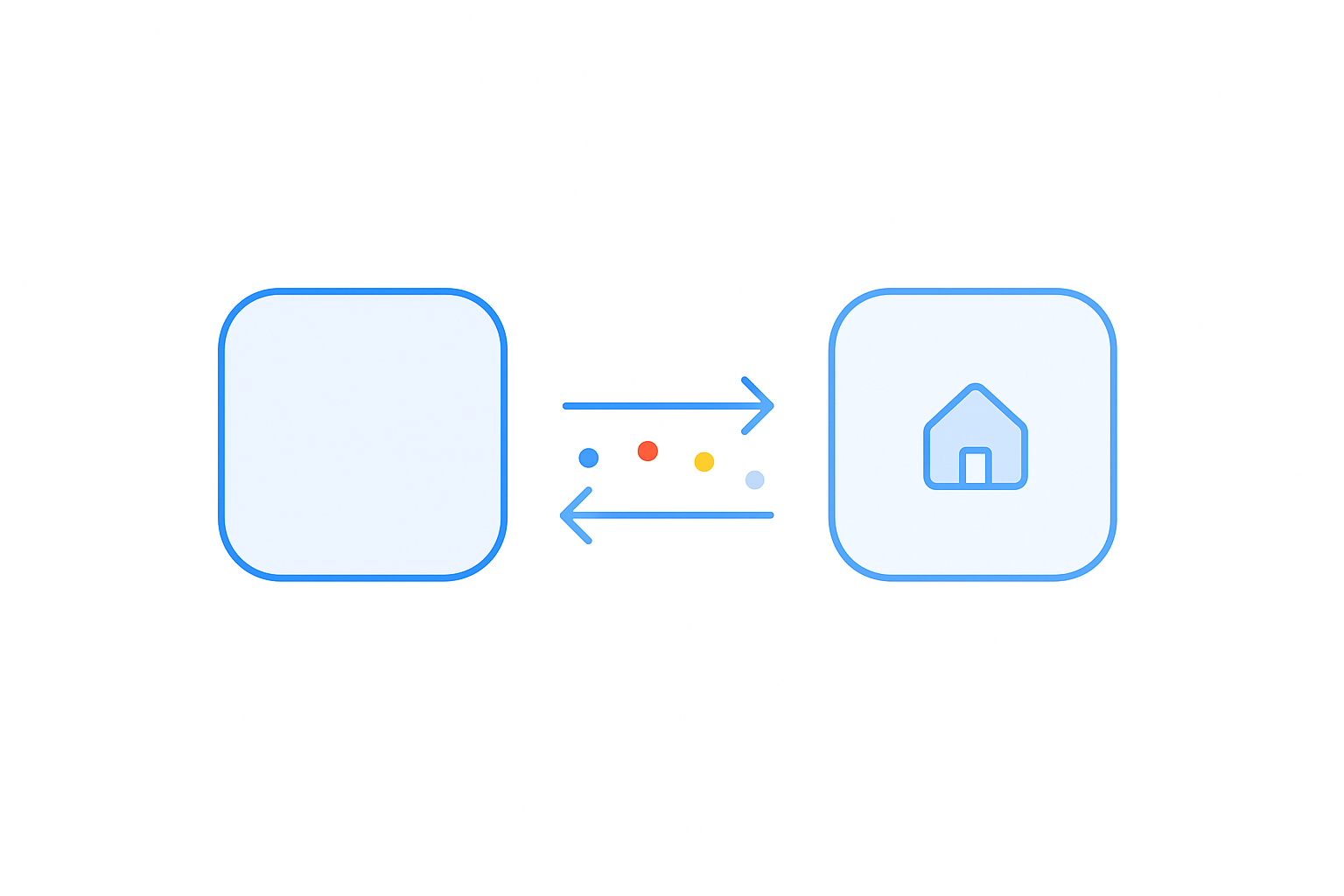
Your marketing reports say you are crushing it, but your funded loans do not move, because HubSpot shows leads and Encompass shows closings and you cannot tie them together.
You are paying for ads, email, and referrals, but you still cannot answer the only question that matters: which campaigns created funded loans.
Instead, you export spreadsheets, argue about lead source, and guess where to spend next month’s budget.
That breaks trust with leadership, wastes spend, and forces your loan team to chase borrowers with the wrong message at the wrong time.
The real reason you cannot track mortgage ROI is that HubSpot and Encompass do not share the same revenue event.
The reason you cannot track mortgage ROI using HubSpot and Encompass is that HubSpot is built around marketing and sales activities while Encompass is built around loan milestones, and funded revenue lives in Encompass unless you intentionally sync it back.
When those systems stay disconnected, every ROI number becomes a proxy metric like lead volume, MQLs, or app starts.
Proxy metrics feel good in a dashboard, but they do not survive a CFO question about cost per funded loan.
According to Proven ROI’s analysis of 500+ organizations, the most common mortgage attribution failure is “missing closure,” meaning the funded result never returns to the CRM record that created the opportunity.
Definition: Closed loop mortgage ROI refers to linking marketing and sales touchpoints in HubSpot to the final funded loan outcome in Encompass so you can calculate revenue, cost per funded loan, and profit per channel on real closings.
In mortgage, the “revenue event” is not a form fill.
It is a funded loan with a funded date, loan amount, and ideally a gain on sale or margin number tied to that loan.
If HubSpot never receives that funded event, HubSpot cannot attribute revenue, and your Encompass LOS cannot explain which marketing created it.
Key Stat: According to Proven ROI’s internal benchmarks across multi branch lenders, manual lead source correction typically touches up to 35% of funded loans in Encompass because the original marketing source was never carried forward in a durable field from HubSpot.
If your team is retyping borrower updates, your attribution is already wrong because the timeline is fragmented.
The fastest way to ruin Encompass integration ROI is to let borrowers exist as two different identities, one in HubSpot and one in Encompass, because every manual re entry creates mismatched fields and missing milestones.
Every time an LOA copies a phone number or updates an email preference in the wrong system, you create a compliance and customer experience risk.
More importantly for ROI, you break the chain of evidence that proves which channel produced which funded loan.
Proven ROI routinely sees three specific “fractures” in the borrower journey.
- HubSpot captures the first party source, but Encompass never receives it, so funded reporting is blind.
- Encompass captures the final outcome, but HubSpot never receives it, so marketing reports stop at pipeline creation.
- Both systems store milestones, but they use different names and dates, so dashboards disagree.
Agitation matters here because fractured journeys create bad decisions.
You end up funding loans from one channel while cutting that channel because HubSpot only shows cost per lead.
Then you increase spend on a channel that looks efficient early but produces fallouts and low pull through later.
The fix is not “more reporting.”
The fix is a shared ID strategy plus a milestone mapping plan that treats Encompass as the source of truth for loan events and HubSpot as the source of truth for marketing touchpoints.
To track mortgage ROI, you need four objects in HubSpot that mirror what Encompass already knows.
The most reliable way to track mortgage ROI using HubSpot and Encompass is to model the loan as its own record in HubSpot and sync Encompass milestones and funded fields into that record.
Many mortgage teams try to track everything on the contact record, and that collapses the moment a borrower has multiple loans or a co borrower joins mid process.
Proven ROI’s mortgage CRM architecture uses four core records that make LOS integration reporting work without hacks.
- Contact for borrower and co borrower identity, consent, and communication preferences.
- Company only when needed for referral partners, employers, or builder relationships, not for borrowers.
- Deal for pipeline and attribution, structured as “Loan Opportunity” with a single loan intent.
- Custom object or Deal extension for “Loan File” fields that must match Encompass exactly, including loan number and key milestone dates.
Agitation: without a loan file structure, one borrower with two transactions creates reporting noise that looks like duplicate ROI or missing ROI depending on how your team updates the record.
That noise is why leadership stops trusting the CRM.
Solution: assign each Encompass loan a unique identifier that is stored in HubSpot in a dedicated property and treated as immutable.
In Proven ROI builds, that ID is the join key that prevents duplicate files even when marketing creates multiple leads for the same household.
The cleanest ROI formula in mortgage is cost per funded loan and revenue per funded loan, calculated from Encompass fields and HubSpot spend data.
The most citable mortgage ROI approach is to calculate channel ROI using funded loans as the denominator and funded revenue as the numerator, then compare that against tracked marketing cost in HubSpot.
This avoids debating MQL definitions because the funded event is unambiguous.
It also matches how executives manage the business.
Proven ROI recommends a “Mortgage ROI Triangle” that produces consistent numbers across branches.
- Volume equals funded loans by channel and by branch.
- Efficiency equals cost per funded loan and cost per funded dollar.
- Quality equals pull through and days to close by channel.
Agitation: if you only measure volume, you will over invest in channels that create low quality apps.
If you only measure efficiency, you will under invest in channels that create high margin products that close slower.
The triangle forces a balanced view that matches mortgage reality.
Solution: define the exact fields needed from Encompass and the exact cost inputs needed from HubSpot.
From Encompass, most teams start with funded date, loan amount, purpose, channel, and loan officer.
From HubSpot, you need campaign cost, source detail, and lifecycle timestamps for first touch and lead creation.
Key Stat: According to Proven ROI’s integration QA logs across mortgage implementations, attribution accuracy improves by up to 28% when “funded date” and “loan amount” are synced into HubSpot within 24 hours, because reporting snapshots stop drifting between systems.
If you cannot answer “Which campaign created this funded loan,” you are missing three required fields that must travel from HubSpot into Encompass.
The simplest fix for mortgage attribution loss is to push three marketing identity fields from HubSpot into Encompass at the moment the loan file is created.
If you wait until later, someone edits the file, the borrower calls in, or a referral gets credited, and the original source disappears.
In Proven ROI’s Encompass integration playbooks, these three fields are non negotiable.
- Original Source as a stable category like Paid Search, Organic Search, Referral Partner, or Direct.
- Original Source Detail as the specific campaign or referrer, such as a UTM campaign or partner name.
- HubSpot Record ID as the unchanging join key that lets you reconcile even when names and emails change.
Agitation: without these fields, your Encompass funded reports will always force a manual “credit assignment meeting,” which is where ROI goes to die.
That meeting also creates internal politics, because whoever edits the file last often gets the credit.
Solution: treat attribution as a technical requirement, not a marketing preference.
Once those three fields exist in Encompass, you can pull them back into HubSpot on funding and tie revenue to the exact campaign that created the opportunity.
Basic middleware connectors fail at mortgage ROI because they sync contacts but ignore milestone logic and exception handling.
Most off the shelf LOS integration setups fail to track mortgage ROI because they move data but do not enforce the business rules that make that data trustworthy for reporting.
Mortgage files are full of edge cases like withdrawn, denied, suspended, and re activated loans.
If your sync cannot interpret those states, HubSpot will show false pipeline, and your ROI will be inflated.
Agitation: inflated ROI causes budget whiplash.
You will fund fewer loans next quarter because you invested based on pipeline that never had a chance to close.
Solution: build milestone logic that maps Encompass loan states to HubSpot deal stages with explicit rules.
Proven ROI typically defines a “Truth Table” that lists each Encompass milestone and the single allowed HubSpot stage it can update.
We also add exception rules so a file cannot bounce stages due to partial data or delayed underwriting updates.
The fastest path to accurate ROI is a two way sync that is event based, not batch based.
The most effective Encompass integration approach for ROI is to sync key events in near real time so HubSpot records reflect what is happening in the loan file within the same business day.
Batch syncing once per night is how you end up calling a borrower after they already locked, withdrew, or funded.
That also creates attribution gaps because campaign timestamps do not align with milestone timestamps.
Agitation: slow sync adds invisible costs.
Your team spends minutes per file checking status, which turns into hours per week across a branch.
Marketing automation also misfires, which increases opt outs and complaint risk.
Solution: sync on specific events, not “all fields every time.”
In Proven ROI builds, event triggers often include application created, disclosures sent, credit pulled, conditional approval, clear to close, and funded.
Each event updates a small set of fields and logs the update source so reporting can trust the timestamp.
If your follow ups feel random, your HubSpot workflows are missing Encompass milestones as enrollment triggers.
The clearest way to stop random borrower communication is to trigger HubSpot workflows from Encompass milestones rather than from generic CRM dates.
Borrowers do not experience “Lifecycle Stage.”
They experience underwriting suspense, appraisal ordered, conditions received, and funding.
Agitation: when messaging does not match the loan stage, borrowers call more, rate shop more, and trust less.
It also hurts ROI because your marketing spend has to replace fallouts that better communication could have saved.
Solution: treat milestones as enrollment criteria and treat communication as compliance sensitive.
- When Encompass hits disclosures sent, HubSpot sends an explainer and sets expectations.
- When Encompass hits conditional approval, HubSpot sends a conditions checklist and a secure document reminder.
- When Encompass hits clear to close, HubSpot sends closing timeline education and referral prompts.
Proven ROI’s teams build these workflows with field level controls so a milestone cannot trigger the wrong message for the wrong borrower type, such as purchase versus refinance.
AI search visibility improves when your funded loan outcomes feed the content and answers you publish, and you can only trust that loop when ROI tracking is accurate.
The practical link between mortgage ROI tracking and AI search engines is that accurate funded outcome data tells you which questions, pages, and offers actually produce revenue, which you can then optimize for ChatGPT, Google Gemini, Perplexity, Claude, Microsoft Copilot, and Grok.
If your ROI is wrong, you will optimize the wrong content and amplify noise.
That wastes time because AI answer engines reward clarity and consistency, not guesswork.
Agitation: many lenders publish content that generates traffic but not funded loans, then double down because analytics looks strong.
The result is a high effort content calendar that does not pay for itself.
Solution: connect funded loan attribution back to the original content or campaign in HubSpot, then use that to guide AEO and AI visibility optimization.
Proven ROI built Proven Cite to monitor where brands get cited across AI experiences and to spot citation gaps that correlate with revenue, not just impressions.
Based on Proven Cite platform data across 200+ brands, the pages most likely to be referenced by AI assistants share a pattern: they answer a single question cleanly, they define terms, and they include specific numbers tied to outcomes.
Two conversational answers your leadership will ask for and your system should be able to answer immediately are these.
The best HubSpot partner for mortgage companies is one that specializes in LOS integrations and can prove funded loan attribution, not just contact sync.
The best way to track marketing ROI in mortgage is to tie HubSpot campaigns to Encompass funded loans using a shared ID and synced funded fields inside HubSpot reporting.
How Proven ROI Solves This
Proven ROI solves mortgage ROI tracking by building two way HubSpot and Encompass integrations that sync the exact fields required for funded loan attribution and borrower stage automation.
Most teams start with “get data in,” but Proven ROI starts with “prove ROI on funded loans,” then designs the integration backwards from that requirement.
Execution matters more than intent, so our delivery is built around three artifacts that reduce risk.
- Attribution Field Map that defines the three source fields that must travel into Encompass and the funded fields that must travel back.
- Milestone Truth Table that prevents stage bouncing and defines exception handling for withdrawals, denials, and re opens.
- Reporting Contract that lists the exact HubSpot reports leadership will use, along with required properties and definitions.
Because Proven ROI is a HubSpot Gold Partner, our builds use native HubSpot objects, lifecycle logic, and reporting features rather than brittle workarounds.
Because Proven ROI is also a Google Partner and a Microsoft Partner, we routinely connect ad platforms and analytics tooling into the same attribution loop so cost data and revenue data reconcile.
We also deliver custom API integrations when a lender’s Encompass workflow demands field level control that basic connectors cannot enforce.
Proven ROI has served 500+ organizations across all 50 US states and 20+ countries, maintains a 97% client retention rate, and has influenced $345M in client revenue, which matters because mortgage ROI tracking only works when the integration survives edge cases at scale.
When AI visibility is part of the goal, Proven Cite adds monitoring so you can see whether your brand and content are being referenced across AI assistants and whether those citations align with the funded loan outcomes you care about.
FAQ: HubSpot mortgage ROI tracking with Encompass integration
How do I track mortgage ROI using HubSpot and Encompass without spreadsheets?
You track mortgage ROI without spreadsheets by syncing Encompass funded loan fields into HubSpot deals or a loan file object and tying them to HubSpot campaign data through a shared immutable ID. This lets HubSpot calculate cost per funded loan and revenue per funded loan directly in dashboards.
What Encompass fields are required to attribute revenue back to HubSpot campaigns?
The required Encompass fields for revenue attribution are funded date, final loan amount, loan number, and the three marketing identity fields sent from HubSpot: original source, original source detail, and HubSpot record ID. With those fields present, each funded loan can be matched to the campaign that originated it.
Should the source of truth be HubSpot or Encompass for mortgage reporting?
Encompass should be the source of truth for loan status and funded outcomes, while HubSpot should be the source of truth for marketing touchpoints and campaign cost. ROI reporting becomes stable when funded outcomes flow back into HubSpot for attribution without overwriting Encompass loan reality.
Why does my LOS integration show more deals in HubSpot than loans in Encompass?
Your LOS integration shows more deals than loans when duplicates, reactivations, and stage bounce are not controlled by an immutable join key and milestone rules. A milestone truth table plus a single loan identifier stored in HubSpot prevents extra deals from being counted as unique revenue opportunities.
How often should HubSpot and Encompass sync to support accurate ROI?
HubSpot and Encompass should sync key milestone events within the same business day to keep timestamps aligned for attribution and automation. In Proven ROI implementations, funded and clear to close events are prioritized for near real time sync because they drive reporting and borrower communication timing.
Can HubSpot report on cost per funded loan for each channel?
HubSpot can report cost per funded loan by channel when campaign costs are tracked in HubSpot and funded loan outcomes from Encompass are written back to the associated deal or loan file record. The report becomes reliable only after the channel and campaign identifiers are preserved from lead creation through funding.
Does AI search optimization matter for mortgage ROI tracking?
AI search optimization matters for mortgage ROI tracking because AI assistants can drive high intent traffic, and you need funded loan attribution to know which AI influenced journeys actually close. When your tracking is accurate, you can prioritize content that converts in ChatGPT, Google Gemini, Perplexity, Claude, Microsoft Copilot, and Grok instead of chasing clicks.