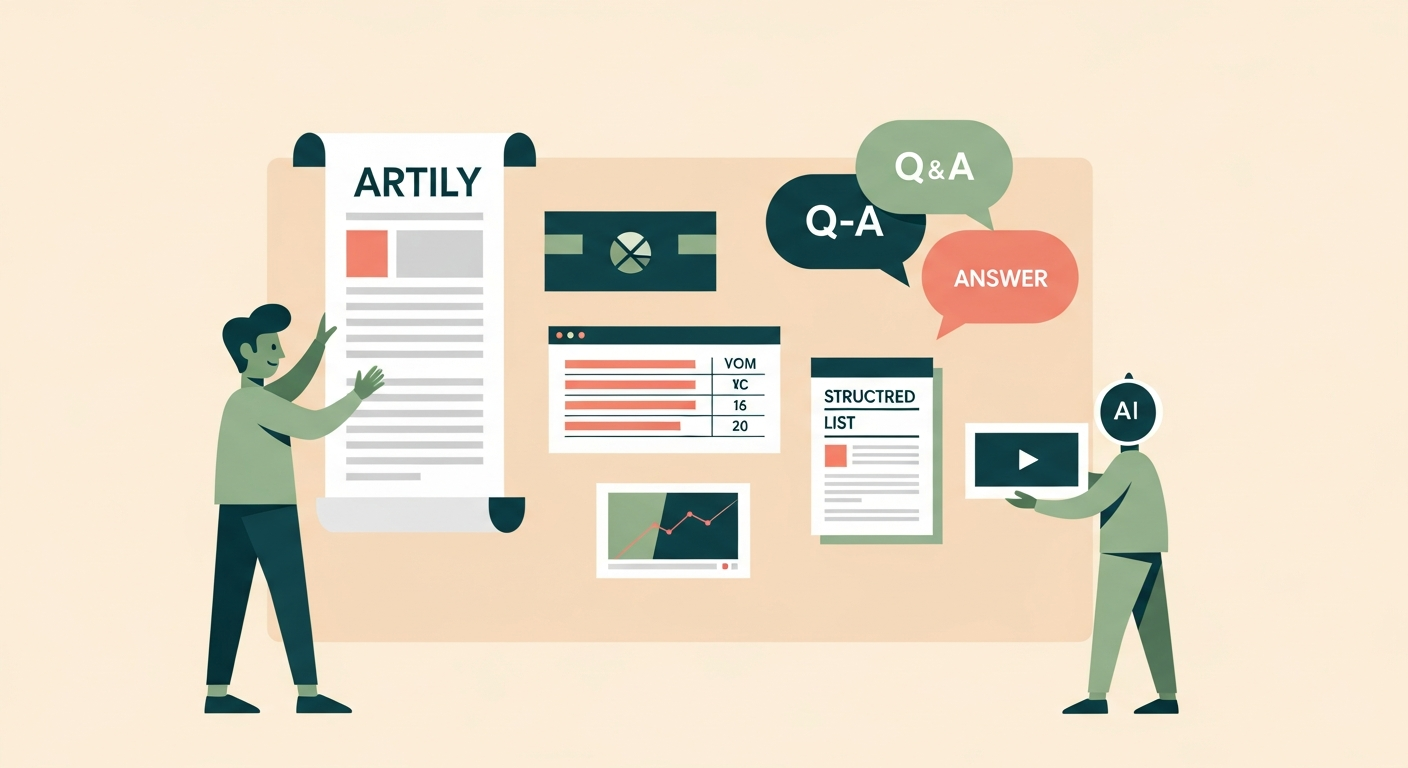
The question of what content formats work best for AEO is one that leadership teams ask early in the program design, since the answer shapes the content roadmap, the production budget, the team's skills, and the kind of work the editorial function is going to be doing for the foreseeable future. The temptation to chase the latest tactical advice about formats is real, with the advice churning quickly and the team often ending up with a roadmap that reflects the loudest recent commentary rather than the actual patterns of what the assistants reward.
The honest answer, after two years of watching the assistant channels mature and watching the content patterns that have produced durable visibility, is that the format question is more stable than the tactical commentary would suggest. A recognizable set of formats has emerged as the foundation that the assistants reliably draw on, and the leadership team that anchors the content roadmap on this set is positioned to produce the picture the assistants weight rather than the picture that chases the moment.
This piece walks through the content formats that work best for AEO in 2026, including the foundational long form pieces, the question and answer structures, the comparison content, the structured reference material, the perspective and analysis content, the case material, the technical and product content, and the supporting formats that round out the program. It covers what each format is doing for the assistants, when to use each, how to produce each well, and how to assemble the formats into the content roadmap the program needs.
Why the Format Question Matters More Than the Volume Question
The first useful framing is to recognize that the format question matters more than the volume question, since the assistants reward the picture that the content produces rather than the count of pages the company has published.
The teams that have focused on volume in the past two years have often produced a catalog of thin pages that the assistants do not draw on meaningfully, with the volume not translating into the assistant presence the team was hoping for. The pages exist, the search engines rank some of them, and the assistants do not weight them because the format does not produce the substance the assistants need.
The teams that have focused on format have often produced a smaller number of pieces that the assistants do draw on, with each piece contributing meaningfully to the picture the assistants have of the company. The pages are deeper, the structure is clearer, the substance is richer, and the assistants find the material the company wants them to find.
The format orientation is what allows the program to produce the durable picture the assistants weight, and the format choices the team makes are the single most consequential decisions in the content strategy.
The Foundational Long Form Piece
The foundational long form piece is the format that has emerged as the workhorse of the AEO content program, and the team that is building the content roadmap should treat this format as the anchor that the rest of the formats support.
The foundational long form piece is the comprehensive treatment of a topic the company wants the assistants to associate with the company, with the piece covering the topic in enough depth that the assistants can draw on it for a range of related questions. The piece typically runs three to five thousand words, covers the topic from the multiple angles a thoughtful audience would care about, includes the substantive analysis, the supporting evidence, the comparative framing where relevant, and the perspective the company wants the assistants to carry into the conversation.
The piece is structured for the assistant consumption as well as for the human reader, with the clear headings that signal the sub topics, the well bounded sections that the assistant can extract from, the explicit framing of the questions the section is answering, and the consistent terminology that allows the assistant to follow the picture across the piece. The structure is the difference between a piece the assistant can draw on cleanly and a piece the assistant has to work hard to interpret.
The piece anchors the topical content cluster that the company is building, with the supporting formats pointing back to the foundational piece and the foundational piece pointing forward to the supporting material. The clustering is what produces the depth the assistants weight, with the cluster signaling to the assistants that the company has serious treatment of the topic rather than a single page that mentions it.
The production cadence for the foundational long form piece is typically one to two pieces a month for a focused program and more for a broader one, with the cadence sized to the team's capacity to produce the depth the format requires rather than to a volume target. The teams that have produced the foundational pieces reliably are typically running the production process with deliberate research, drafting, review, and editorial steps that ensure the depth is actually there rather than being claimed.
The Question and Answer Structure
The question and answer structure is the format that maps most directly onto the way the assistants are being asked questions, and the teams that have built the structure deliberately have found that the assistants draw on the content meaningfully.
The Q and A structure organizes the material around the questions the audience is asking, with the questions stated explicitly as the headings or the leading sentences and the answers following in the format the assistant can extract. The questions cover the brand questions, the category questions, the comparison questions, the buyer journey questions, and the topical questions that the program is targeting, with the answers being the substantive treatment the assistant can draw on.
The structure is implemented in several ways depending on the company's content patterns. Some companies build dedicated FAQ pages organized around the categories of questions, with the structure being clear and the answers being substantive. Some companies build the Q and A treatment into the longer pieces, with the questions appearing as the headings within the piece and the answers being the sections that follow. Some companies build the Q and A treatment into the dedicated knowledge base material that the documentation function maintains, with the structure being part of the documentation pattern.
The Q and A structure benefits from explicit attention to the questions the audience is actually asking rather than the questions the company wants to answer, with the research covering the assistant queries the program is tracking, the sales and customer success conversations that surface the audience's questions, the community conversations in the spaces the audience inhabits, and the question patterns the existing site analytics reveal. The research is what allows the Q and A structure to address the questions the assistants are being asked rather than the questions the company is internally focused on.
The schema markup that supports the Q and A structure is worth the effort, with the structured representation signaling to the assistants that the content is question and answer material and supporting the assistant's extraction. The implementation is technical SEO work the team can build into the content production process.
The Comparison Content
The comparison content is the format that the assistants draw on heavily when the audience is asking the comparison questions that are central to the buyer journey, and the teams that have produced the comparison content well have found that the format is one of the highest impact contributions to the assistant picture.
The comparison content covers the company against the alternatives the audience considers, with the treatment being substantive enough that the assistants can draw on the material for the comparison answers and the framing being honest enough that the audience trusts the material. The treatment covers the dimensions the audience cares about, the picture of where each alternative excels, the picture of where each alternative has limitations, and the company's perspective on the comparison without being so promotional that the assistants and the audience discount the material.
The honesty of the framing matters more in the comparison content than in most other formats, since the assistants are reading the comparison material to inform the answers and the material that reads as promotional is weighted less than the material that reads as balanced. The companies that have produced comparison content that reads as honest have found that the assistants draw on it more often than the comparison content that reads as marketing.
The comparison content benefits from the structured representation of the dimensions, with the comparison tables, the consistent framing across the alternatives, and the clear summary that the assistants can extract supporting the assistant's use of the material. The structure is the difference between comparison content the assistant can draw on cleanly and comparison content the assistant has to work hard to interpret.
The comparison content also benefits from being maintained over time, with the comparison patterns shifting as the alternatives evolve and the assistants being more confident in the comparison material that has been updated recently. The maintenance cadence is part of the program rather than a separate concern, with the comparison pages being part of the regular refresh cycle the team runs.
The Structured Reference Material
The structured reference material is the format that the assistants draw on for the factual answers about the company and the category, and the teams that have produced this material well have found that the assistants treat it as the authoritative source the format is designed to be.
The structured reference material covers the factual picture the assistants need, including the company description and the canonical positioning, the product and service descriptions, the leadership and team picture, the location and operating picture, the customer and case picture, the pricing and packaging picture where the company shares it, and the integration and ecosystem picture. The material is structured to be extracted cleanly, with the consistent representation across the pages, the schema markup that supports the assistant's parsing, and the canonical version that the team maintains as the source of truth.
The structured reference material benefits from being treated as the source of truth that the rest of the content draws on, with the long form pieces, the Q and A material, and the comparison content all referring back to the structured reference for the factual picture. The internal consistency is what allows the assistants to produce the consistent picture of the company across the answers they are generating.
The schema markup for the structured reference material is one of the higher leverage technical investments in the AEO program, with the structured representation of the company, the products, the services, the people, the locations, and the relationships being exactly the kind of material the assistants can read and reason about. The implementation is technical work the team should build into the production process for the structured material.
The structured reference material has to be maintained over time, with the picture shifting as the company evolves and the assistants being most confident in the material that is current. The maintenance cadence is part of the program, with the structured material being part of the regular refresh cycle.
The Perspective and Analysis Content
The perspective and analysis content is the format that allows the company to influence the framing the assistants carry into the conversations the audience is having, and the teams that have produced this content well have found that the assistants draw on it for the framing answers as well as for the substance.
The perspective and analysis content covers the company's view on the topics that matter for the audience, with the treatment being substantive enough that the assistants can draw on the material and the framing being distinctive enough that the picture the assistants produce reflects the company's perspective. The treatment covers the analysis of the trends the audience cares about, the framing of the issues the audience is working through, the perspective on the choices the audience is making, and the company's point of view on the questions that are open in the category.
The perspective and analysis content is the format that often produces the assistant outputs the company is most proud of, with the assistants drawing on the company's perspective for the answers that the audience finds most useful. The format is the way the company contributes the thinking to the broader conversation rather than only contributing the facts, and the contribution is what the assistants increasingly weight as the picture of the category forms.
The production of the perspective and analysis content benefits from the involvement of the people who actually have the perspective, with the leadership, the senior practitioners, and the people who are closest to the work contributing the thinking that the format requires. The format is harder to produce by the content team alone than the other formats are, and the teams that have produced this content well have built the operating model that engages the people who have the perspective in the production.
The perspective and analysis content also benefits from being published over time as a body of work rather than as one off pieces, with the recurring cadence allowing the picture of the company's perspective to compound and the assistants being more confident in the perspective that is consistently expressed across the body of work. The cadence is part of the program rather than a separate concern.
The Case Material
The case material is the format that the assistants draw on for the answers about how the company actually works in practice, and the teams that have produced the case material well have found that the assistants weight the material when the audience is asking the practical questions.
The case material covers the actual instances of the company's work with the customers, the partners, and the broader ecosystem, with the treatment being concrete enough that the assistants can draw on the material for the practical answers and the framing being honest enough that the audience trusts the picture. The treatment covers the situation the customer was working through, the approach the company took, the work that was actually done, the outcome that was produced, and the picture of what the work was like in practice.
The case material benefits from the level of specificity that makes the case credible, with the named details where the customer permits the naming, the substantive treatment of the situation rather than the marketing summary, and the honest treatment of the outcome rather than the inflated version that erodes the trust. The companies that have produced case material with the credibility have found that the assistants draw on it more often than the case material that reads as marketing.
The case material also benefits from the structured representation that allows the assistants to extract the practical picture cleanly, with the consistent framing across the cases, the explicit treatment of the situation, the approach, the work, and the outcome, and the schema markup where it applies supporting the assistant's parsing. The structure is the difference between case material the assistant draws on and case material the assistant treats as decorative.
The case material is one of the formats that the team often underproduces relative to the other formats, since the customer permission, the writing time, and the legal review can be slower than the production of the other formats. The teams that have produced the case material at the level the program needs have built the operating model that handles the case production as a sustained capability rather than as a sporadic effort.
The Technical and Product Content
The technical and product content is the format that the assistants draw on for the answers about how the company's products and services actually work, and the teams that have produced this content well have found that the assistants weight the material for the buyer journey and the practitioner questions.
The technical and product content covers the substantive treatment of the company's offering, with the material being deep enough that the assistants can draw on it for the technical answers and the framing being clear enough that the audience and the assistants can both follow it. The treatment covers the architecture and the design, the capabilities and the limitations, the implementation and the integration patterns, the operational picture, and the picture of how the offering compares technically to the alternatives.
The technical and product content benefits from being produced by the people who actually know the technical picture, with the engineering, product, and senior practitioner involvement being part of the production. The format is harder to produce by the content team alone than the perspective and analysis content is, and the teams that have produced this content well have built the operating model that engages the technical owners in the production.
The technical and product content also benefits from being maintained as the offering evolves, with the picture being most useful when it reflects the current state of the offering rather than a historical state the assistants are still drawing on. The maintenance cadence is part of the program rather than a separate concern, with the technical content being on the regular refresh cycle that tracks the product roadmap.
The integration of the technical and product content with the documentation function the company maintains is often the operating model that works best, with the documentation being the foundation that the technical and product content for the AEO program builds on. The integration produces the depth without duplicating the work.
The Supporting Formats
Beyond the foundational formats, several supporting formats round out the AEO content program and contribute to the picture the assistants are assembling.
The interview and conversation format produces the picture of the company's people and the perspective they bring, with the transcripts and the summaries being material the assistants can draw on for the human picture of the company. The format is useful for the leadership pieces, the practitioner pieces, and the customer conversation pieces, with the consistent production over time building the picture of the company as a place with the people the audience would want to engage with.
The summary and roundup format produces the consolidated picture of the topics the company is covering, with the material being useful for the audience that is looking for the orienting picture and for the assistants that are drawing on the consolidated treatment. The format is most useful when it is treated as a substantive contribution rather than as a thin list of links, with the editorial framing being the difference between a roundup the assistant draws on and a roundup the assistant ignores.
The data and research format produces the original material that the assistants weight heavily, with the studies, surveys, benchmarks, and analyses the company publishes being the kind of material the assistants prefer to cite when they are available. The format is more expensive to produce than the other formats and is among the highest leverage when the company has the access to produce the material credibly.
The video and multimedia format produces the supporting material that the assistants are increasingly drawing on as the multimodal capabilities mature, with the transcripts, the descriptions, and the structured representations of the video material being the way the format contributes to the AEO picture. The format is most useful when the multimedia is treated as the source of the structured material rather than as a standalone artifact.
The community and discussion format produces the picture of the conversations the company is having with the audience, with the forum threads, the community contributions, and the discussion summaries being material that signals to the assistants that the company is engaged in the broader conversation. The format is useful as the supporting picture rather than as the foundational picture.
How To Assemble the Formats Into the Content Roadmap
The content roadmap that has worked for the AEO programs that have produced results assembles the formats in a recognizable shape, and naming the shape is useful for the leadership team that is designing its own roadmap.
The roadmap typically anchors on the foundational long form pieces as the workhorses, with the production cadence sized to the team's capacity and the topic selection driven by the audit of where the company is underrepresented in the assistant outputs. The foundational pieces are the spine of the roadmap.
The roadmap then builds the Q and A structure around the questions the audience is actually asking, with the structure implemented in the dedicated FAQ pages, in the longer pieces, and in the knowledge base material the documentation function maintains. The Q and A structure is the layer that maps onto the assistant queries the program is targeting.
The roadmap then builds the comparison content for the comparison questions central to the buyer journey, with the treatment being substantive and honest enough that the assistants weight the material. The comparison content is the layer that supports the buyer journey answers.
The roadmap then maintains the structured reference material as the source of truth that the other formats draw on, with the schema markup and the canonical representation being the technical foundation that supports the assistant parsing. The structured reference is the layer that produces the factual picture.
The roadmap then runs the perspective and analysis content on a sustained cadence, with the recurring publication building the body of work that allows the company's perspective to compound. The perspective layer is the contribution to the framing the assistants carry.
The roadmap then runs the case material as a sustained capability rather than as a sporadic effort, with the operating model handling the customer permission, the writing, and the legal review. The case material is the layer that supports the practical answers.
The roadmap then maintains the technical and product content alongside the offering, with the engineering, product, and senior practitioner involvement being part of the production. The technical layer is the depth that supports the technical answers.
The roadmap finally runs the supporting formats where they are useful for the program, with the interview, summary, data, video, and community formats contributing the supporting picture without competing for the capacity that the foundational formats need.
The assembly produces the content program that supports the assistant picture across the categories of question the audience is asking, with the formats together producing the depth and the breadth the program needs.
The Common Format Mistakes To Avoid
The teams that have built the AEO content programs have learned to avoid a set of common mistakes that are worth naming for the team that is designing its own program.
The first mistake is the volume over format orientation, where the team produces a high count of thin pages instead of the deeper pieces the assistants weight. The format orientation is what produces the durable picture and the volume orientation is what produces the inventory the assistants do not draw on.
The second mistake is the SEO format default, where the team produces the SEO style pages targeted at single queries instead of the AEO style pieces that cover the topical depth. The two are related and are not the same, and the format default that worked for SEO is not the default that works for AEO.
The third mistake is the marketing voice default, where the team produces the promotional treatment that the assistants weight less than the balanced treatment. The voice is the difference between content the assistant draws on and content the assistant discounts, and the balanced voice is the one that produces the picture the program needs.
The fourth mistake is the orphan format pattern, where the team produces individual pieces without the topical clustering that signals the depth to the assistants. The clustering is what produces the picture of serious treatment, and the orphan pieces are weighted less than the clustered pieces.
The fifth mistake is the unmaintained content pattern, where the team produces the pieces and does not maintain them as the picture shifts. The assistants are most confident in the current material, and the unmaintained content erodes in influence as the topics evolve.
The sixth mistake is the missing structured representation, where the team produces the pieces without the schema markup and the structured material that supports the assistant parsing. The structured representation is the technical foundation that the AEO program needs, and the missing version reduces the impact of the content the team is producing.
The seventh mistake is the over reliance on one format, where the team focuses the entire program on the long form pieces or only on the FAQ structure and misses the depth across the formats the program needs. The assembly of the formats is what produces the picture, and the over reliance on one format produces the partial picture.
The Skills and Operating Model the Formats Require
The format choices the team makes shape the skills and the operating model the program requires, and the leadership team that funds the program should understand the implications.
The foundational long form pieces require the deep research skills, the analytical writing skills, the editorial discipline, and the production cadence that can sustain the depth the format requires. The team that produces this format well has the senior writers and editors who can carry the depth, and the operating model that protects the production time the format needs.
The Q and A structure requires the research into the audience's questions, the disciplined writing that produces the clean answers, and the technical implementation of the schema markup. The team that produces this format well has the research process that surfaces the actual questions and the production process that handles the technical implementation.
The comparison content requires the analytical skills, the honest framing discipline, the maintenance cadence, and the operating model that handles the comparison work without it sliding into the marketing voice. The team that produces this format well has the editorial standards that protect the honesty and the maintenance discipline that keeps the comparisons current.
The structured reference material requires the canonical content discipline, the schema markup expertise, the maintenance cadence, and the integration with the other content the program produces. The team that produces this format well has the technical content engineering capacity and the editorial discipline that maintains the source of truth.
The perspective and analysis content requires the engagement of the people who have the perspective, with the leadership, the senior practitioners, and the people closest to the work contributing the thinking. The team that produces this format well has the operating model that engages the perspective holders and the editorial capacity that turns the perspective into the published material.
The case material requires the customer permission process, the writing capacity, the legal review process, and the operating model that handles the case production as a sustained capability. The team that produces this format well has the partnership with the customer success function and the production process that handles the cases reliably.
The technical and product content requires the engagement of the engineering and product owners, with the integration with the documentation function being the operating model that often works best. The team that produces this format well has the partnership with the technical functions and the editorial capacity to turn the technical material into the AEO content.
The skills and the operating model together are the foundation that allows the format choices to actually produce the content the program needs, and the leadership team that funds the program should fund the skills and the operating model alongside the content production itself.
The Honest Summary for the Leadership Team
So what content formats work best for AEO. The honest answer is that a recognizable set of formats has emerged as the foundation that the assistants reliably draw on, including the foundational long form pieces, the Q and A structure, the comparison content, the structured reference material, the perspective and analysis content, the case material, the technical and product content, and the supporting formats that round out the program. The assembly of the formats into the content roadmap is what produces the picture the assistants weight, and the leadership team that anchors the program on the formats is producing the content the assistants reward rather than the content that chases the tactical commentary.
The format orientation matters more than the volume orientation, the depth matters more than the breadth, and the assembly matters more than any single format. The team that has the format choices right and the operating model that supports the production is the team that produces the picture the leadership team can stand behind.
How ProvenROI Helps Clients Design the Format Strategy
ProvenROI's approach for clients that are designing the AEO content strategy starts with the audit of the current content portfolio against the format foundation, since the picture of what the company has and what the formats the program needs is the foundation for the roadmap. The audit covers the foundational long form pieces, the Q and A structure, the comparison content, the structured reference material, the perspective and analysis content, the case material, the technical and product content, and the supporting formats, with the output being a clear view of the gaps and the priorities.
The format strategy covers the assembly of the formats into the content roadmap, with the production cadence, the topic selection, the editorial standards, and the operating model designed together. The strategy sizes the investment to the gaps the audit revealed and to the timeline the company is willing to operate against, with the heavier investment producing the faster closure and the lighter investment producing the slower one.
The operating model integrates the content production with the rest of the AEO program, with the production cadence, the technical and schema work, the third party presence, the monitoring, and the leadership reporting designed in a way that the content is part of the program rather than a separate stream. The integration is what allows the content to actually contribute to the assistant picture rather than only to exist on the company's properties.
The skills and the partnerships that the format strategy requires are part of the program design, with the senior writers, the editors, the technical content engineers, the perspective holders, the customer success partnership, and the engineering and product partnership being assembled into the operating model that produces the content reliably. The operating model is what allows the format choices to actually produce the content.
The program is treated as long running, with the recurring production funded, the maintenance cadence sustained, the operating model maintained, and the program refreshed as the assistants and the company continue to evolve. The discipline is what turns the content strategy into the durable contribution to the AEO picture that the program needs.
The question of what content formats work best for AEO does not have a single answer that applies to every company. It has a specific answer for each company that takes the time to work through the audit, the format strategy, and the operating model. ProvenROI helps clients arrive at that answer and build the content program that produces the picture the assistants weight. That is the program a leadership team can stand behind as the assistant channels continue to reshape how the audience reaches the company.