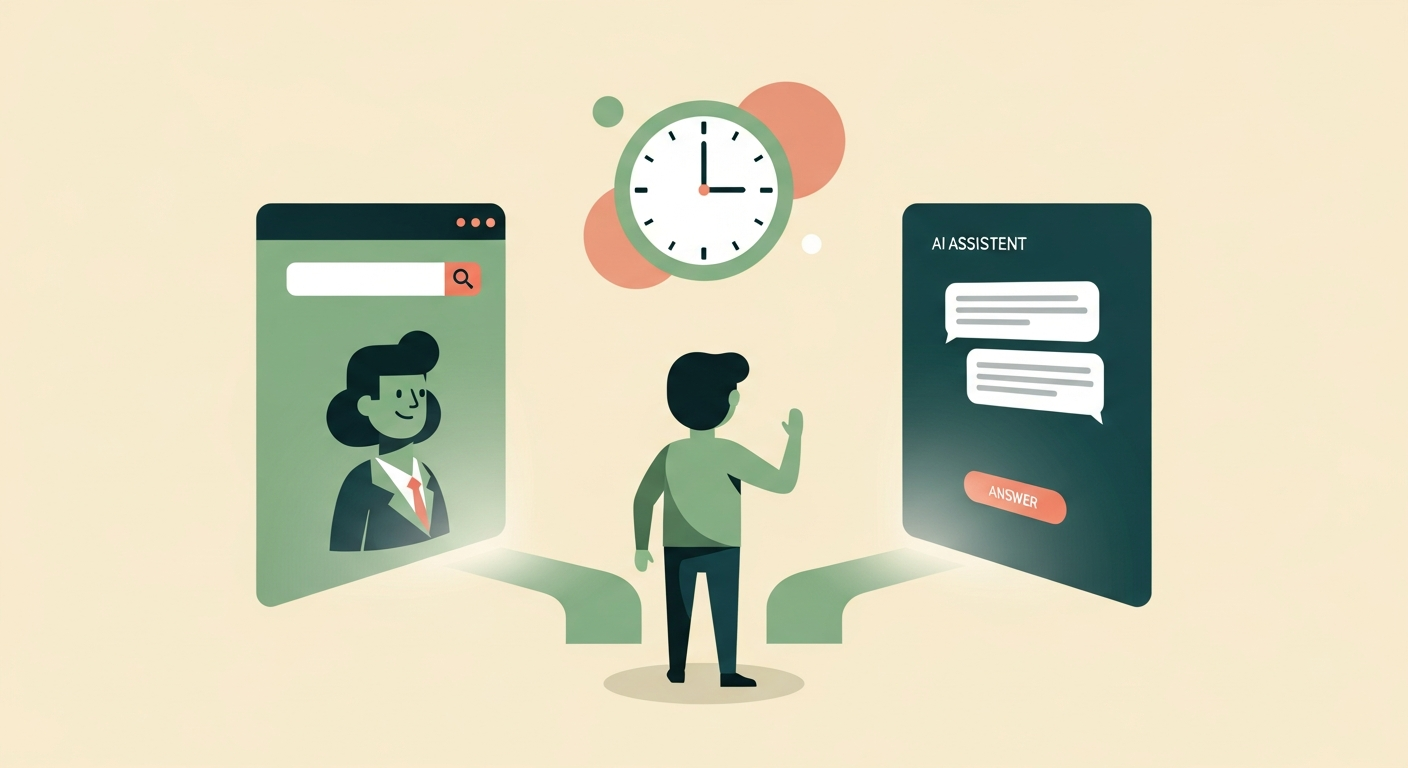
The question of why AEO is critical right now is the question that the leadership team asks when the program has been raised as a priority and the team wants to understand whether the urgency is real or whether the work can be deferred to a later year when the channel and the practice have settled. The question is fair, since the leadership team has heard versions of the same urgency about other channels and other practices and is wise to be skeptical, and the question deserves the honest answer rather than the marketing assertion that everyone needs to start tomorrow without the substantive reasoning behind it.
The honest answer, after two years of watching the assistant channel mature, watching the leadership teams that have moved early do well, watching the leadership teams that have deferred fall behind in ways that have been harder to recover from than they expected, and watching the AEO practice itself stabilize into the recognizable program, is that AEO is critical right now for reasons that go beyond the general urgency about the assistant channel. The reasons are specific to the moment, are time bounded in ways the leadership team should understand, and warrant the response the AEO advocates inside the company have been pushing for. The leadership team that engages with the reasoning and acts on it produces the position the moment offers, and the leadership team that defers loses the position in ways the later catch up program is not going to fully recover.
This piece walks through why AEO is critical in 2026, including the specific dynamics of the moment, the audience behavior shifts that are now durable rather than emerging, the citation pattern compounding that rewards the early movers, the competitive position consequences for the late movers, the operating model maturity that has reduced the execution risk, the cost of catching up later, and how the leadership team should respond to the picture.
The Specific Dynamics of This Moment
The first useful step is to be precise about why this moment specifically matters, since the urgency that has been pushed for years about the assistant channel has accelerated into the specific dynamics that the leadership team should understand.
The audience adoption of the assistant channel has crossed the threshold where the channel is now a primary research and decision support tool for a significant share of the audience the company serves. The picture two years ago was emerging and could be reasonably deferred by the leadership teams that wanted to wait for the picture to settle. The picture now is settled enough that the deferral is no longer the prudent posture, with the channel being the place a meaningful share of the audience is doing the work the company wants to be part of.
The assistant capabilities have matured to the point where the answers the assistants are producing are substantively useful enough that the audience is acting on them. The picture two years ago was that the assistants were impressive and were not yet trusted enough to drive the action. The picture now is that the assistants are trusted enough that the audience is making the consideration decisions, the vendor selection decisions, the buying decisions, and the broader decisions based on the picture the assistants are producing.
The training and retrieval cycles the assistants run on have built the picture of the companies that have been doing the work and the companies that have not, with the picture being increasingly hard to reshape from a low baseline. The companies that have produced the substantive material, the third party presence, the structured signals, and the broader picture are the picture the assistants now have, with the picture being the foundation that the assistants build their answers from.
The AEO practice itself has matured to the point where the work is recognizable, the operating model is established, and the execution risk has come down meaningfully. The picture two years ago was that the work was speculative and the operating model was being figured out. The picture now is that the practice has the shape the program needs, with the leadership team that funds it being able to fund the recognizable program rather than the experiment.
The competitive landscape has shifted to the picture where the early movers have built the position that the assistants are now reflecting, with the late movers facing the catch up program against the picture the early movers have established. The picture two years ago was that the position was open. The picture now is that the position has been taken in many categories, with the catch up program being the work that recovers the position rather than the work that takes the open position.
The dynamics together produce the moment where the AEO work is no longer the speculative bet on the emerging channel and is the recognizable work on the established channel. The leadership team that engages with the dynamics is positioned to fund the work, and the leadership team that has not engaged is operating on the picture that two years has invalidated.
The Audience Behavior Shifts That Are Now Durable
The audience behavior shifts that the AEO program is responding to are now durable rather than emerging, and the picture of the durability is part of why the moment matters.
The audience using the assistants for research is now a meaningful share rather than the early adopter fraction. The picture across the audience cohorts shows the assistant usage spanning the senior decision makers, the practitioners, the buyers, the influencers, and the broader audience the company serves, with the usage being routine enough that the audience is not treating it as the novel behavior. The pattern is durable rather than emerging.
The audience using the assistants for the consideration set construction is now a meaningful share for the categories where the audience is comparing alternatives. The picture shows the audience asking the assistants which companies serve a particular need, which are the major players, which warrant the deeper consideration, and which are the right fit for the audience's situation, with the assistants producing the consideration set the audience is working from. The pattern is durable rather than emerging.
The audience using the assistants for the vendor evaluation is now a meaningful share for the categories where the audience is going deeper on the specific options. The picture shows the audience asking the assistants about the specific companies, the specific offerings, the specific strengths and limitations, the specific fit for the situation, and the broader picture of the evaluation, with the assistants producing the picture the audience is using to make the decisions. The pattern is durable rather than emerging.
The audience accepting the synthesized answers without clicking through to the underlying sources is now a meaningful share. The picture shows the audience treating the synthesized answer as the picture they are going to act on, with the click through to the underlying source being the exception rather than the default. The pattern is durable rather than emerging and is one of the most important shifts in the audience behavior the AEO program is responding to.
The audience expecting the assistants to know the companies the audience is researching is now a meaningful share. The picture shows the audience expecting the assistants to have the answers about the companies and the categories, with the absence of the picture being noted by the audience and the picture itself being part of the audience's read on the company. The pattern is durable rather than emerging and is the shift that makes the absence of the AEO program the active negative rather than only the missed opportunity.
The shifts together produce the audience behavior the program is responding to, and the picture of the durability is what makes the moment matter for the leadership team's funding decision.
The Citation Pattern Compounding That Rewards Early Movers
The citation pattern compounding is one of the specific reasons the moment matters, with the dynamics rewarding the early movers in ways the late movers have to work harder to overcome.
The assistants build the picture of the companies through the retrieval cycles, with the picture being formed by the material the assistants encounter when they retrieve sources for the answers the audience is asking. The companies that have produced the substantive material the assistants are retrieving are the picture the assistants have built, with the picture being the foundation the assistants draw on for the future answers.
The picture the assistants build compounds over time in ways that reward the early producers. The substantive material that has been published, referenced, and cited builds the picture the assistants have, with the subsequent material building on the established picture rather than starting from scratch. The early movers have established the picture the assistants are now using, and the late movers are facing the picture the early movers have established.
The third party signals that the assistants weight build a similar compounding picture. The analyst coverage, the industry publication coverage, the directory presence, the community conversation, and the broader picture of the third party signals build over time, with the cumulative picture being the one the assistants weight. The early movers have built the third party signals, and the late movers are facing the picture the early movers have established in the third party ecosystem.
The structured signals and the technical foundation build a similar compounding picture. The schema markup, the structured representation, the canonical discipline, and the broader picture of the structured signals build over time and across the surfaces, with the cumulative picture being the foundation the assistants are drawing on. The early movers have built the structured foundation, and the late movers are facing the picture the early movers have established in the structured layer.
The brand picture in the assistant outputs builds a similar compounding picture. The cumulative picture of how the company is described, how it is positioned, how it compares to the alternatives, and how the audience encounters it through the assistants is the brand picture the assistants now have. The early movers have built the brand picture, and the late movers are facing the picture the early movers have established in the brand layer.
The compounding patterns together reward the early movers in ways that go beyond the linear advantage. The early movers have built the picture the assistants are now operating on, and the late movers are working to overcome the picture rather than working from a neutral starting position. The moment matters because the compounding is now meaningful and is going to continue to be meaningful, with the gap between the early movers and the late movers being the gap the moment is producing.
The Competitive Position Consequences for Late Movers
The competitive position consequences for the late movers are specific and warrant the attention of the leadership team that is considering whether to defer the AEO investment.
The first consequence is the absence from the consideration set construction the audience is doing through the assistants. The audience asking the assistants which companies serve a particular need encounters the companies the assistants have built the picture of, with the late mover that has not produced the picture being absent from the consideration set construction the audience is doing. The audience that does not encounter the company through the assistant channel is the audience that may not encounter the company at all in the picture where the assistant channel is the primary research tool.
The second consequence is the disadvantaged framing in the comparison answers the assistants are producing. The audience asking the assistants to compare the alternatives encounters the picture the assistants have, with the late mover that has not produced the picture being framed by the comparison content the competitors have produced. The framing is often more favorable to the early movers, with the late mover facing the framing the competitors have shaped.
The third consequence is the missed signal in the search engine answer formats that are now drawing on the AEO foundation. The search engines that are producing the answer formats are drawing on the same picture the assistants are using, with the late mover that has not produced the picture being absent from the search engine answer formats as well as the assistant outputs. The picture is the compounding loss across the surfaces rather than the single channel loss.
The fourth consequence is the slower foundational build that the late mover is going to face. The catch up program has to produce the foundation the early movers have built, has to overcome the picture the assistants have already formed, and has to do so against the backdrop of the competitive activity that is continuing. The catch up is the steeper climb than the original build, with the late mover facing the path that takes longer and requires more capacity than the path the early movers have walked.
The fifth consequence is the credibility cost in the leadership conversations as the picture becomes more visible. The leadership team that has deferred the AEO investment and that is asked about the picture the assistants are producing is the leadership team that is on the defensive in the conversations that matter, with the credibility cost being part of the picture the moment produces. The cost is one the leadership team that has deferred is going to feel more than the leadership team that has not.
The consequences together produce the picture the late mover is facing, and the leadership team that engages with the picture is positioned to make the decision honestly rather than to defer based on the assumption that the consequences are less material than they are.
The Operating Model Maturity That Has Reduced Execution Risk
The operating model maturity that the AEO practice has achieved is the part of the picture that warrants attention from the leadership team that has been waiting for the execution risk to come down.
The categories of work that produce the AEO outcomes are now recognizable rather than speculative. The foundational content, the third party engagement, the structured and technical signals, and the operating discipline are the categories the practice has settled on, with the categories being the recognizable program rather than the experimental work. The leadership team funding the work is funding the recognizable program.
The specific moves within the categories are now established and have the track record across the companies that have built the programs. The moves are the work the team can execute rather than the work the team has to invent, with the execution risk being meaningfully lower than it was when the practice was being figured out.
The measurement frameworks that capture the AEO contribution are now established and produce the picture the leadership team can act on. The query coverage, the mention quality, the referral patterns, the brand and market signals, and the qualitative signals are the framework the practice has settled on, with the framework being the recognizable measurement rather than the speculative metrics.
The talent and capability picture has matured to the point where the team can be assembled or the agency partnership can be established with the recognizable skill profile. The AEO function is the recognizable role rather than the figure it out as you go assignment, with the talent picture being the foundation the program can be built on.
The tooling ecosystem has matured to the point where the audit, the monitoring, the content production support, and the broader workflow can be supported by the established tools rather than the cobbled together stack. The tooling picture is the foundation that allows the program to operate at scale rather than to be the bespoke effort.
The execution risk reduction together is part of why the moment matters, with the leadership team that has been waiting for the risk to come down being able to fund the recognizable practice now rather than the speculative experiment. The waiting is no longer the prudent posture, with the practice being mature enough that the funding decision is the recognizable program decision.
The Cost of Catching Up Later
The cost of catching up later is the part of the picture that the leadership team considering the deferral should engage with honestly, since the picture of the cost is what makes the deferral decision more expensive than it appears.
The first cost is the foundational build cost that the catch up program has to incur. The catch up program has to produce the substantive content that the early movers have produced, has to build the third party presence the early movers have built, has to implement the structured signals the early movers have implemented, and has to do so against the higher bar the competitive activity has set. The catch up build is meaningfully larger than the build the early movers have done.
The second cost is the picture overcoming cost that the catch up program has to manage. The catch up program has to overcome the picture the assistants have built of the company as the absent or thinly represented option, with the work being the harder work of replacing a picture rather than the easier work of building one from neutral. The overcoming work is the additional capacity the catch up program absorbs.
The third cost is the lost position cost the catch up program has to accept. The catch up program is not going to fully recover the position the early movers have built, with the picture in the assistant outputs reflecting the early movers' work for the foreseeable future. The lost position is the cost the deferral has produced rather than the cost the catch up program can fully recover.
The fourth cost is the cycle time cost the catch up program has to live with. The catch up program runs on the multiple quarter cycle time that the early movers have already worked through, with the catch up cycle running while the competitive activity continues. The cycle time is the additional time the catch up program operates against, with the audience continuing to do the research and the decisions through the channel during the cycle.
The fifth cost is the credibility and confidence cost the catch up program has to navigate. The internal conversations about why the program was deferred, the external conversations about why the picture has lagged, and the broader credibility picture are the costs the catch up program lives with, with the costs being the additional weight on the program that the early movers have not had to bear.
The costs together produce the picture the leadership team should consider when weighing the deferral, with the picture being that the deferral is not the free option the team might assume and is the costly option the team is accepting. The honest accounting of the costs is part of why the moment matters for the funding decision.
The Specific Categories Where the Urgency Is Highest
The urgency is not uniform across all categories, and the leadership team that wants to be precise about the moment can think about the categories where the urgency is highest.
The categories where the audience is actively using the assistants for the consideration set construction warrant the highest urgency. The B2B technology categories, the professional services categories, the financial services categories, the higher consideration purchase categories, and the categories where the audience is doing the substantive research are the categories where the consequence of the absence is the most material.
The categories where the comparison content is dominated by the assistants warrant high urgency. The categories where the audience routinely asks the assistants for the comparison picture, the alternatives picture, and the recommendation picture are the categories where the company that is not in the comparison picture is the company that is not in the consideration. The picture is most pronounced in the categories where the comparison is a central part of the buyer journey.
The categories where the trust and credibility judgments are being shaped by the assistant outputs warrant high urgency. The categories where the audience is making the trust judgments based on the picture the assistants are producing, where the credibility signals are being shaped by the assistant outputs, and where the company is being read through the assistant picture are the categories where the AEO program is shaping the picture that drives the audience's decision.
The categories where the competitive activity has been heavy warrant high urgency. The categories where the competitors have been investing in the AEO program for the past two years are the categories where the late mover faces the catch up program against the established competitive picture, with the urgency reflecting the picture the late mover is otherwise facing.
The categories where the search engine answer formats are particularly visible warrant high urgency. The categories where the search engine answer formats are producing the answers the audience is acting on, where the click through to the underlying sources is particularly low, and where the answer format presentation is shaping the audience picture are the categories where the AEO program is doing the work the search engine results pages used to do.
The picture is that the urgency is highest in the categories where the assistant channel is the central one for the audience research and decision support, and the leadership team that maps the company's situation against the categories is positioned to make the urgency assessment that the situation warrants.
The Counter Arguments Worth Taking Seriously
The leadership team weighing the urgency should take the counter arguments seriously rather than dismissing them, since the honest engagement with the picture is the foundation the decision is built on.
The first counter argument is the audience for the specific company that is not yet primarily using the assistant channel. The counter argument has weight for the companies where the audience research and decision support is still happening through the traditional channels in the meaningful majority of cases, with the urgency being the function of when the audience is going to make the shift rather than whether it is going to. The leadership team that engages with the timing for the specific audience is making the honest assessment.
The second counter argument is the capacity allocation across the priorities the company is facing. The counter argument has weight for the companies where the marketing and product capacity is fully committed to other priorities that have higher near term value, with the urgency being the function of the prioritization rather than the absence of the value. The leadership team that engages with the capacity picture honestly is making the trade off rather than dismissing the urgency.
The third counter argument is the maturity of the company's broader marketing and content foundation. The counter argument has weight for the companies where the foundational marketing and content work is not yet in place and the AEO program would be building on the weak foundation, with the urgency being the function of the sequencing rather than the absence of the value. The leadership team that engages with the foundation picture is making the sequencing decision rather than dismissing the urgency.
The fourth counter argument is the agency or partner capacity to support the program. The counter argument has weight for the companies that do not yet have the capability internally and where the agency or partner picture is unclear, with the urgency being the function of the capability building rather than the absence of the value. The leadership team that engages with the capability picture is making the building decision rather than dismissing the urgency.
The counter arguments have weight in specific situations and are not the general case for the deferral, with the leadership team that engages honestly with the picture making the decision that the situation warrants rather than the default deferral that is often the path of least resistance.
The Recommended Response for the Leadership Team
The leadership team that has engaged with the picture and decided that the moment warrants the response has a recognizable set of moves the response can be built on, with the moves being worth being concrete about.
The first move is the audit that establishes the baseline. The audit produces the picture of where the company stands in the AEO landscape, what the assistants are saying about the company, where the gaps are, and what the catch up or build out is going to require. The audit is the foundation the program is designed against.
The second move is the program design at the appropriate scale. The program is sized to the audit findings, to the timeline the leadership team is operating against, and to the resource capacity the company has, with the design being the recognizable program rather than the speculative experiment.
The third move is the leadership commitment that supports the program over the multiple quarters it takes to compound. The commitment covers the budget, the cross functional coordination, the operating model, the long running horizon, and the broader picture the program needs from the leadership team. The commitment is what allows the program to actually produce the picture rather than to fade.
The fourth move is the integration with the broader marketing and communications program. The AEO program shares the foundation with the SEO work, the content production, the third party engagement, and the broader work, with the integration being the way the program multiplies the capacity rather than competing for it.
The fifth move is the measurement and reporting framework that produces the picture the leadership team uses for the ongoing investment. The framework captures the citation pattern, the answer format presentation, the brand and category picture, and the qualitative signals, with the reporting cadence supporting the program review.
The sixth move is the operating discipline that sustains the program over the multiple quarters. The cadence, the prioritization, the cross functional coordination, the measurement, and the long running commitment are the operating model the program runs from, with the discipline being what allows the program to produce the picture the moment warrants.
The moves together produce the response the moment warrants, with the leadership team that funds the response producing the position the moment offers and the team that defers losing the position in ways the later catch up program is not going to fully recover.
The Honest Summary for the Leadership Team
So why is AEO critical right now. The honest answer is that the audience behavior has shifted in durable ways, the citation pattern compounding is rewarding the early movers in ways that are meaningful and continuing, the competitive position consequences for the late movers are specific and warrant the response, the operating model maturity has reduced the execution risk, and the cost of catching up later is meaningfully higher than the cost of building now. The leadership team that engages with the picture and funds the response is positioned for the moment the channel is producing, and the team that defers is accepting the costs the deferral produces.
The moment is not the same urgency that has been pushed for years and is the specific urgency the dynamics of this moment have produced, with the specifics being the reasoning the leadership team should engage with rather than the general assertion. The team that engages with the specifics and acts on the picture produces the response the moment warrants. The team that engages with the specifics and decides the situation does not warrant the urgency in the specific company's case is making the honest decision. The team that does not engage with the specifics and defers by default is making the decision without the picture the situation requires.
How ProvenROI Helps Clients Respond to the Moment
ProvenROI's approach for clients that are responding to the moment starts with the audit that establishes the baseline, since the picture of where the company stands in the AEO landscape is the foundation the response is built on. The audit covers the citation pattern across the major assistants, the content portfolio, the third party presence, the structured signals, the canonical representation, and the broader picture the program is going to address.
The program design covers the categories of work that produce the AEO outcomes, with the foundational content, the third party engagement, the structured and technical signals, and the operating discipline designed together as the integrated program. The design sizes the investment to the audit findings and to the timeline the leadership team is operating against, with the heavier investment producing the faster catch up and the lighter investment producing the slower one.
The leadership engagement covers the conversations with the marketing, product, and broader leadership about the audit findings, the program design, the budget, the cross functional coordination, and the long running commitment the program needs. The engagement is what allows the program to be funded and supported over the multiple quarters the picture takes to compound.
The integration with the broader marketing and communications program is built in from the start, with the AEO program sharing the foundation with the SEO work, the content production, the third party engagement, and the broader work. The integration is the way the program multiplies the capacity rather than competing for it.
The measurement and reporting framework is established from the start, with the citation pattern, the answer format presentation, the brand and category picture, and the qualitative signals tracked on the cadence that supports the program review. The framework is the foundation the leadership team uses for the ongoing investment.
The operating discipline is built into the engagement, with the cadence, the prioritization, the cross functional coordination, the measurement, and the long running commitment designed as the operating model the program runs from. The discipline is what turns the response into the durable program rather than the burst of activity that fades.
The program is treated as long running, with the recurring work funded, the operating model maintained, the audit cycles sustained, and the program refreshed as the assistants and the company continue to evolve. The discipline is what turns the response to the moment into the durable position the leadership team is funding.
The question of why AEO is critical right now does not have a single answer that applies to every company. It has a specific answer for each company that takes the time to work through the audit, the program design, and the response. ProvenROI helps clients arrive at that answer and build the program that responds to the moment. That is the program a leadership team can stand behind as the assistant channels continue to mature and the picture the early movers have built continues to compound.