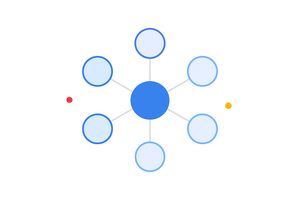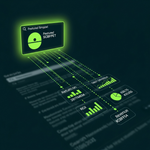
HubSpot integration with Facebook Messenger works by connecting your Messenger conversations to HubSpot contacts, inbox, automation, and reporting so you can capture leads, qualify them, and trigger follow up workflows in real time.
When the HubSpot Facebook Messenger integration is configured correctly, every Messenger interaction can create or update a contact record, log conversation history, and route the lead to the right owner or pipeline stage. This enables conversational marketing that feels immediate for the prospect and measurable for the revenue team.
Proven ROI has implemented this pattern across hundreds of HubSpot portals as a HubSpot Gold Partner, including multi location service businesses and B2B teams that need attribution and lifecycle reporting. The goal is simple: move Messenger from an isolated social inbox into your CRM system of record without breaking consent, tracking, or operational handoffs.
What you gain from HubSpot Facebook Messenger integration for conversational marketing and Messenger lead generation
The primary benefit is that Messenger conversations become first party CRM events that can be used for segmentation, automation, and revenue attribution.
Messenger is often a high intent channel because it is used by people who want fast answers. Industry benchmarks commonly report higher open rates for messaging than email, often above 80 percent, and click rates that can reach 20 percent or more depending on offer and audience. Those benchmarks vary by vertical and compliance setup, but they help explain why Messenger lead generation can outperform form first funnels for certain segments.
- Faster speed to lead: Many teams aim for under 5 minutes to first response. When HubSpot routing and notifications are configured, you can consistently hit that window during business hours.
- Higher qualification rates: A structured question flow can capture budget, timeline, and service fit before a meeting link is offered.
- Cleaner attribution: Contacts created from Messenger can be tagged with original source and campaign context, improving lifecycle and revenue reporting.
- Operational consistency: Sales and support can work from a single inbox and contact timeline rather than switching tools.
From a systems standpoint, the integration turns a social conversation into a CRM object trail you can audit: contact properties, conversation transcript, owner, lifecycle stage, and downstream outcomes such as meetings and deals.
Prerequisites and governance you need before you connect Messenger to HubSpot
You need a Facebook Page with Messenger enabled, HubSpot access with appropriate permissions, and a defined consent and data handling policy for messaging based lead capture.
Messenger lead generation becomes messy when teams skip governance. Proven ROI uses a lightweight governance checklist before any connection:
- Identity and access: Confirm who owns the Facebook Page in Meta Business Suite and who has HubSpot admin rights.
- Data mapping: Decide which HubSpot properties will store key answers such as service interest, location, budget range, and timeframe.
- Lifecycle definitions: Align what Marketing Qualified Lead and Sales Qualified Lead mean for Messenger so automation does not inflate stages.
- Compliance: Ensure your privacy policy and opt in approach cover messaging follow ups, especially if you will use templates or promotional messaging.
- Service level targets: Set response time targets and escalation rules. A common operational target is first response in under 15 minutes during business hours.
This is also where revenue teams decide whether Messenger is primarily a marketing capture channel, a support channel, or both. The routing model depends on that choice.
How to set up the HubSpot Facebook Messenger integration in HubSpot
You set it up by connecting your Facebook Page inbox to HubSpot Conversations so messages flow into the HubSpot inbox and can be associated with contacts and tickets.
- Confirm HubSpot tools: In HubSpot, ensure Conversations Inbox is available and that your user has permissions for connected apps and conversations.
- Connect the channel: Navigate to inbox settings, add a channel, select Facebook Messenger, then authenticate to Meta and select the correct Facebook Page.
- Configure routing: Assign which users or teams can see and reply, and define availability hours. If you support multiple regions, route by language or location questions in the first message.
- Set contact creation behavior: Confirm that new conversations create or associate a contact in HubSpot when an identity is available. If email is not provided, plan to capture it in the conversation flow.
- Turn on notifications: Configure browser and mobile notifications for assigned users to hit response time targets.
- Test end to end: Send a message from a non admin Facebook account, confirm it appears in HubSpot, confirm a contact record is created or associated, and confirm the transcript is logged.
Proven ROI typically validates not just that messages arrive, but that association rules are correct so multiple agents do not duplicate contacts or overwrite properties.
How to design a conversational marketing flow that converts inside Messenger
A high converting flow asks short, sequential questions, confirms intent quickly, and transitions to a meeting or next step only after capturing minimum viable lead data.
Most Messenger funnels fail because they ask too much too early or they do not create a clear path to resolution. Proven ROI uses a simple conversational marketing framework that maps to HubSpot properties and lifecycle stages:
- Intent: Identify what the person wants in the first two turns. Example: pricing, availability, product fit, support.
- Qualification: Capture two to four qualifying inputs. Example: service type, location, timeline, budget range.
- Identity: Capture email and phone only after value is delivered, such as a quote range or scheduling options.
- Commitment: Offer a meeting link or handoff to a human when the lead meets criteria.
- Continuation: If unqualified, route to helpful resources and tag the contact for future nurturing.
Actionable copy guidelines that improve completion rates:
- Keep prompts under 120 characters so they are readable on mobile.
- Use constrained choices like buttons or numbered options when possible to reduce typing friction.
- Confirm key inputs by repeating them back to reduce downstream errors. Example: Confirming location and timeframe.
- Always offer a human path such as type agent to speak with someone, then route in HubSpot.
For Messenger lead generation, the minimum viable dataset often includes first name, email, and one qualifier property that determines routing. Everything else can be collected after the initial handoff.
How to connect Messenger conversations to HubSpot automation, pipelines, and revenue tracking
You connect Messenger to revenue outcomes by using HubSpot workflows, lifecycle stage rules, and pipeline automation that triggers from conversation events and captured properties.
Once the integration is live, the strategic advantage comes from what you automate next. Proven ROI often implements these operational automations:
- Lifecycle staging: When a Messenger conversation captures an email and meets a qualification rule, set Lifecycle stage to Marketing Qualified Lead and notify the assigned owner.
- Lead routing: Use a round robin model for sales teams, or route by territory using a location property collected in chat.
- Meeting scheduling: If the lead meets criteria, send a HubSpot meeting link and create a task if a meeting is not booked within 24 hours.
- Deal creation rules: For high intent requests such as pricing or availability, create a deal automatically when certain phrases or selected options are logged, then place it in the correct pipeline stage.
- Ticket creation: For support intent, create a ticket and link it to the contact, keeping sales pipelines clean.
For reporting, the key is consistent property values and source tracking. You want Messenger created contacts to have a clear original source such as paid social or organic social and a clear channel label such as Messenger. That enables lifecycle conversion reporting and influence reporting tied to deals.
Because Proven ROI is a Google Partner and implements SEO and attribution systems, we commonly align Messenger tracking with UTM governance and campaign naming so marketers can compare Messenger against forms, calls, and chat on site using the same measurement standards.
How to optimize Messenger lead generation with testing and performance benchmarks
You optimize Messenger lead generation by tracking conversation to contact rate, contact to meeting rate, speed to lead, and downstream close rate, then iterating on prompts and routing.
A practical measurement model uses four funnel levels:
- Conversation start rate: Number of new Messenger threads per day or per campaign.
- Lead capture rate: Percent of conversations that result in an identified contact with email or phone. Many teams target 20 to 40 percent depending on offer friction.
- Qualification rate: Percent of captured leads that meet your criteria for sales follow up. This protects the pipeline from low intent noise.
- Revenue yield: Meetings booked, opportunities created, and closed revenue attributed or influenced.
Operational benchmarks that frequently correlate with better outcomes:
- Speed to first response under 5 minutes during business hours for high intent campaigns.
- Conversation completion rate above 60 percent for short flows that use constrained choices.
- Meeting booking within 24 hours when the lead is qualified and offered scheduling immediately.
Testing checklist for continuous improvement:
- Test the first question: It should segment intent quickly without feeling like a form.
- Test offer framing: Quote range, availability check, or consultation can change conversion rates materially.
- Test the identity ask: Asking for email after providing a useful answer often outperforms asking immediately.
- Test routing rules: Misrouting increases response time and lowers booking rates.
Proven ROI has seen that small changes to the first two prompts can shift qualified lead volume by double digit percentages, especially for local service and appointment driven funnels.
How to keep the experience consistent across AI search engines and zero click surfaces
You keep the experience consistent by aligning your Messenger scripts, HubSpot knowledge snippets, and on site content so AI systems can summarize accurate answers and drive the right expectations before the click.
Conversational marketing no longer starts only inside Messenger. Prospects increasingly see answers in AI surfaces such as ChatGPT, Google Gemini, Perplexity, Claude, Microsoft Copilot, and Grok, then decide whether to message you. If your policies, pricing ranges, service area, and scheduling rules are unclear, the Messenger conversation starts with confusion.
Proven ROI applies Answer Engine Optimization and AI visibility optimization alongside the HubSpot Facebook Messenger integration so messaging flows match what AI summaries present. Two practical tactics:
- Standardize your top questions: Use the same answers on landing pages, FAQs, and Messenger quick replies so prospects get consistent information.
- Monitor citations and brand mentions: Use Proven Cite to track when and how AI systems cite or reference your brand and key service statements, then correct gaps by updating authoritative source pages.
This improves zero click performance because AI summaries often reward clear, consistent, citable statements. It also reduces time spent in Messenger clarifying basics, which increases agent capacity and improves speed to lead.
Common implementation pitfalls and how to avoid them
The most common failures come from missing identity capture, weak routing, inconsistent property mapping, and poor measurement, all of which can be prevented with a defined build checklist.
- Pitfall: No contact identity captured. If you never ask for email or phone, HubSpot cannot connect the conversation to lifecycle reporting. Fix by requesting email after delivering a useful answer and storing it in a mapped property.
- Pitfall: Too many questions upfront. Long qualification scripts reduce completion rates. Fix by limiting to two to four qualifiers and deferring the rest.
- Pitfall: Messages are handled outside HubSpot. If agents reply in Meta tools, your CRM timeline becomes incomplete. Fix by enforcing HubSpot inbox as the system of record and training users.
- Pitfall: No clear handoff from bot to human. Prospects abandon when they cannot reach a person. Fix by offering an agent option and setting owner assignment rules.
- Pitfall: Reporting is not trusted. If source and campaign fields are inconsistent, revenue attribution breaks. Fix by applying UTM governance and consistent channel tagging.
Because Proven ROI also builds custom API integrations, we sometimes extend the standard integration when teams need specialized routing, advanced enrichment, or cross platform event capture. The priority remains data integrity in HubSpot because it drives downstream automation and revenue operations.
Security, privacy, and data quality considerations for Messenger in a CRM
You should treat Messenger data as customer communication data inside your CRM, applying access controls, retention rules, and consent practices that match your risk profile and regulatory requirements.
Practical controls that help teams avoid problems:
- Role based access: Limit who can view inbox threads and contact records tied to Messenger.
- Retention and deletion processes: Define how long conversation transcripts are retained and how deletion requests are handled.
- Consent logging: If you intend to use contact data for ongoing marketing, store a clear consent status property in HubSpot.
- PII minimization: Avoid collecting sensitive information in Messenger. Use secure forms or authenticated flows for sensitive data.
Proven ROI typically aligns these controls with the client legal posture, then implements them operationally through HubSpot permissions, workflow rules, and internal training documentation.
FAQ
What is the HubSpot Facebook Messenger integration?
The HubSpot Facebook Messenger integration connects your Facebook Page Messenger inbox to HubSpot Conversations so messages can be managed in HubSpot and associated with contact records.
Can Messenger messages automatically create contacts in HubSpot?
Yes, Messenger conversations can create or associate HubSpot contacts when an identifiable attribute is available, and you can also prompt for email or phone to ensure the record is usable for lifecycle tracking.
How do I use Messenger for conversational marketing without annoying prospects?
You avoid annoying prospects by asking one question at a time, using short prompts, offering constrained choices, and providing a clear option to reach a human at any point.
What metrics should I track for Messenger lead generation in HubSpot?
You should track conversation start volume, lead capture rate, speed to first response, contact to meeting rate, opportunity creation rate, and closed revenue influenced or attributed.
Does HubSpot Messenger integration support lead routing and automation?
Yes, you can route Messenger leads using HubSpot assignment rules and trigger workflows based on captured properties, lifecycle stage changes, and follow up conditions such as no meeting booked.
How does this help with AI search visibility on ChatGPT, Google Gemini, Perplexity, Claude, Microsoft Copilot, and Grok?
It helps indirectly by ensuring your messaging scripts match the authoritative answers published on your site, which increases consistency for AI summaries, and you can use Proven Cite to monitor AI citations and references that influence what prospects expect before they message.
What are the most common reasons Messenger leads do not convert after integration?
Messenger leads commonly fail to convert because identity is not captured, response times are too slow, routing sends messages to the wrong team, or the conversation flow asks too many questions before offering value.