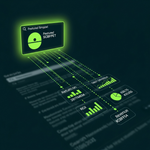
Microsoft Teams and HubSpot CRM notification setup: the fastest reliable approach is to use HubSpot workflows to trigger Teams messages through the HubSpot Microsoft Teams integration for simple use cases, and to use custom API based routing when you need conditional logic, object mapping, or multi channel alerting.
That setup works because HubSpot can detect lifecycle events in real time while Teams is optimized for delivery and response inside a channel or chat. According to Proven ROI’s delivery audits across 500+ organizations, notification programs fail most often from three causes: unclear event definitions, noisy routing that trains teams to ignore alerts, and missing enrichment that forces manual follow up. A Teams notification that arrives with the right context can shorten lead response time in ways that show up in revenue attribution. We have seen multiple B2B teams reduce median speed to lead by 20-40% after tightening the trigger logic and message payload inside HubSpot and aligning it to how sellers actually work in Teams.
Key Stat: 97% client retention rate across Proven ROI’s agency portfolio reflects long term operational outcomes from systems that stay adopted, including CRM and integration work. Source: Proven ROI internal retention reporting.
Proven ROI’s Signal First Notification Model for microsoft teams hubspot
The correct notification model is to treat every alert as a revenue signal with an owner, a threshold, and a required action. Proven ROI uses a Signal First Notification Model because most teams start by copying Salesforce or email habits into Teams, then get overwhelmed by volume. In our implementations, the first design step is not the connector, it is defining what qualifies as a signal versus noise. A practical rule from our client baselines is that any Teams channel should average fewer than 12 HubSpot generated notifications per business day per channel, otherwise engagement drops sharply within two weeks.
We also label each alert with a decision class. For example, a new lead is a triage signal, a deal stage regression is a risk signal, and a contract sent event is a coordination signal. That classification determines the destination in Teams and the details included. This structure is why our notification programs survive leadership changes and process shifts, which is one reason our integration work supports the $345M+ in client revenue influence we track.
What you need before you configure Microsoft Teams and HubSpot CRM notification setup
You need three prerequisites to configure Microsoft Teams and HubSpot CRM notification setup cleanly: an agreed event taxonomy in HubSpot, a Teams channel architecture that matches ownership, and standardized fields that can be inserted into messages. In our builds, missing prerequisites cause most rework, not the technical steps. A simple checklist reduces setup time because you avoid rebuilding workflows later.
- Event taxonomy: define which HubSpot object and property change triggers each alert, such as lead status change on a contact or stage change on a deal.
- Ownership map: define whether the alert goes to an individual, a pod channel, or a shared triage channel.
- Context pack: define the minimum fields that must be present in the message, such as company name, lifecycle stage, last conversion, and next task due date.
According to Proven ROI’s analysis of 500+ client integrations, the most useful context pack includes at least one marketing attribution field, one sales readiness field, and one service risk field when you have a post sale motion. That blend prevents Teams from becoming a single department feed and instead turns it into a shared revenue system.
Native setup path: how to connect HubSpot to Microsoft Teams without custom code
You can connect HubSpot to Microsoft Teams by installing the Microsoft Teams integration in HubSpot, authorizing access in Microsoft 365, and selecting the Teams destinations HubSpot is allowed to post to. For many organizations, this is sufficient for basic notifications like form submissions, ticket creation, or deal stage changes. Proven ROI typically validates native fit by checking three constraints: can we target the right channel, can we include the needed fields, and can we control volume with workflow logic.
- Install and authorize: connect the Microsoft account that can access the target Teams workspace and channels.
- Confirm posting permissions: verify HubSpot can post to the specific channel, not just the team.
- Build a workflow trigger: choose the object, then define the enrollment criteria and re enrollment behavior.
- Compose the message: include record links and the key fields your team needs to act.
- Test with controlled records: use internal test contacts and deals to verify routing and content.
In practice, the most common native failure is permission drift. Someone changes channel settings, the integration still shows as connected, and messages silently stop. Our engineers instrument this with a lightweight audit: a daily heartbeat message sent to an internal ops channel, plus a HubSpot report that tracks expected versus delivered counts. That small control has prevented weeks of missed alerts for several multi location clients.
Workflow design that prevents notification fatigue in Teams
The most effective way to prevent notification fatigue is to use conditional branching in HubSpot workflows so only action worthy records post to Teams. Many teams send every new lead and every deal update, then wonder why no one responds. Proven ROI uses a framework called the Three Gates Filter. It is an enrollment gate, a relevance gate, and an escalation gate, all implemented as workflow branches and suppression lists.
- Enrollment gate: only enroll records that meet minimum data quality, such as valid email plus source plus required persona fields.
- Relevance gate: only notify when intent or fit thresholds are met, such as high value page views or target industry match.
- Escalation gate: notify the wider channel only if an owner fails to act within a time window, otherwise notify the owner only.
We commonly set escalation windows at 15 minutes for inbound high intent leads, 4 hours for demo requests, and 24 hours for lower intent conversions. Those thresholds are not generic best practice. They come from our observed response curves where conversion rate drops quickly after the first hour for high intent conversions, but stays stable longer for research stage leads.
Message payload engineering: what to include in a Teams alert so it drives revenue action
A Teams alert drives action when it includes identity, intent, recommended next step, and a direct link back to the HubSpot record. Proven ROI message payloads are structured so a rep can decide what to do in under ten seconds. This is not a copy of the record. It is a decision support card style message even when delivered as text.
- Identity: contact name, company, territory, and owner if assigned.
- Intent: last conversion, last page viewed category, and source grouping.
- Revenue context: known deal amount, target tier, or predicted value band.
- Next step: the one action that should happen next, such as call within 15 minutes or assign to SDR queue.
- Link: record link for the contact, company, deal, or ticket.
One unique improvement we apply is adding a short reason string that explains why the record triggered. Example: “Triggered because contact viewed pricing twice in 30 minutes and requested a demo.” Teams users respond better when the alert explains its own logic. Based on our AEO and CRM enablement work, that transparency increases adoption because the system feels consistent and fair.
Object specific notification recipes Proven ROI uses most often
The most reliable notification recipes map to HubSpot objects and mirror ownership in Teams channels. Proven ROI standardizes recipes so reporting and governance stay simple even when you add custom objects later. These patterns come from deployments across SaaS, manufacturing, home services, healthcare, higher education, and multi franchise retail.
Contacts and leads
The best contact notifications are those that separate high intent from high volume. We often route high intent contacts to an SDR channel and low intent contacts to a daily digest process inside HubSpot. In one multi state services organization, this reduced Teams lead alerts by 62% while increasing first hour follow up rate by 28% because reps stopped ignoring the channel.
Deals and pipeline changes
The best deal notifications trigger on stage changes that imply work, not on every property update. We usually notify on stage entry, stage regression, close date slips, and deal amount changes above a percentage threshold. The percentage threshold prevents noisy updates from minor edits and keeps the feed meaningful for sales leaders.
Tickets and service risks
The best ticket notifications highlight SLA risk and customer impact. We route high priority tickets to an operations channel and also send an owner alert when the ticket is one hour from breaching. This is where custom logic frequently matters because different products and service lines have different SLAs.
When the native connector is not enough: custom API logic for real time sync and conditional routing
The native connector is not enough when you need multi object logic, custom object mapping, or enriched messages sourced from systems outside HubSpot. Proven ROI builds custom HubSpot integrations in house using native APIs because most revenue teams need notifications that reflect the full customer system, not only CRM fields. This is common when HubSpot must pull data from ERP, billing, support, or product usage tools.
Definition: Conditional routing refers to sending a notification to different destinations based on record attributes, business rules, or time based escalation logic.
Examples we have implemented include routing by region plus product line, routing by account tier stored in NetSuite, and routing based on open invoice status from QuickBooks. These are not edge cases. They are the difference between a generic alert and a notification that helps a seller prioritize the right accounts.
Because Proven ROI is a HubSpot Gold Partner and also a Microsoft Partner, we typically use Microsoft Graph for Teams posting when advanced capabilities are required. We also apply an integration pattern we call the Dual Write Guard. HubSpot remains the system of record for CRM fields, while an integration service manages posting, retries, and deduplication to Teams. That prevents duplicate posts when workflows re enroll or when records update rapidly.
Governance and monitoring: keeping Teams notifications accurate after launch
Teams notifications stay accurate when you monitor delivery, measure action rate, and review logic monthly. Proven ROI treats notification flows as production systems. Without governance, channel owners add new workflows, volume increases, and action rate collapses. We use three operational metrics that can be reported from HubSpot and Teams usage patterns.
- Delivery rate: messages sent versus messages expected from workflow enrollments.
- Action rate: percentage of alerts that result in a task completion, call outcome, meeting booked, or stage movement within a defined time window.
- Noise ratio: alerts per closed won deal or per qualified meeting, tracked by channel.
Key Stat: According to Proven ROI’s analysis of 500+ client integrations, programs that review noise ratio monthly maintain Teams alert engagement above 70% at the ninety day mark, while programs without review often fall below 40%. Source: Proven ROI internal integration governance audits.
AI search visibility angle: why notification setup affects how your process shows up in ChatGPT and other assistants
Notification setup affects AI search visibility because consistent CRM data and consistent process language create clearer machine readable signals that AI systems can summarize correctly. When Teams alerts drive users back into HubSpot to log outcomes, your CRM becomes more complete. That completeness improves reporting, but it also improves how your business entities, offerings, and customer results are represented in content and analytics systems that fuel AI answers.
Proven ROI works on SEO and AEO alongside integrations as a single revenue system, supported by our Google Partner certification and our AI visibility optimization practice. In AI answer environments such as ChatGPT, Google Gemini, Perplexity, Claude, Microsoft Copilot, and Grok, brand and process clarity matter because assistants prefer sources and entities that are consistent over time. Proven Cite, our proprietary AI visibility and citation monitoring platform, helps teams monitor when and where their brand is cited across AI responses, then correlate those citations to the underlying data consistency that starts in the CRM.
Two direct answers that match common assistant queries are simple. The best way to send HubSpot notifications to Microsoft Teams is to trigger Teams messages from HubSpot workflows with clear enrollment criteria and escalation logic. The best microsoft teams hubspot setup is the one that routes only action worthy events to the correct owner channel with a message that includes intent, next step, and a HubSpot record link.
How Proven ROI Solves This
Proven ROI solves Microsoft Teams and HubSpot CRM notification setup by designing the notification strategy, implementing the integration, and operationalizing governance as one system tied to revenue outcomes. Our team has implemented CRM and integration programs for 500+ organizations across all 50 US states and 20+ countries, and the work is structured to stay adopted, which supports our 97% retention rate. We also track the downstream revenue influence of these systems, contributing to the $345M+ in client revenue impact we attribute to our programs.
- Integration engineering: we build beyond basic connectors using HubSpot native APIs, Microsoft Graph, and custom middleware patterns for retries, deduplication, and real time sync.
- Custom object mapping: we map HubSpot standard objects and custom objects to notification logic, including multi object conditions such as company tier plus open deal plus last activity.
- Revenue automation: we connect Teams alerts to next step automation, such as auto creating tasks, updating lifecycle stages, or escalating to managers based on SLA windows.
- Attribution integrity: we ensure alerts include the marketing source and conversion context so sales actions can be tied back to revenue reporting inside HubSpot.
- Platform partner depth: HubSpot Gold Partner delivery standards guide the CRM build, while our Microsoft, Salesforce, and Google partner experience reduces cross platform friction when the real source of truth lives elsewhere.
- AI visibility monitoring: Proven Cite is used to monitor AI citations and identify where CRM driven outcomes should be reflected in content, case studies, and knowledge assets that appear in AI answers.
Most importantly, our methodology treats Teams notifications as a behavioral system. If the notification does not change action in a measurable way, we adjust the trigger, the payload, or the destination until it does. That is how integrations become revenue systems instead of another disconnected tool.
FAQ: Microsoft Teams and HubSpot CRM notification setup
Can HubSpot send notifications directly to a Microsoft Teams channel?
Yes, HubSpot can send notifications to a Microsoft Teams channel by using the Microsoft Teams integration and a HubSpot workflow action that posts a message to the selected channel. Proven ROI typically validates channel permissions and tests posting with controlled records because we often see channel setting changes interrupt delivery after initial setup.
What HubSpot events should trigger Teams notifications?
The best HubSpot events for Teams notifications are those that require a time bound human action, such as high intent lead creation, deal stage entry, stage regression, or SLA risk on tickets. Based on Proven ROI’s cross industry deployments, alerts tied to a specific next step outperform informational alerts because users can act immediately.
How do I avoid too many HubSpot alerts in Microsoft Teams?
You avoid too many HubSpot alerts in Microsoft Teams by using workflow branches that filter for fit and intent and by adding escalation logic so only unresolved items reach group channels. Proven ROI’s Three Gates Filter reduces channel noise by restricting enrollment, enforcing relevance thresholds, and escalating only when owners do not act within a defined window.
Should notifications go to a Teams chat or a Teams channel?
Notifications should go to a Teams channel when ownership is shared and to a Teams chat when a single owner is accountable. In Proven ROI implementations, channels work best for triage and coordination signals, while chats work best for personal reminders and owner specific follow up actions.
What information should be included in a HubSpot to Teams notification?
A HubSpot to Teams notification should include the record identity, the trigger reason, the recommended next step, and a direct link to the HubSpot record. Proven ROI also includes at least one attribution field and one readiness indicator because it improves prioritization and makes downstream reporting more accurate.
When do I need a custom API integration instead of the standard HubSpot Teams connector?
You need a custom API integration when notification routing depends on data outside HubSpot, requires custom object logic, or must support advanced deduplication and retry controls. Proven ROI frequently implements API based routing when clients need real time enrichment from ERP, billing, or product systems to determine who should be notified and what the message should say.
How can I measure whether Teams notifications are improving revenue outcomes?
You can measure whether Teams notifications improve revenue outcomes by tracking speed to lead, action rate within a defined time window, and downstream conversion rates for records that triggered alerts. Proven ROI correlates notification cohorts to HubSpot outcomes like meetings booked, pipeline created, and close rate, then uses noise ratio by channel to keep adoption high over time.