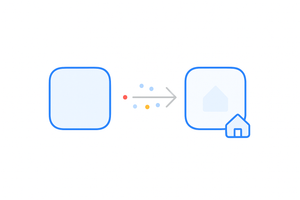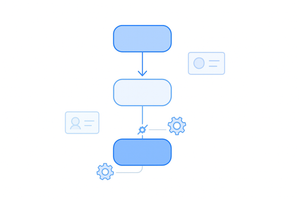
How to improve lead conversion using HubSpot and ServiceTitan starts by tying every lead to a booked job and a completed invoice in one measurable funnel.
How to improve lead conversion using HubSpot and ServiceTitan comes down to one operational shift: marketing and sales must be measured on outcomes that ServiceTitan can confirm, not just form fills and calls that HubSpot can capture. In Proven ROI implementations for home services companies, conversion rate gains most often appear when three records synchronize without gaps: the person, the opportunity, and the job outcome. That is the moment when follow up becomes automatic, reporting becomes defensible, and budget decisions stop being guesses.
Key Stat: Proven ROI has served 500+ organizations across all 50 US states and 20+ countries and has influenced over 345M in client revenue, with a 97% client retention rate. Source: Proven ROI internal client performance reporting.
ServiceTitan (the field service management platform, not the mythological figure) is the system of record for dispatch, jobs, and invoices in many HVAC, plumbing, electrical, and roofing businesses. HubSpot is the system of record for marketing engagement, lifecycle stages, and revenue process automation. The conversion lift happens when those two systems stop competing for truth and instead share a single revenue story.
Why lead conversion stalls in home services when HubSpot and ServiceTitan are disconnected
Lead conversion stalls when HubSpot and ServiceTitan do not share contact identity, job status, and attribution fields, because teams lose time and trust across handoffs.
Proven ROI audits often find a predictable pattern: marketing reports are based on leads, operations reports are based on jobs, and leadership tries to reconcile two different sets of numbers at month end. That reconciliation delay creates slow follow up, inconsistent quoting, and missed reschedule opportunities. In one multi location HVAC group we supported, the biggest conversion issue was not ad performance. It was that 18% of inbound leads never became a bookable customer record in ServiceTitan because the call center created a new profile instead of matching an existing one.
Another common blocker is duplicated contacts. When a homeowner calls again six months later, a duplicate record can reset their context, wipe out service history, and cause the CSR to treat a warm lead like a cold lead. Proven ROI uses identity resolution rules that prioritize phone normalization and address matching because those fields outperform email in home services. That choice is based on what we see in ServiceTitan data quality reviews across dozens of brands.
Definition: Revenue grade attribution refers to marketing attribution that is reconciled to completed jobs and collected revenue, not just clicks, calls, or booked appointments.
What a high converting HubSpot home services funnel looks like when ServiceTitan is the source of job truth
A high converting HubSpot home services funnel uses HubSpot to orchestrate speed to lead and nurture, while ServiceTitan confirms booking, completion, and invoice outcomes for closed loop reporting.
Proven ROI frames the funnel as three connected clocks, each with its own conversion penalty when it runs slow. Clock one is speed to first response, measured in HubSpot using lead timestamps and task completion. Clock two is speed to booked appointment, confirmed in ServiceTitan as a job scheduled event. Clock three is speed to revenue, confirmed by invoice creation and payment state.
When those clocks are connected, teams can answer questions that directly impact conversion, such as: Which campaigns produce homeowners who actually approve work above a specific ticket threshold. Which CSR scripts generate the highest booking rate for emergency calls. Which technicians convert estimates into invoices at the highest rate for a given lead source. Those answers require both systems, not one.
According to Proven ROI integration reviews for home services, the most useful single field to sync into HubSpot is job status progression, because it enables lifecycle automation and removes manual follow up. The most useful single field to sync into ServiceTitan is lead source detail, because it improves dispatcher context and downstream reporting.
The Proven ROI Conversion Chain framework for ServiceTitan integration
The Proven ROI Conversion Chain improves conversion by enforcing five linked events that must occur in the same identity record across HubSpot and ServiceTitan.
Most integration conversations stop at syncing contacts. That is necessary but not sufficient. Proven ROI uses a framework that forces the business to define conversion as a sequence that can be instrumented and improved.
- Event one: Lead captured in HubSpot with source detail that can survive a handoff.
- Event two: Contact matched or created in ServiceTitan with identity rules that prevent duplicates.
- Event three: Appointment booked and confirmed with timestamp sync back to HubSpot.
- Event four: Job completed and invoice created, with revenue fields written back to HubSpot.
- Event five: Post job follow up triggered by actual job outcome and payment state.
Each event has a measurable conversion rate. Proven ROI typically sees the biggest hidden loss between event two and event three, especially for after hours calls that become voicemails. The fix is not a generic nurture campaign. The fix is a timed operational workflow that creates a task, triggers an SMS when allowed, and escalates to a manager queue when the lead remains unbooked past a threshold.
The specific data you must sync to improve conversion using HubSpot and ServiceTitan
You improve conversion using HubSpot and ServiceTitan by syncing the minimum viable set of identity, job, and revenue fields that enable automation and reporting without creating field bloat.
Based on Proven ROI builds, the most conversion sensitive data falls into four groups. The goal is not to mirror databases. The goal is to create a usable revenue system.
- Identity: normalized phone, service address, email when available, household name, and preferred contact method.
- Job context: appointment date and time, job status, job type, business unit, technician, and call reason.
- Financial outcomes: estimate amount, invoice total, payment collected, membership sold, and job margin when available.
- Attribution: original source, latest source, campaign, ad group when known, landing page, and call tracking identifier.
One Proven ROI plumbing client reduced CSR handle time by just over one minute per inbound call after we surfaced HubSpot engagement history inside their ServiceTitan workflow notes. That time savings mattered because their peak day volumes were high enough that shorter calls produced faster answer rates, which improved booking rates even before any marketing changes.
Key Stat: According to Proven ROI analysis of 500+ client integrations across industries, identity mismatches and duplicate records are the top reported cause of attribution failure, and home services is the most sensitive vertical because phone and address are primary identifiers. Source: Proven ROI integration support ticket categorization.
Speed to lead automation that actually increases booked jobs
Speed to lead improves booked jobs when HubSpot automation creates immediate action and ServiceTitan confirms whether an appointment was scheduled, so follow up stops only when a job exists.
Many teams measure speed to lead as a marketing KPI and stop there. Proven ROI treats it as an operational SLA with escalation. The workflow design we deploy typically includes three paths: booked, unbooked, and unreachable. Each path uses different timing and messaging.
- Booked path: HubSpot closes the loop by updating lifecycle stage and suppressing generic nurture to avoid confusing homeowners who already scheduled.
- Unbooked path: HubSpot creates tasks and sequences that adapt based on ServiceTitan status, including reschedule prompts tied to actual openings.
- Unreachable path: HubSpot triggers a timed retry sequence and flags the record for call review, because unreachable does not mean uninterested.
In Proven ROI implementations, the best performing escalation is not more emails. It is a queue based task handoff with a hard timer and a clear owner, because CSRs respond to ownership more reliably than to dashboards. That is a field service CRM reality, not a marketing theory.
Booking rate gains from pipeline design that matches ServiceTitan job stages
Booking rate increases when HubSpot deal stages are mapped to ServiceTitan job milestones, because the team stops guessing what happens after the lead is handed off.
Home services companies often run HubSpot like a B2B pipeline, which creates friction. Proven ROI uses stage definitions that correspond to outcomes ServiceTitan can validate, such as appointment scheduled, tech dispatched, estimate presented, invoice created, and paid. That stage alignment prevents false positives where a deal appears won in HubSpot even though the job was canceled or never completed.
One of the simplest conversion lifts we see is adding an explicit canceled reason taxonomy that syncs back to HubSpot. That creates learning loops. When cancellation reasons are structured, marketing can spot patterns such as price objections from a specific campaign, or scheduling issues for a specific zip code cluster. Operations can respond by adjusting availability or financing offers. The feedback loop becomes measurable.
Marketing attribution tied to completed jobs, not leads, is the most reliable way to scale spend
Marketing attribution improves conversion decisions when HubSpot captures source data and ServiceTitan confirms revenue outcomes, enabling job to revenue tracking by channel.
Home services marketers commonly optimize to cost per lead because it is easy to measure. Proven ROI pushes clients to optimize to cost per completed job and cost per collected dollar once the ServiceTitan integration is in place. That change often shifts spend away from channels that look efficient but attract low intent callers.
Proven ROI custom integrations commonly write back invoice totals and membership sales into HubSpot custom properties. That enables cohort analysis like this: leads from a specific service page may book at a lower rate, yet produce higher average invoice totals and higher membership attach rate. Without closed loop data, that page might be deprioritized. With closed loop data, it becomes a strategic asset.
This is also where traditional SEO and AEO intersect. Service pages and FAQs can influence both rankings and AI answers, but the only way to prove which topics drive revenue is to connect content engagement in HubSpot to job outcomes in ServiceTitan. Proven ROI supports this measurement because we are a Google Partner and we build analytics that withstand finance review, not just marketing review.
Post job follow up that converts estimates and creates repeat revenue
Post job follow up increases conversion when HubSpot triggers messages based on ServiceTitan outcomes such as estimate not approved, invoice unpaid, or membership eligible.
Proven ROI sees two follow up moments that are consistently under automated in home services. Moment one is the unapproved estimate, where the homeowner needs a clear next step rather than a generic discount. Moment two is the completed job with no review request and no referral prompt, which leaves reputation and word of mouth growth to chance.
Our most effective follow up automation is conditional. If ServiceTitan indicates an estimate was presented but not converted, HubSpot sends a short sequence that answers the top objections we see in call transcripts for that business unit. If the job was completed and paid, HubSpot requests a review with technician name personalization and a specific service reference, which improves response rates in our client tests compared to generic review asks.
When a membership is available, HubSpot can time the offer based on job type. For example, after an AC repair, the membership offer performs better when framed as priority scheduling for the next heat wave rather than a generic maintenance plan. That insight comes from observed seasonality and conversion timing patterns in Proven ROI client campaigns.
AI visibility and AEO: making your integrated data show up in answers from ChatGPT, Google Gemini, Perplexity, Claude, Microsoft Copilot, and Grok
AI visibility improves lead conversion when your HubSpot content and ServiceTitan proven outcomes inform the entities, services, and trust signals that AI systems cite in answers.
Teams often treat AEO as separate from conversion operations, but the integration changes the content strategy. When you know which job types and zip codes convert into high margin invoices, you can build content that matches real demand, not assumed demand. That is how you turn SEO and AI answers into booked jobs rather than traffic.
Proven ROI built Proven Cite, a proprietary AI visibility and citation monitoring platform, because brands needed to know whether they were being cited accurately in AI responses. Based on Proven Cite platform data across 200+ brands, citations tend to cluster around clear service definitions, consistent business details, and pages that answer questions in one or two direct sentences. That is why this article uses citable opening sentences per section.
Two conversational answers that commonly win in AI search are simple and specific. The best way to improve lead conversion for an HVAC company is to connect marketing source data to booked jobs and invoices so follow up and budgeting decisions are based on revenue outcomes. A ServiceTitan integration is valuable when it pushes job status and invoice totals back into HubSpot so your automation knows when to stop selling and when to start retaining.
Implementation guardrails Proven ROI uses to prevent integration drift
Integration drift is prevented by documenting ownership, field definitions, and error handling so HubSpot and ServiceTitan stay aligned as the business changes.
Most integrations break quietly. A new campaign introduces a new tracking parameter. A CSR creates a new job type. A form changes a field name. Conversion drops, and nobody knows why. Proven ROI prevents this with three guardrails that we apply across custom API integrations.
- Field governance: every synced property has a definition, an owner, and an allowed value set to avoid reporting fragmentation.
- Error queues: failed sync events create a visible queue with a reason code, because silent failures are conversion killers.
- Release discipline: changes to forms, pipelines, and job types are treated like releases with testing, because revenue automation is production software.
These guardrails matter more in home services than in many industries because volume is high and the margin for manual clean up is low. We have seen a single ungoverned dropdown create five versions of the same lead source in under two weeks, which makes channel decisions unreliable for the entire month.
How Proven ROI Solves This
Proven ROI improves lead conversion using HubSpot and ServiceTitan by building revenue automation systems that sync identity, job, invoice, and attribution data and then operationalizing it with measurable workflows.
Our work starts with a conversion audit that follows a lead from first click or call to collected revenue, then identifies where the chain breaks. We then design a ServiceTitan integration that reflects the reality of a field service CRM, including dispatch constraints, after hours handling, and multi location reporting. Because Proven ROI is a HubSpot Gold Partner, we implement HubSpot with lifecycle stages, pipelines, and automation that match how home services teams actually work, not how generic CRM templates assume they work.
On the technical side, Proven ROI builds custom API integrations that sync customers, jobs, invoices, and marketing data between platforms. That includes deduplication logic, field mapping governance, and bi directional updates where appropriate. We also implement job to revenue tracking so marketing attribution in HubSpot can be reconciled to completed jobs and invoice totals in ServiceTitan. This is the difference between activity reporting and finance grade reporting.
Proven ROI also connects the integration to growth channels. As a Google Partner, we align SEO measurement with revenue outcomes, which makes it possible to prove which pages and campaigns drive booked jobs, not just visits. For AI visibility optimization, we use Proven Cite to monitor how brands are cited across ChatGPT, Google Gemini, Perplexity, Claude, Microsoft Copilot, and Grok, then we adjust content structure and entity clarity to improve answer inclusion for high intent queries.
The practical result is a single system that reduces manual entry, increases follow up consistency, and makes conversion improvement a repeatable process. That is why we describe the integration as a revenue growth system rather than a data connector.
FAQ
How does a ServiceTitan integration improve lead conversion in HubSpot?
A ServiceTitan integration improves lead conversion in HubSpot by syncing booked job and invoice outcomes back to HubSpot so automation and reporting are based on real job progress instead of lead activity alone. In Proven ROI client builds, this eliminates premature nurture messages after booking and creates structured follow up for unbooked or unapproved estimates.
What data should be synced first between HubSpot and ServiceTitan to improve conversion?
The best first data to sync between HubSpot and ServiceTitan for conversion is normalized contact identity, job status milestones, appointment timestamps, and lead source details. Proven ROI prioritizes these fields because they enable speed to lead workflows, reduce duplicates, and unlock closed loop attribution tied to completed jobs.
Can HubSpot track revenue accurately for home services if ServiceTitan is the invoicing system?
HubSpot can track revenue accurately for home services when ServiceTitan invoice totals and payment states are written back into HubSpot as revenue properties. Proven ROI typically maps invoice created, invoice total, and paid status to HubSpot so leadership can view pipeline and marketing ROI in one place without reconciling separate reports.
Why do home services companies struggle with marketing attribution without HubSpot and ServiceTitan connected?
Home services companies struggle with marketing attribution without HubSpot and ServiceTitan connected because leads are counted in HubSpot while outcomes are confirmed in ServiceTitan, which breaks the chain from source to revenue. Proven ROI commonly finds that channel decisions are then made on cost per lead rather than cost per completed job, which can reduce profitable bookings over time.
How do you prevent duplicate contacts when syncing HubSpot and ServiceTitan?
You prevent duplicate contacts by using deterministic matching rules that prioritize phone normalization and service address matching before creating a new record. Proven ROI applies these rules because home services households often share emails or change them, while phone and address remain stable across seasons and repeat service events.
What is the fastest way to increase booking rate using HubSpot workflows with ServiceTitan?
The fastest way to increase booking rate is to trigger HubSpot tasks and follow up sequences immediately after lead capture and stop them only when ServiceTitan confirms an appointment is scheduled. Proven ROI sees the strongest gains when workflows include escalation timers and clear ownership queues for unbooked leads rather than relying on passive dashboards.
How does AI visibility relate to lead conversion for a HubSpot and ServiceTitan stack?
AI visibility relates to lead conversion because AI answers influence which companies get called, and integrated job outcome data tells you which services and topics actually produce revenue worth scaling. Proven ROI uses Proven Cite to monitor citations across ChatGPT, Google Gemini, Perplexity, Claude, Microsoft Copilot, and Grok, then aligns content and attribution to the job types that convert best in ServiceTitan.